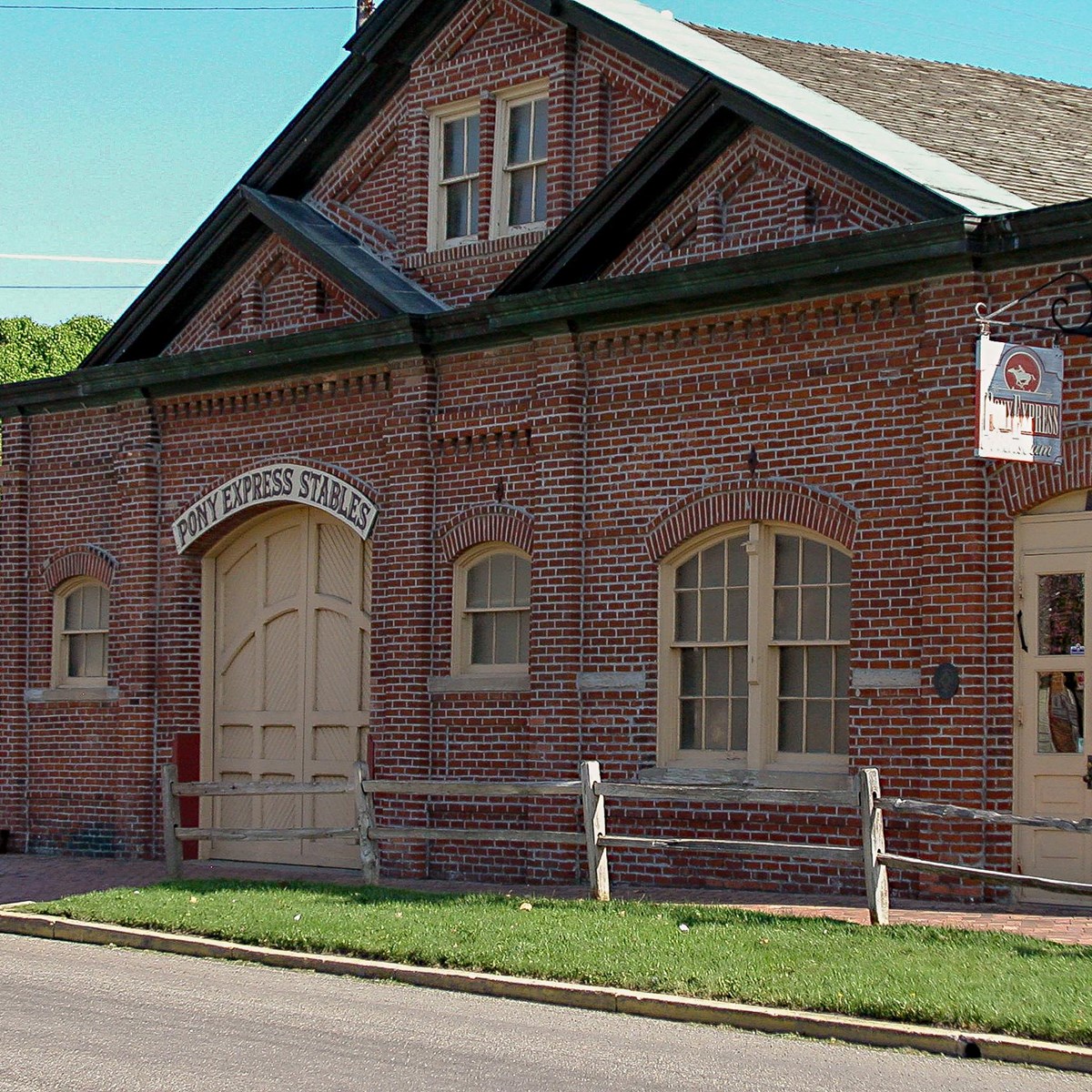
The Pony Express survives in American memory as a single rider leaning into danger, carrying the West on a saddle. That image is not false so much as too narrow. Riders mattered, and some rides were genuinely brutal. But the service worked, when it worked, because it was a relay machine: a corporate route built in haste, tied to railroad and telegraph edges, dependent on stations every few miles, and doomed by the very communications technology it helped bridge.[1][2][5]
The useful question is not whether the Pony Express was heroic. It often was. The sharper question is what kind of heroism the evidence supports. The myth says speed came from exceptional individuals crossing wilderness. The record points to choreography: St. Joseph's rail connection, Sacramento's western terminus, hundreds of horses, dozens of riders, station keepers, stock tenders, a lightweight mail pouch, and a business plan that needed a federal contract it never fully secured.[4][5][6]
Myth: The Pony Express Was The Mail System Of The Old West
The first correction is scale. The Pony Express was famous because it was brief, not because it became a mature national mail system. The National Park Service dates its operation to the 18 months between April 1860 and October 1861.[1] The National Pony Express Association gives the same basic frame: the line could move letters from Missouri to California in roughly 10 days, but it existed in a narrow window before easy long-distance electronic communication.[5]
That narrowness matters. The service opened after California's population, mining economy, and political importance had outgrown the old communications lag. St. Joseph's city history page notes that letters from New York to San Francisco could take about 30 days by steamship around South America, while the Butterfield overland route took 23 days.[4] Ten-day mail therefore felt astonishing. It was not merely faster delivery; it was a different political tempo on the eve of the Civil War.
But "the mail system" overstates the case. The Pony Express was an express overlay, not the ordinary postal state. It was expensive, selective, and fragile. The NPS history page ties its rise to a gap created by westward migration, Gold Rush demand, the Mormon exodus, and reduced overland mail service to California in 1858.[1] It was a stopgap for urgent communication across a continent whose permanent wires had not yet closed.
Evidence: St. Joseph Was A Technology Choice
The rider myth begins in open country, but the system began at a railhead. St. Joseph had the Hannibal and St. Joseph Railroad connection by February 14, 1859, placing it at the western edge of fast eastern communication.[4] That is why the town mattered. A letter could move by established transport to St. Joseph, then enter the horse relay for the long gap across the plains, mountains, and deserts.
The restored Pony Express Stables make this point physically. The NPS identifies the building as the Pike's Peak Stable, originally built in 1858 for a freight and stagecoach company, purchased in 1860 by the Central Overland California and Pike's Peak Express Company, and used for the Pony Express purpose.[3] The cover image is useful because it refuses the empty-wilderness version of the story. The service started from brick, doors, horses, employees, and urban logistics.
Even the first westbound departure complicates the painting. St. Joseph's account says the mail from the East arrived late, delaying the crowd until near dark, and warns that the famous Charles Hargens image of the start is not historically accurate because the first rider actually left at night.[4] That detail is small but revealing. The myth wants a clean ceremonial launch; the system depended on a delayed train, a waiting pouch, a stable, and a handoff.
Myth: One Fearless Boy Carried The Story
The recruitment legend also needs tightening. The familiar advertisement calls for young, skinny, wiry fellows under 18, expert riders willing to risk death daily, with orphans preferred. St. Joseph's official history says that ad is now believed by some leading Pony Express historians to be a fake.[4] Whether or not every popular retelling mentions the caveat, the ad has done heavy cultural work: it condenses the Pony Express into youth, danger, loneliness, and expendability.
The evidence points to a larger labor system. St. Joseph's page says Russell, Majors, and Waddell assembled the enterprise in roughly two months during the winter of 1860, with 156 stations, 120 riders, 400 horses, and hundreds of employees.[4] The Pony Express National Museum timeline gives a similar operational picture: the firm bought over 400 horses, hired station keepers and stock tenders, and placed relay stations about 10 to 15 miles apart, with home stations roughly 90 to 120 miles apart.[6]
Those numbers change the story. A rider could be brave and still be one component in a timed network. The crucial unit was not the entire cross-continent journey by one man, but the repeatable exchange: horse, pouch, route segment, station, next horse, next rider. The magic was not that the system abolished distance. It divided distance into punishable intervals.
Evidence: The Telegraph Was The Real Finish Line
The Pony Express did not fail because the romance ran out. It failed because the communications problem changed. NPS notes that on June 16, 1860, only about ten weeks after the service began, Congress authorized support for a transcontinental telegraph line connecting the Missouri River and the Pacific Coast.[1] While the wire ends advanced, the Pony Express kept carrying letters and newspapers across the full route, and telegrams moved only between the wire termini.[1]
That hybrid phase is the most revealing part of the story. The horse line and the telegraph were not simply old and new in sequence. For a while, they were one combined communications ecology. The Pony Express carried messages across the unwired gap between moving technological frontiers. It was fast because it knew it was temporary, even if its investors hoped for a durable contract.
The Pony Express National Museum timeline shows the squeeze. By July 26, 1861, telegraph construction had reduced the horse run to seven days; by August 13, 1861, Pony Express news could be telegraphed to San Francisco two days before letters arrived; by October 24, 1861, the east and west coasts were linked by the transcontinental telegraph.[6] NPS says San Francisco was in direct contact with New York City on October 26, 1861, the day the Pony Express was officially terminated, with final letters completing the route in November.[1]
The service, then, was not the opposite of modern communications. It was part of the transition into them. Its riders carried the last unwired miles for a network that was busy making them obsolete.
Myth: It Was A Simple Triumph Of Frontier Pluck
The business evidence is less romantic. St. Joseph's account says the founders wanted a government mail contract but did not get the prize in the way they needed, and that the service was costly from the beginning.[4] The museum timeline adds the stresses: conflict along the route in May and June 1860, large losses tied to the Pyramid Lake War, Russell's bond scandal in late 1860, and government restructuring of the western route in 1861.[6]
This does not reduce the accomplishment. It explains why accomplishment and fragility lived together. The Pony Express could deliver Lincoln election news quickly in November 1860 and later move his inaugural address west from the telegraph edge in March 1861.[6] It also could not escape route violence, capital strain, and a technological endpoint built into its own moment.
That is the strongest myth-vs-evidence conclusion: the legend is durable because the real system was more precarious than the icon. A lone rider makes the story simple. A relay system makes it better. The Pony Express was a business gamble, a wartime information bridge, a logistical improvisation, and a memorial factory all at once.
Its achievement was not that horses beat wires. They did not. Its achievement was that, for 18 months, people could design enough stations, labor, animal power, and timing discipline to make the continent feel temporarily smaller. The rider matters most when he is put back inside that machine.
Sources
- National Park Service, "History & Culture - Pony Express National Historic Trail" - overview of the 1860-1861 operating period, route purpose, telegraph authorization, and termination.
- Missouri State Parks, "Pony Express Stables" National Register documentation - state-hosted PDF record for the St. Joseph stable site, its building history, and its association with the Pony Express.
- National Park Service, "Pony Express Stable" - site page for the Pike's Peak Stable in St. Joseph, including construction, purchase by the Central Overland company, first-run association, and restoration.
- City of St. Joseph, Missouri, "The Pony Express" - local history account of rail access, delivery-time comparisons, founders, station counts, recruitment-ad doubts, and first-night logistics.
- National Pony Express Association, "1860-1861 History" - trail association summary of the 18-month service, migration pressures, telegraph bill, and remaining trail sites.
- Pony Express National Museum, "Historical Timeline" - museum timeline covering route setup, first run, stations, horses, conflict, telegraph milestones, and discontinuation.