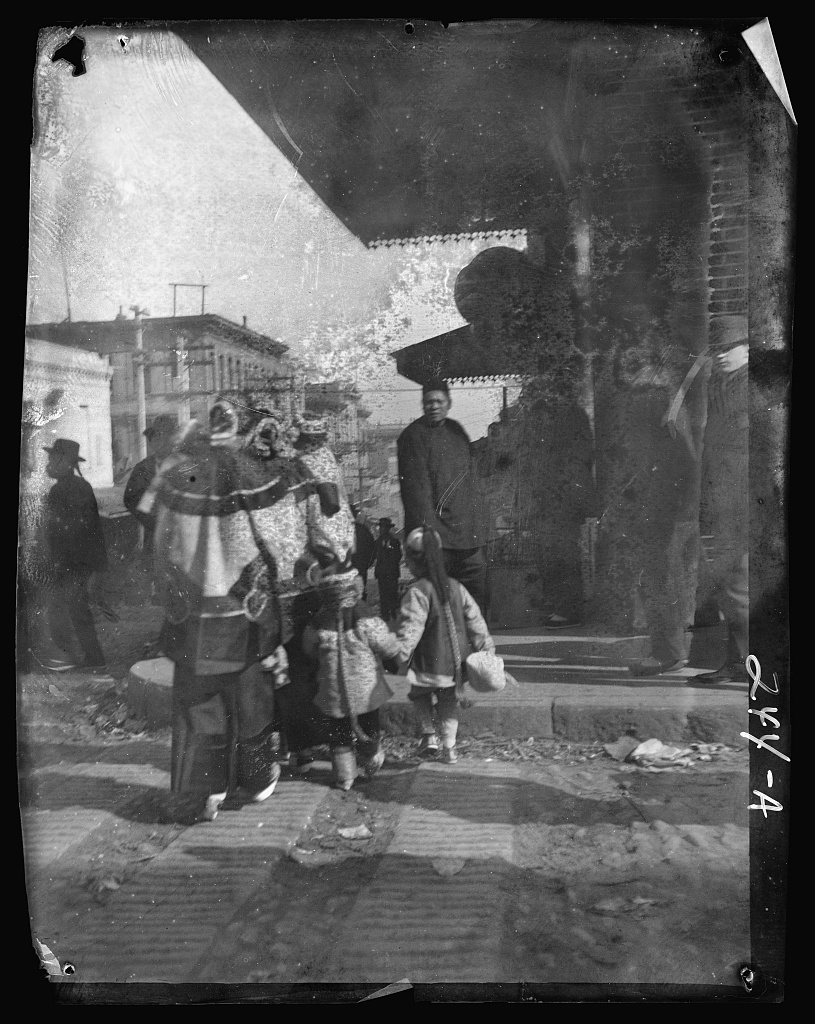
On March 3, 1875, the United States enacted a five-section statute with the deliberately forgettable title “An act supplementary to the acts in relation to immigration.” It did not call itself the Page Act. It did not announce a ban on Chinese women. In fact, the phrase Chinese women appears nowhere in its text.[1]
Read one clause at a time, the law can look like a compact attack on forced labor, prostitution, and the entry of people convicted of serious crimes. Read as a machine, however, it does something more. Section 1 adds a sexual-purpose test to an existing consular clearance process for U.S.-enrolled or licensed vessels carrying subjects of designated Asian countries—in practice, chiefly from Hong Kong. Section 5 adds inspection, detention, and return at the American port of arrival. Between the modified overseas gate and the arrival gate, a migrant can be made to prove not merely her identity or consent but her sexual respectability.[1][4]
That difference between stated category and operating procedure is the Page Act's historical importance. The Act and the officials applying it did not need to write “exclude Chinese women” as a single command. Congress located new tests and powers inside an existing clearance system; consuls and port officers decided who needed individual papers, what counted as suspicion, and how moral doubt would be recorded. The statute's nouns described forbidden conduct. Law plus administration built the border.
A “supplement” that sharpened an existing federal gate
Before 1875, American states and port officials had attempted to exclude arriving migrants under state police powers. California directed especially aggressive suspicion toward Chinese passengers. Federal law was not a blank slate, however. The 1862 Coolie Trade Prohibition Act, carried into Revised Statutes §2162, already required masters of U.S.-enrolled or licensed vessels to obtain consular certification that Chinese passengers were migrating freely and voluntarily. Section 1 of the Page Act expressly cross-referenced that older rule.[1][4]
The 1875 law therefore did not invent an overseas passport system. It inserted a new inquiry about sexual purpose into an existing U.S.-vessel clearance process, then added classes of inadmissible migrants and an inspection-and-return procedure at arrival. It is often identified as the first restrictive federal immigration statute because those provisions made individual exclusion—not simply control of a carrier or punishment of an importer—part of a national rule.[2][4]
The immediate political invitation came on December 7, 1874. In his annual message to Congress, President Ulysses S. Grant grouped coerced Chinese labor and the trafficking of Chinese women as involuntary migration, while describing the women as brought for shameful purposes and as a danger to the communities where they settled. Representative Horace F. Page of California converted that mixture—protection language, labor anxiety, and moral panic—into legislation.[8]
It would be too simple to say that trafficking was invented as a pretext. Women were abducted, sold, confined, and transported for prostitution in the nineteenth-century Pacific world. Hong Kong's own March 18, 1875 Protection of Women—Emigration Abuses Ordinance criminalized prostitution-specific abduction, sale, purchase, and detention of women and girls; separate clauses also punished broader fraudulent confinement and decoying connected to emigration.[3] The Page Act likewise voided coercive contracts and punished both involuntary transportation and knowing importation for prostitution.[1] There were real abuses to prosecute.
But the two statutes illuminate a crucial choice. The Hong Kong ordinance chiefly defined offenses committed against women. The American law also made the suspected purpose of a woman's migration a condition of her admissibility. A measure presented as protection could therefore remove a trafficker's legal claim over a woman while still sending the woman away.
Section 1 put a sexual inquiry into an older overseas gate
Section 1 begins with a cross-reference. When the American consul performed the older free-and-voluntary inquiry for a subject of “China, Japan, or any Oriental country,” the Page Act now required the consul to determine whether a service agreement existed for “lewd and immoral purposes.” If the consul found such an agreement, he withheld the permit or certificate that Revised Statutes §2162 required before the master of a U.S.-enrolled or licensed vessel could carry those passengers.[1]
The provision neither covered every carrier nor imposed an equivalent sexual-purpose inquiry on European emigrants. Its asymmetry lay less in a categorical ban than in a targeted administrative burden: subjects of the named Asian countries traveling within the covered shipping system entered an American moral inquiry before reaching American territory. In practice, most Chinese emigrants bound for the United States left through Hong Kong, where refusal of clearance could stop a journey before the San Francisco wharf came into view.[4][5]
The word ascertain carried much of the power. The statute named no evidentiary standard, no required proof, and no presumption in the migrant's favor. A consul had to decide whether the covered service agreement existed, but Congress did not say how to prove it. Bailey's administration used that gap to widen questions about contract and coercion into judgments about marriage, occupation, household standing, and “virtue.”[1][4]
This is where a close reading must resist one tempting error. Section 1's grammar covered “any subject” of the named regions, not women alone, and Section 2 separately punished transporting any such person into involuntary service. The gendered gate emerged when officials treated suspected sexual purpose as a problem to be detected primarily in women. The discriminatory result came from statutory placement plus administrative presumption, not from one explicit sentence saying all Chinese women were forbidden.
Sections 3 and 5 turned suspicion into removal
Section 3 used broader language. It forbade importing women of any nationality for prostitution, voided related agreements, and authorized up to five years in prison and a fine of up to $5,000 for a knowing importer. By comparison, Section 2 set a maximum one-year term and $2,000 fine for transporting an Asian subject into involuntary service, while Section 4 set a maximum one-year term and $500 fine for contracting to supply unlawfully imported labor. Congress made knowing importation for prostitution the statute's most severely punished offense.[1][4]
Section 5 then shifted attention from offender to arrival. It declared two classes inadmissible: certain people serving felony sentences and women imported for prostitution. If a port collector had “reason to believe” that either class was aboard, the vessel could be inspected. An inspector certified the people he placed in a forbidden class, who could not simply land. If a certified passenger sought judicial review, the collector had to detain the vessel while the challenge was decided. If the inspector's finding was sustained, the passenger was returned aboard and barred from landing unless the vessel's master, owner, or consignee posted a $500 bond conditioned on return within six months; if the vessel was forfeited, its proceeds could instead fund that return.[1]
On paper, this arrival provision was not limited to Chinese passengers. In operation, it connected to Section 1's nationality-targeted addition to the older certificate inquiry. A Chinese woman could satisfy a consul before departure and still face a collector after arrival. A European emigrant was not assigned the same sexual-purpose test under Section 1. Formal generality at San Francisco did not cancel selective screening at Hong Kong; the two stages compounded each other.[4]
The certificate became a moral biography
The best surviving account of Hong Kong enforcement comes through historian George Peffer's research and legal scholar Kerry Abrams's reconstruction of consular dispatches and congressional testimony. Their dependency chain matters: the earlier clearance statute supplies the certificate framework, the Page Act adds the sexual-purpose inquiry, an August 21, 1876 dispatch preserves Consul David H. Bailey's procedure, and later scholarship recovers how the questions worked together.[1][4][5]
Applicants were asked about contracts and coercion, but also whether they were married or single, what occupation they expected in the United States, whether they had lived in a brothel, and whether they considered themselves virtuous. According to the preserved dispatch, most applicants who reached this stage faced substantially the same inquiry three times: at the consulate, before the colonial harbor master, and again aboard ship.[4] Repetition was not neutral verification: it created opportunities for small differences in an answer to be read as deceit, while an unmarried status or an occupation the consul found implausible could become evidence of prostitution without proving it. That is an inference from the procedure, not a claim that every discrepancy produced a refusal.
The paperwork traveled with the body. Congressional testimony described an individual declaration, certificate, and photograph for each woman so San Francisco officials could compare passenger and record. The National Archives' overview of Asian and Pacific immigration confirms the Page Act's certified-document requirement and preserves later case files showing Chinese women subjected to moral questioning despite presenting papers.[6]
One certificate exposed how far the inquiry had moved beyond a simple contract test. Bailey reported that a man sought to travel with two wives; the consul certified one and refused the other, identifying the admitted wife in a photograph. The surviving certificate records no finding that the second woman was destined for prostitution. In Abrams's reading, the document shows how a Western judgment about legitimate marriage could determine passage.[4]
Men did not bear an equivalent documentary load. Port testimony indicated that women arrived with individual certificates and photographs, while men could be covered by a collective paper whose count was checked against the passengers. The system claimed to distinguish voluntariness and crime. Its most exacting identification work was instead attached to female respectability.[4]
The fall in arrivals measures the gate, not every life behind it
The first numbers after enactment are stark. Between July 1 and October 1, 1875, 161 Chinese women arrived in San Francisco. In the first quarter of 1876, only 15 did. Those figures, reported by the port surveyor to Congress, show that arrivals fell sharply as the new process took hold.[4] Peffer's study adds the other side of the mechanism: wives and daughters could be refused, forced into expensive legal proceedings, or deterred from attempting the journey at all.[4][5]
Numbers cannot tell us that every woman denied a certificate was innocent, nor can they recover women who never applied. They also do not erase exploitation within the prostitution trade. What they can establish is that enforcement reached much farther than the conviction of traffickers. The administrative output was not merely more prosecutions; it was fewer Chinese women crossing the border.
That result preceded the Chinese Exclusion Act by seven years. In 1882, Congress openly suspended the immigration of Chinese laborers after renegotiating treaty constraints.[2][4] The Page Act had already demonstrated a less explicit technique: turn an older overseas clearance into a moral screen, give officials wide discretion, attach exacting documentation to the targeted group, and let procedure convert a stereotype into a population filter.
Protection and exclusion are not rival stories
There are two serious readings of the Act. The narrower reading begins with the literal offenses. Congress voided involuntary service contracts, punished transporting people into forced service and knowingly importing women for prostitution, and created a route to judicial review. Set beside Hong Kong's anti-abuse ordinance, the law belongs to a real transpacific effort to confront coercion and prostitution.[1][3]
The broader reading begins with design and enforcement. Political rhetoric treated Chinese womanhood itself as suspect; Section 1 added a nationality-selective sexual-purpose test to the consular clearance rule for U.S.-enrolled or licensed shipping; officials tested marriage and virtue without a defined standard; individual photographs made women more inspectable than men; and arrivals collapsed. On that evidence, the statute functioned as an exclusion law aimed well beyond proven traffickers and proven prostitution.[4][5][8]
The broader reading explains the machinery better, but it does not require pretending that coercion was imaginary or that every official decision had the same motive. The more unsettling conclusion is that a law can address a genuine harm and still distribute suspicion unjustly. Protection became exclusion when the state made the possible victim carry the burden of disproving its racial and sexual assumptions.
That is why the Page Act rewards inspection at the level of verbs. Ascertain, withhold, inspect, detain, return: together they reveal an older carrier-control system becoming a federal admissions regime before the United States possessed a modern immigration service.[1][4] The statute never needed to write its practical target as a headline. Its added test, followed by administrative choices, made Chinese women legible to the state one certificate, one photograph, and one moral judgment at a time.
Sources
- U.S. Congress, “An act supplementary to the acts in relation to immigration,” March 3, 1875, 18 Stat. 477–478 — authenticated primary text of the five sections commonly called the Page Act.
- San Francisco Maritime National Historical Park, Katherine Hijar, “Chinese Women, Immigration, and the First U.S. Exclusion Law: The Page Act of 1875,” August 2, 2022 — institutional overview of the law's context, provisions, and effects.
- University of Hong Kong Libraries, Protection of Women—Emigration Abuses Ordinance, No. 2 of 1875 — primary text of Hong Kong's March 18 ordinance on abduction, sale, detention, prostitution, and emigration abuses.
- Kerry Abrams, “Polygamy, Prostitution, and the Federalization of Immigration Law,” Columbia Law Review 105, no. 3 (2005), Duke Law repository — statutory analysis and reconstruction from congressional testimony and consular dispatches.
- George Anthony Peffer, If They Don't Bring Their Women Here: Chinese Female Immigration before Exclusion, University of Illinois Press, 1999 — book record, argument, and chapter scope for consular enforcement, habeas proceedings, and deterrence.
- U.S. National Archives, “Immigration from Asia and the Pacific, 1870s to 1950s” — archival overview of Page Act documents, moral-turpitude questioning, and later exclusion-era case files.
- Library of Congress, Arnold Genthe, “Women and children crossing a street, Chinatown, San Francisco,” photographed between 1896 and 1906 — catalog record for the article's archival photograph.
- Ulysses S. Grant National Historic Site, Ronald C. White, “Ulysses S. Grant, Chinese Immigration, and the Page Act of 1875” — institutional account of Grant's December 1874 message, anti-Chinese politics, and the Act's passage.