The most exacting words in Nanni’s complaint about copper come near the end. The next time Ea-nasir supplies him with metal, Nanni says, he will choose the ingots “in my own yard.” The letter comes from Ur, in present-day Iraq, around 1750 BCE. It takes only a moment to recognize the anger of a man promised one grade of goods and offered another. It takes a little longer to see why the address for the next delivery matters. [1][2][3]
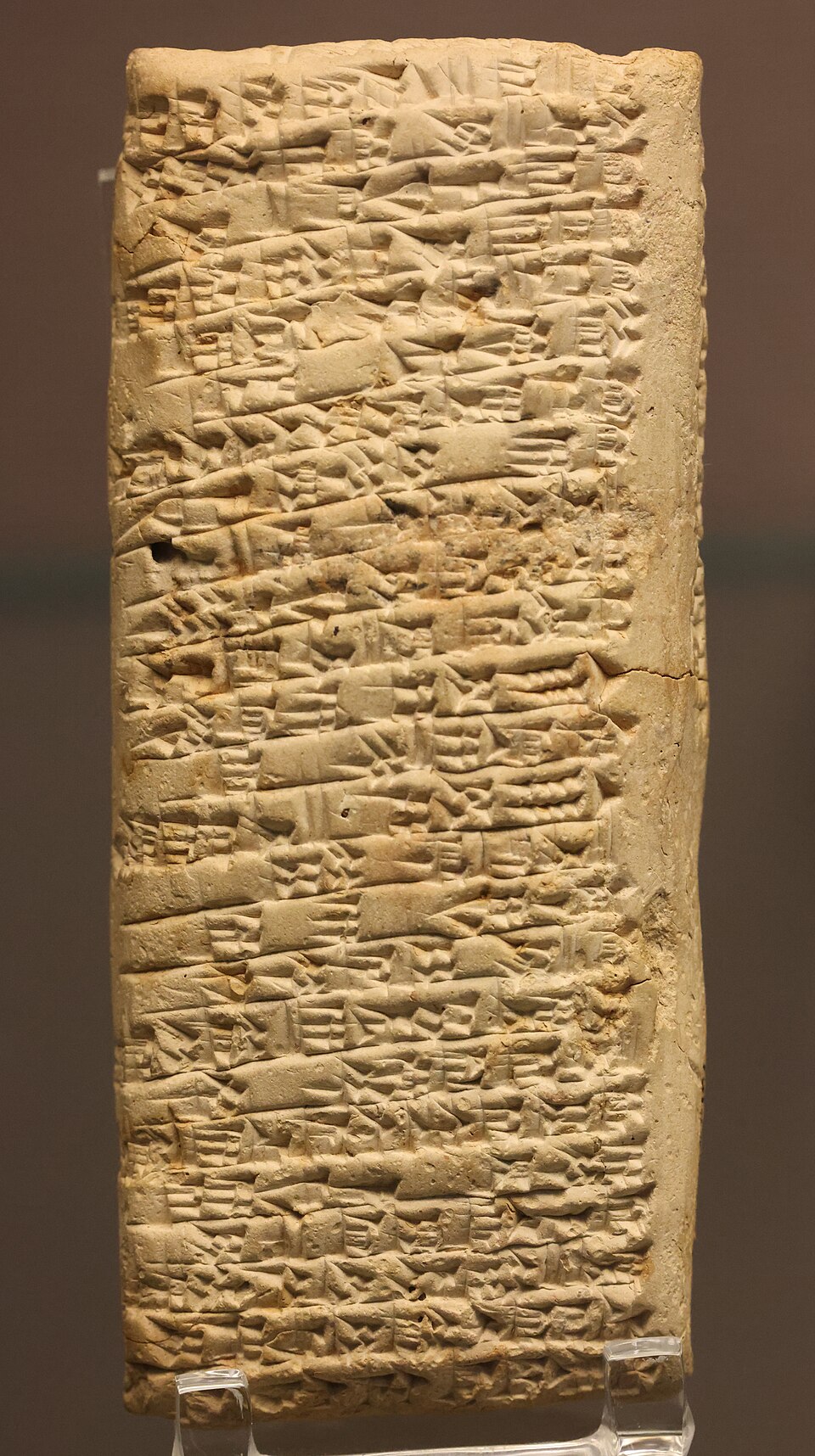
Nanni opens with a conversation that took place when the two men were together. Ea-nasir promised good copper to a man Nanni names. Then Ea-nasir left, and by the time someone could actually look at the metal, Nanni was elsewhere. The messenger who faced the ingots had two choices, as Nanni tells it. He could take what was in front of him or he could go. Even Ea-nasir’s side of that exchange comes down to us in the words of the man complaining about him. The tablet preserves no sample of the disputed metal and gives us no independent judgment of its grade. [1]
Ea-nasir traded with Dilmun, a centre of the Gulf copper trade associated with present-day Bahrain. On that scale of business a messenger might have a considerable journey to make just to come home empty-handed. Read the middle of the letter closely, though, and the object the men were sent to collect has changed. Nanni now wants a bag of his money back. He says he sent men several times and that their way lay through hostile territory. The complaint about the ingots and the demand for repayment belong to the same letter. Only the journeys for the money are explicitly described this way. [1][3]
Who gets to refuse an ingot?
The men who made those journeys were, in Nanni’s estimation, the social equals of the two merchants. That detail earns its place in an angry letter. A man entrusted to speak for Nanni had stood in front of an inferior lot and been told to take it or leave it. When Ea-nasir sent such men away, Nanni understood the slight as directed at himself. He asks what other merchant in the Dilmun trade has ever treated him this way. The question lets us hear the standard of conduct he expected a fellow trader to recognize. [1]
Nanni can produce references. He names another man, Šumi-abum, who like him had delivered copper to the palace on Ea-nasir’s behalf. He even specifies where a sealed record of further business was to be kept, in the temple of Šamaš. A reader trying to settle accounts from the letter would still come up short. Nanni mentions silver he may owe Ea-nasir, a passage his translator marks as uncertain. What comes through clearly is the scale of the acquaintance. These men already had obligations to one another before the messenger ever saw the copper. [1]
The British Museum took the tablet into its collection in 1953. In 2015 a photograph of its display helped turn Ea-nasir into an internet celebrity for selling bad copper. The museum label could fit the grievance into a line. Nanni needed both faces of a tablet, partly because he had business he still expected to do. [2][3][4]
His closing demand repays a second look. He wants his money back in full. For future deliveries he also claims the right to examine the ingots one at a time. In his yard he can keep a sound piece, refuse a poor one and answer for the choice himself. A messenger standing over a distant pile had been offered a single decision about the lot. Nanni’s last few lines give the next decision a place, a person and a much smaller unit of copper. Whether Ea-nasir ever brought a load to that yard is something the letter leaves open. [1]
Sources
- A. Leo Oppenheim, Letters from Mesopotamia (1967), pp. 82–83. Translation of Nanni’s letter, UET 5 81.
- Cuneiform Digital Library Initiative, UET 5, 0081. Catalogue record and transliteration of the tablet from Ur.
- Gabriel Moshenska, “The Legend of Ea-Naṣir.” The excavated correspondence, the Gulf trade and the modern reception of the tablet.
- Geni, “Complaint tablet to Ea-Nasir 2023.” Photograph of the reverse, with display and licensing details.