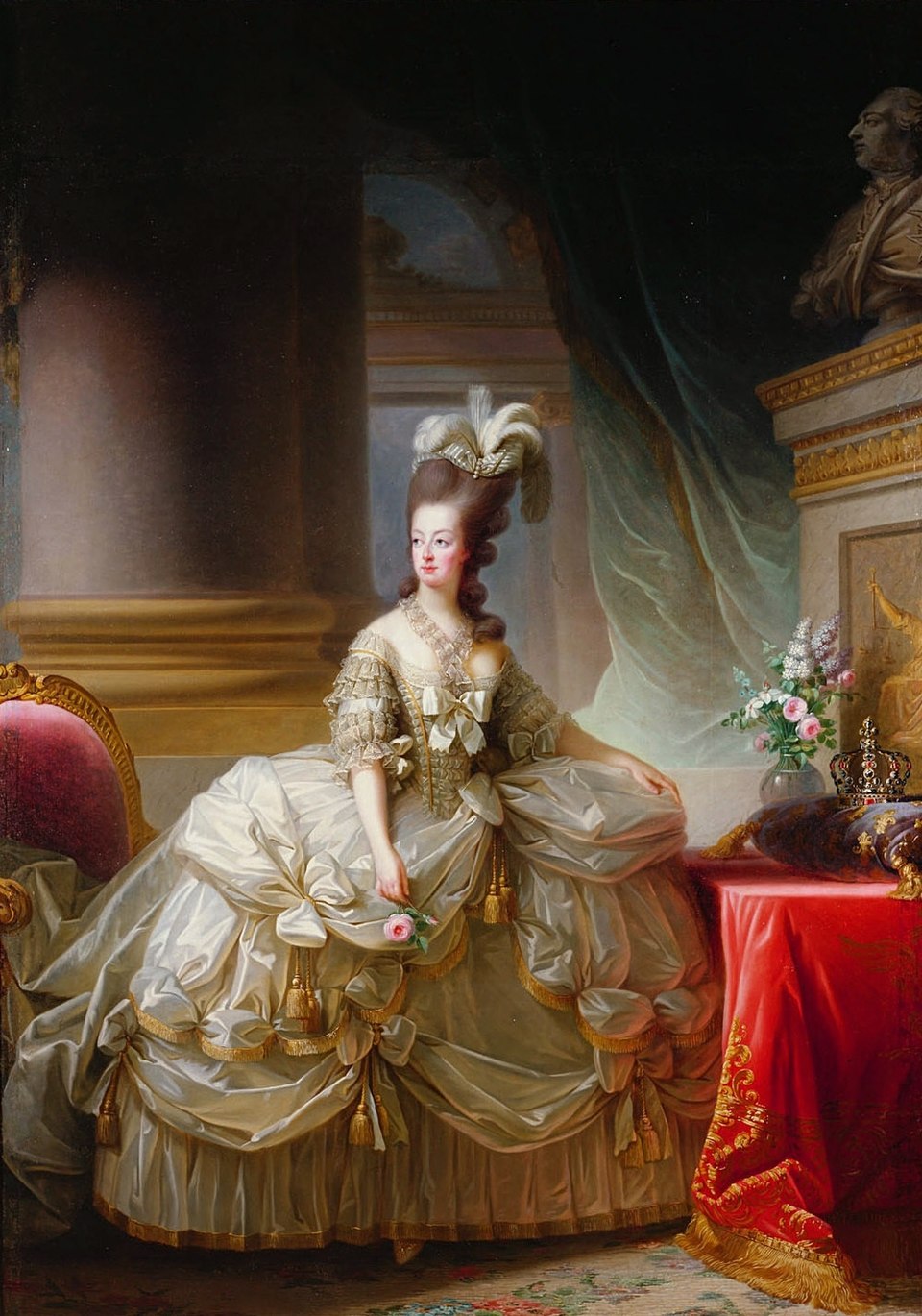
The phrase is famous because it sounds perfect: one sentence that compresses aristocratic indifference, bread scarcity, and revolutionary anger into a single scene.
But as history, it is weak.
The line usually appears as Marie Antoinette’s “Let them eat cake,” often given in French as Qu’ils mangent de la brioche. The evidence trail points elsewhere. The quote appears in Jean-Jacques Rousseau’s Confessions, where he attributes it not to Marie Antoinette but to “a great princess.”[1][2] By the time that passage was written, Marie Antoinette was still a child in Vienna.[3][4]
So why does the attribution survive? Because it does political work. It gives a revolution a villainous sound bite.
The evidence chain: what the sources actually show
1) The phrase appears in Rousseau before Marie Antoinette became queen
In Book VI of Confessions, Rousseau recounts his own embarrassment about buying bread and recalls “the thoughtless saying of a great princess,” rendered in English as “Then let them eat pastry!”[1] The French text is the more famous formulation: Qu’ils mangent de la brioche.[2]
Timeline matters here.
- Rousseau (born 1712) died in 1778.[4]
- Marie Antoinette (born 1755) married the French dauphin in 1770 and became queen in 1774.[3]
That does not prove she never repeated something similar later. But it does remove the strongest version of the myth: that this line originated as her spontaneous response to 1789 hunger. The line already existed in political-literary circulation.
2) Publication timing helped the line detach from its original context
Confessions was published posthumously in stages (1782–1789), as revolutionary politics intensified.[5] That matters because readers encountering the line in late-1780s France were no longer reading it as a narrow autobiographical aside. They were reading inside a public sphere primed to decode elite symbols.
A phrase attached to “a great princess” was therefore available for reattachment to whichever royal figure best fit the emotional mood of the moment. By 1789, that figure was usually Marie Antoinette, already cast as an emblem of court excess and foreign influence.[3][6]
3) The social backdrop made the quote believable even when it was likely false
The late ancien régime carried deep structural strain: fiscal crisis, political deadlock, and severe legitimacy loss.[6] In that kind of environment, people do not need a quote to be document-perfect; they need it to feel true to lived hierarchy.
That is the key to the myth’s durability. The sentence survives not because archival attribution is strong, but because it narrates distance between rulers and the bread line in one beat.
Myth test: claim vs evidence
Claim A
Marie Antoinette personally coined “Let them eat cake” during the Revolution.
Evidence
The best-known textual source is Rousseau’s “great princess” passage, predating Marie Antoinette’s queenship.[1][2][3][4] Modern historical references treat the Marie-Antoinette attribution as doubtful or apocryphal.[7]
Assessment
Weak claim. The timeline and source chain do not support confident attribution to Marie Antoinette.
Claim B
Even if misattributed, the quote accurately captures why people hated the monarchy.
Evidence
The period’s broader evidence supports intense anger about inequality, governance failure, and subsistence pressure; in that setting, a compact line of aristocratic contempt had enormous mobilizing value.[3][6][8]
Assessment
Partly strong as political sociology, weak as textual attribution. The phrase is better treated as a revolutionary-era symbol than as a verified royal utterance.
Why this misquote is historically important anyway
A common mistake in “myth busting” is to stop after saying, “False quote, case closed.” That misses the historical signal.
This line is a useful case study in how political memory is manufactured:
- A portable phrase exists in elite text culture.
- A legitimacy crisis creates demand for moral shorthand.
- Public discourse remaps the phrase onto the most visible target.
- Later retellings flatten uncertainty into certainty.
The result is not random error. It is a memory technology: one sentence that teaches later generations how to feel about an era.
If we read the quote this way, the question changes from “Did she say it?” to “Why did this become the sentence everyone wanted her to have said?”
That second question is where historical value sits.
Practical reading rule for famous one-line quotes
When you meet a quote that perfectly flatters the present-day moral lesson, run a three-step check:
- Source check: earliest verifiable text and exact wording.
- Timeline check: whether the attributed speaker fits the document date.
- Circulation check: when and why the line became politically useful.
On all three checks, the Marie Antoinette attribution underperforms.
Bottom line
The evidence does not support the confident claim that Marie Antoinette said “Let them eat cake.”
What the evidence does support is arguably more interesting: the line became durable because it solved a political communication problem for revolutionary memory. It converted complicated structural crisis into a moral tableau with one face and one sentence.
That is why historians should treat it as a case of symbolic truth built on weak attribution—not as a reliable quote and not as mere trivia.
Sources
- Project Gutenberg, The Confessions of Jean Jacques Rousseau (Book VI)
- Wikisource (French), Les Confessions (Rousseau), Livre VI
- Encyclopaedia Britannica, “Marie-Antoinette”
- Encyclopaedia Britannica, “Jean-Jacques Rousseau”
- Encyclopaedia Britannica, “Confessions (work by Rousseau)”
- Encyclopaedia Britannica, “French Revolution”
- HISTORY, “Did Marie-Antoinette Really Say ‘Let Them Eat Cake’?”
- World History Encyclopedia, “Marie Antoinette”