Alice Paul is often remembered in two overly simple ways: either as the singular hero who “won the vote,” or as the extremist foil to a broader suffrage movement that would have succeeded anyway. The documentary record suggests a harder, more useful story.
If we keep the lens tight—from the 1913 Washington procession to the 1920 ratification campaign—Paul looks less like a lone savior and more like a strategic pressure engineer. Her contribution was not abstract inspiration. It was a repeatable political method: stage conflict in public, make state coercion visible, and force parties in power to pay electoral costs for delay.
That method did not, by itself, create the 19th Amendment. But without it, the constitutional path likely would have taken longer, and the federal timetable might have remained subordinate to slower state-by-state campaigns.
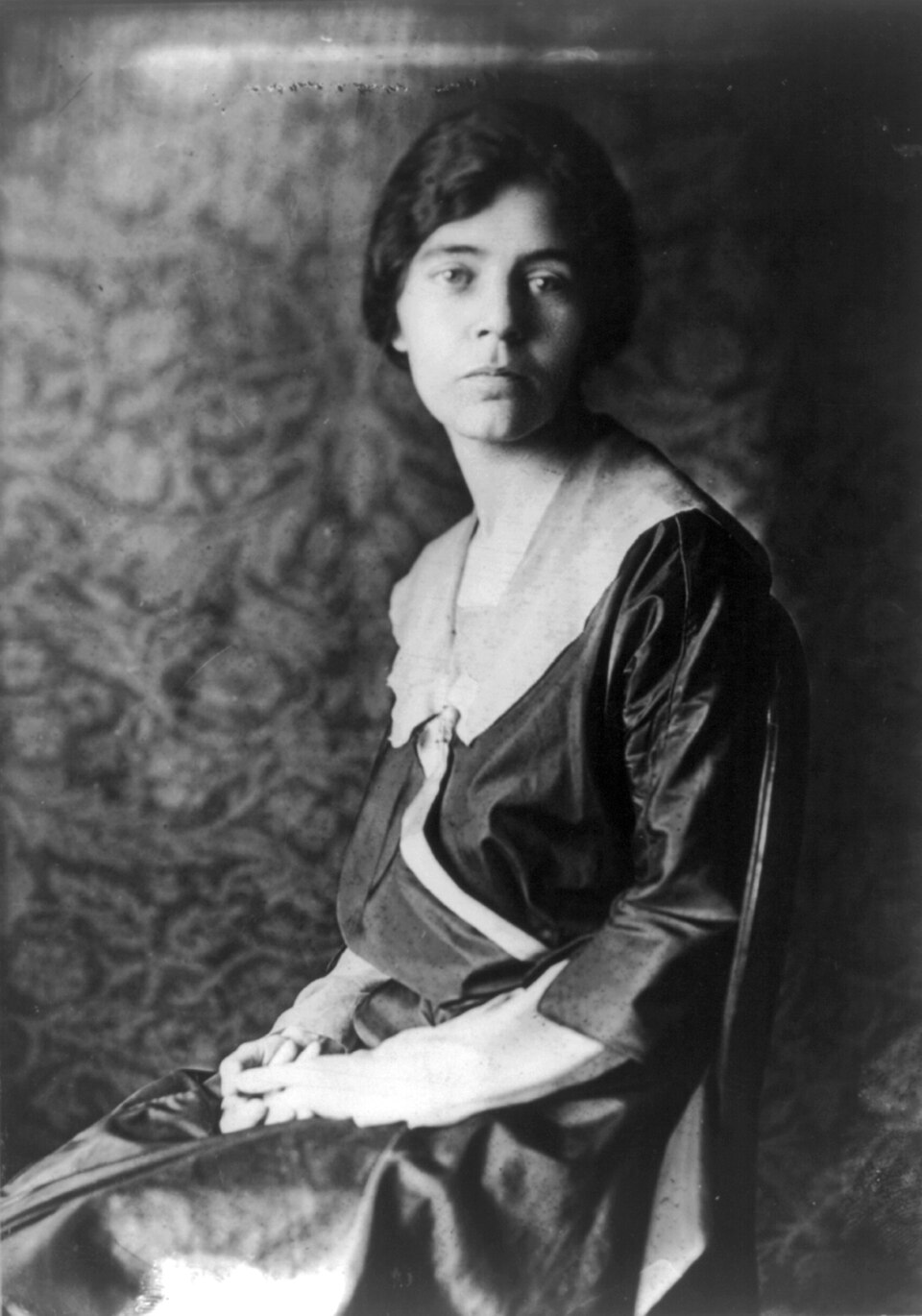
Image context: The hero portrait is a Library of Congress image of Alice Paul. It anchors this piece in the organizer herself rather than in generic suffrage iconography.
Seven timeline anchors (1913–1920)
- March 3, 1913: the Woman Suffrage Procession in Washington, D.C., is staged on the eve of Woodrow Wilson’s inauguration, with a scale and theatricality designed to dominate national attention.[1][2][3]
- 1913–1916: conflict deepens between congressional-amendment organizers and state-by-state strategists; Paul’s bloc formalizes into the National Woman’s Party (NWP), built around federal leverage.[1][4]
- January 1917: NWP begins White House picketing (“Silent Sentinels”), a new protest form in U.S. executive-space politics.[1][2]
- Late 1917: arrests escalate; suffragists are jailed at Occoquan and elsewhere; hunger strikes and force-feeding convert imprisonment into a national legitimacy crisis.[1][2]
- 1918: Wilson publicly shifts to support a federal suffrage amendment, changing elite political alignment even before final passage.[3]
- June 4, 1919: Congress passes the amendment and sends it to the states.[3]
- August 18, 1920 (certified August 26): Tennessee becomes the 36th state to ratify; the amendment enters the Constitution, while many women—especially Black women in the South and other targeted groups—still face disenfranchisement through discriminatory law and practice.[3][5]
These anchors matter because they show a chain: spectacle -> repression -> legitimacy shock -> executive shift -> congressional passage -> state ratification.
What Paul actually optimized
1) She optimized for federal time, not local accumulation
A core strategic divide in suffrage politics was temporal. State campaigns could produce wins, but unevenly. The federal-amendment path was harder up front yet potentially faster once coalition thresholds were reached.
Paul treated constitutional change as a timing problem: if national party elites could be made to carry visible blame for delay, the issue would move from civic aspiration to governing liability. That is the logic behind “hold the party in power responsible,” which the NWP operationalized through election pressure and relentless message discipline.[1][4]
This was not a repudiation of decades of state-level organizing; it was a different routing choice under late-stage conditions.
2) She turned public space into evidence production
The 1913 procession and later White House pickets were not only demonstrations. They were media systems before modern social platforms: visual scripts built to force newspapers, lawmakers, and party networks to process suffrage as immediate conflict.[1][2][4]
The same logic appears in NWP’s internal publicity behavior documented by the Library of Congress record: photographs, captions, repeatable iconography, and wide circulation through press channels.[2] In modern terms, Paul’s network controlled narrative assets, not just slogans.
3) She weaponized state overreaction
Arrest, detention, and force-feeding were intended to discipline protest. Instead, they widened the movement’s audience by recoding suffragists from “disruptors” to citizens visibly denied political standing.[1][2]
This is one of the most important microhistorical mechanisms in the period: not merely that the state used coercion, but that the movement had prepared a narrative frame in which coercion produced political loss for incumbents.
The mechanism chain: from moral claim to constitutional throughput
A biography microhistory is most useful when it identifies mechanism rather than repeating tribute language. In Paul’s case, the chain looks like this:
- Agenda seizure: high-visibility procession/picketing breaks routine news hierarchies.
- Elite forcing function: executive and congressional actors are required to state positions rather than defer.
- Repression visibility: arrests and prison abuse move undecided publics and moderate allies.
- Party-cost conversion: delay becomes electorally and reputationally expensive.
- Institutional conversion: Congress passes amendment; state ratification campaign closes constitutional threshold.
Paul’s distinct role sits strongest in steps 1–4. Step 5 required broader coalition labor across many organizations, regions, and political bargains that no single leader controlled.
The central historical disagreement
Interpretation A: Paul as decisive architect
This view argues that without Paul’s militant pressure, national suffrage would have remained trapped in incremental state politics. Evidence includes the White House picket innovation, the prison crisis, and the alignment shift that preceded federal passage.[1][2][3]
Interpretation B: Paul as high-visibility catalyst inside a long coalition arc
This view emphasizes continuity from 19th-century organizing through NAWSA and state campaigns. Under this reading, Paul accelerated the last phase but did not fundamentally determine eventual constitutional success.[3][4][5]
Working synthesis
The strongest evidence supports a middle claim: Paul changed tempo and bargaining structure, while broader suffrage coalitions supplied durability and ratification depth.
That distinction matters. It avoids both hero mythology and flattening. History gets more precise when we separate acceleration effects from total-causation claims.
What changed—and what did not—in 1920
Ratification transformed constitutional text but did not automatically equal universal ballot access. The National Archives summary is explicit: many women, especially African American women and other marginalized groups, continued to face exclusion under discriminatory state regimes for decades.[3]
This is not a footnote. It is a structural warning about legal milestones: constitutional authorization can arrive before enforcement capacity and political inclusion do.
In Paul’s own post-1920 trajectory (including the ERA campaign), we can see recognition of that gap between formal equality language and lived legal order.[1]
Why this microhistory is still high-value now
Current democratic conflicts often repeat the same strategic puzzle: when institutions delay, how do movements alter governing incentives without losing legitimacy?
Paul’s 1913–1920 record offers three durable lessons:
- Tempo is political power. Choosing federal versus local pathways is a decision about time as much as doctrine.
- Narrative infrastructure is policy infrastructure. Images, symbols, and disciplined repetition are not ornamental; they determine whether coercion helps incumbents or backfires.
- Legal victory is a phase, not an endpoint. Text change without enforcement design can preserve exclusion under new formal language.
Those lessons travel well beyond suffrage history—to voting rights, labor standards, climate governance, and digital-rights fights where state capacity, legitimacy, and timing still decide outcomes.
What evidence would materially change this assessment
- New archival party records proving federal leadership had already fixed a near-term amendment timetable before NWP escalation would reduce Paul’s acceleration weight.
- Comparative state evidence showing equivalent national timing in peer democracies without militant executive-targeted tactics would weaken the mechanism claim.
- Ratification-process studies demonstrating that visible repression had negligible effect on elite alignment would shift causality back toward slow structural drift.
Until then, the most defensible interpretation is sequential: Paul’s pressure tactics did not substitute for coalition politics; they altered its speed and leverage profile at the constitutional endgame.
Sources
- U.S. National Park Service, “Dr. Alice Paul”
- Library of Congress, “Women of Protest: Photographs from the Records of the National Woman’s Party (About this Collection)”
- U.S. National Archives, “19th Amendment to the U.S. Constitution: Women’s Right to Vote (1920)”
- Library of Congress Exhibition, “Shall Not Be Denied: Women Fight for the Vote (About this Exhibition)”
- U.S. National Park Service, “19th Amendment – Women’s History”
- National Women’s History Museum, “Alice Paul”
- Library of Congress item metadata, “Official program - Woman suffrage procession, Washington, D.C. March 3, 1913”
- Wikipedia, “Alice Paul” (secondary orientation and citation hub)
- Wikimedia Commons image source — Alice Paul portrait
Editor’s Pick Review
This piece earns today’s Editor’s Pick because it turns a familiar suffrage figure into a high-precision mechanism story without collapsing into either hero worship or flattening. The seven-anchor timeline is concrete, the causality chain is explicit, and the disagreement section does real historiographic work instead of performative “both-sides” hedging. Just as importantly, the Chinese edition carries the argument with strong readability and low translationese: key English terms are kept only when needed and clarified inline (for example, “Silent Sentinels” and “Occoquan”), while policy and movement vocabulary stays consistent across sections. The result is a rare bilingual post that is both evidence-dense and genuinely readable.