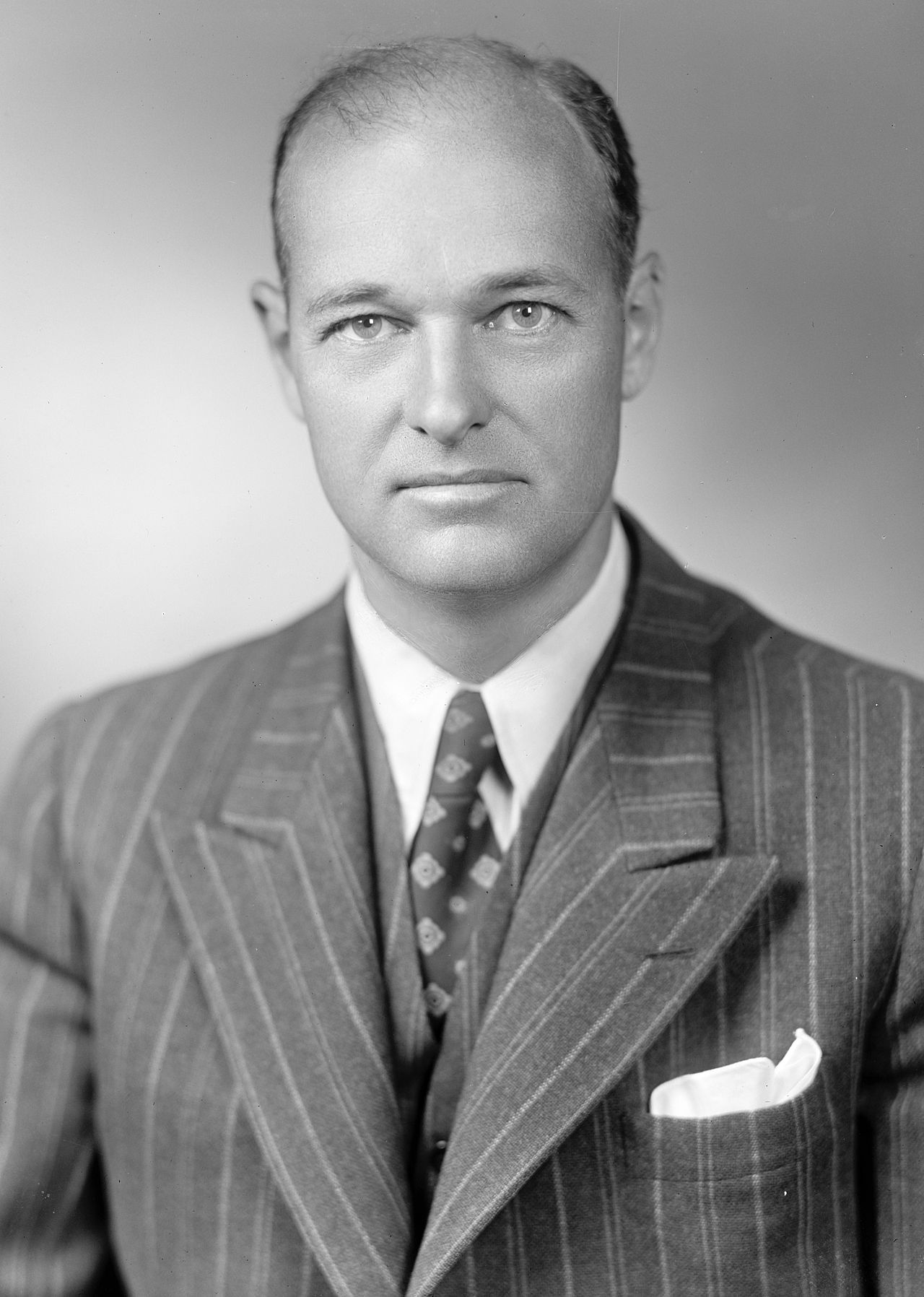
Most summaries of early Cold War strategy flatten the story into one word: containment. The documents themselves are sharper and more unstable than that shorthand suggests.
If we read the core texts in sequence, the key historical question becomes precise: did U.S. policy move in a straight line from diagnosis to doctrine, or did each document quietly widen the target, the tools, and the geography of conflict?
The four documents and their dates
A timeline anchor is necessary because the argument changes with each text:
- 22 Feb 1946 — George Kennan’s “Long Telegram” from Moscow to Washington.[1]
- 12 Mar 1947 — Truman’s address to Congress (later called the Truman Doctrine).[2]
- Jul 1947 — Kennan’s anonymous “X Article,” The Sources of Soviet Conduct.[3][4]
- 7 Apr / 12 Apr / 14 Apr 1950 — NSC-68 drafting and presidential referral process in FRUS records.[5]
That sequence is only four years long, but it is enough to show a shift from analytic memorandum to public doctrine to globalized security planning.
Document 1 (Moscow, 1946): the Soviet motive is framed as structural insecurity
Kennan’s telegram does not read like a generic anti-Soviet rant. It builds a causal model. In Part 1, he summarizes official Soviet worldview as one in which the USSR sees itself in an antagonistic “capitalist encirclement” with “no permanent peaceful coexistence” in the long run.[1]
Then, in Part 2, he gives the psychological mechanism behind that posture:
“At bottom of Kremlin's neurotic view of world affairs is traditional and instinctive Russian sense of insecurity.”[1]
That line matters because it gives Washington a policy premise: Soviet conduct is not only opportunistic; it is also regime-preservational and recurrent. The memo therefore points toward sustained pressure management, not one-off crisis bargaining.
Document 2 (Washington, 1947): diagnosis becomes public commitment
Truman’s March 12 speech converts internal analytic language into congressional authorization politics. The famous sentence is explicit:
“It must be the policy of the United States to support free peoples who are resisting attempted subjugation by armed minorities or by outside pressures.”[2]
In the same speech, Truman requests $400 million for Greece and Turkey.[2][6] By 22 May 1947, he signs the aid law, describing it as an “important step in the building of the peace.”[6]
The textual move here is important: Kennan’s private diagnostic frame becomes a public moral-security formula with appropriations and implementation machinery.
Document 3 (Foreign Affairs, 1947): containment is named and operationalized
The X Article gives the phrase that became canonical. As the Office of the Historian records it, Kennan writes:
“The main element of any United States policy toward the Soviet Union … must be that of a long-term, patient but firm and vigilant containment of Russian expansive tendencies.”[4]
The same paragraph series adds a method: “adroit and vigilant application of counter-force” at shifting points.[4] Read closely, this is not yet a single military blueprint. It is a durability doctrine: political stamina, selective pressure, and flexible geography.
Document 4 (NSC-68, 1950): a broader, harder security grammar
FRUS records show NSC-68 entering top-level policy handling in April 1950, with explicit urgency, budget implications, and whole-of-government review.[5] The report’s own structure and language widen scope from regional crisis management to a systemic confrontation model.
The 1950 move does not erase earlier texts, but it changes their operating environment. What was framed in 1946–1947 as a long political struggle becomes connected to large-scale military and fiscal planning with fewer regional limits.
What the sources state directly vs what this essay infers
What the sources state directly
- Kennan’s 1946 telegram frames Soviet behavior through ideological conflict and regime insecurity, with specific policy deductions.[1]
- Truman’s 1947 speech requests aid for Greece/Turkey and states a general U.S. support principle for “free peoples.”[2][6]
- Kennan’s 1947 X Article names “long-term, patient but firm and vigilant containment.”[3][4]
- FRUS NSC-68 documentation records the 1950 escalation into urgent strategic-program review involving military and economic consequences.[5]
What this essay infers (with boundaries)
- The concept “containment” did not enter policy fully formed; it was assembled through genre shifts: secret cable -> presidential speech -> journal doctrine -> national security program.
- The decisive transformation is not vocabulary alone, but policy scale: from selective political containment logic to broader global-security implementation.
Boundary condition: this is not a claim that 1950 “betrayed” 1946, nor that 1946 already required NSC-68-scale militarization. The stronger claim is narrower: each document widened what counted as a containment problem.
Two competing interpretations
Interpretation A: continuity is the main story
Under this view, all four documents describe one coherent trajectory. Kennan diagnoses expansion pressure; Truman legitimizes response; X codifies method; NSC-68 operationalizes at state scale. The differences are format and intensity, not direction.[1][2][4][5]
Interpretation B: category drift is the main story
This view argues that early containment was strategically selective and politically weighted, while 1950-era language encouraged near-global threat framing. In this reading, the doctrine’s center of gravity shifted from bounded competition to expansive security universalism.[4][5]
Both interpretations are defensible. The deciding evidence is how one weights the change in operational scope between 1947 rhetoric and 1950 planning documents.
Why this close reading still matters
Policy terms become dangerous when they survive while their operating boundaries change. “Containment” is a classic case: a stable label attached to moving assumptions about geography, instruments, and acceptable cost.
Reading the original documents side by side makes one practical lesson clear. Strategy is not just what leaders say in one speech; it is what successive documents allow institutions to do next.
Sources
- National Security Archive (GWU), “George Kennan’s ‘Long Telegram’” (Feb 22, 1946 text)
- Yale Law School Avalon Project, “Truman Doctrine: Address Before a Joint Session of Congress, March 12, 1947”
- Foreign Affairs, George F. Kennan (“X”), “The Sources of Soviet Conduct” (July 1947)
- U.S. Department of State, Office of the Historian, “Kennan and Containment, 1947” (quotation and policy context)
- U.S. Department of State, Office of the Historian, FRUS 1950, Vol. I, Document 85 (NSC-68 transmission and process record)
- Harry S. Truman Library, “Statement by the President Upon Signing Bill Endorsing the Truman Doctrine” (May 22, 1947)
- U.S. National Archives, “Truman Doctrine (1947)” (background and congressional context)
- Wikimedia Commons source image, “George F. Kennan 1947” (Harris & Ewing)