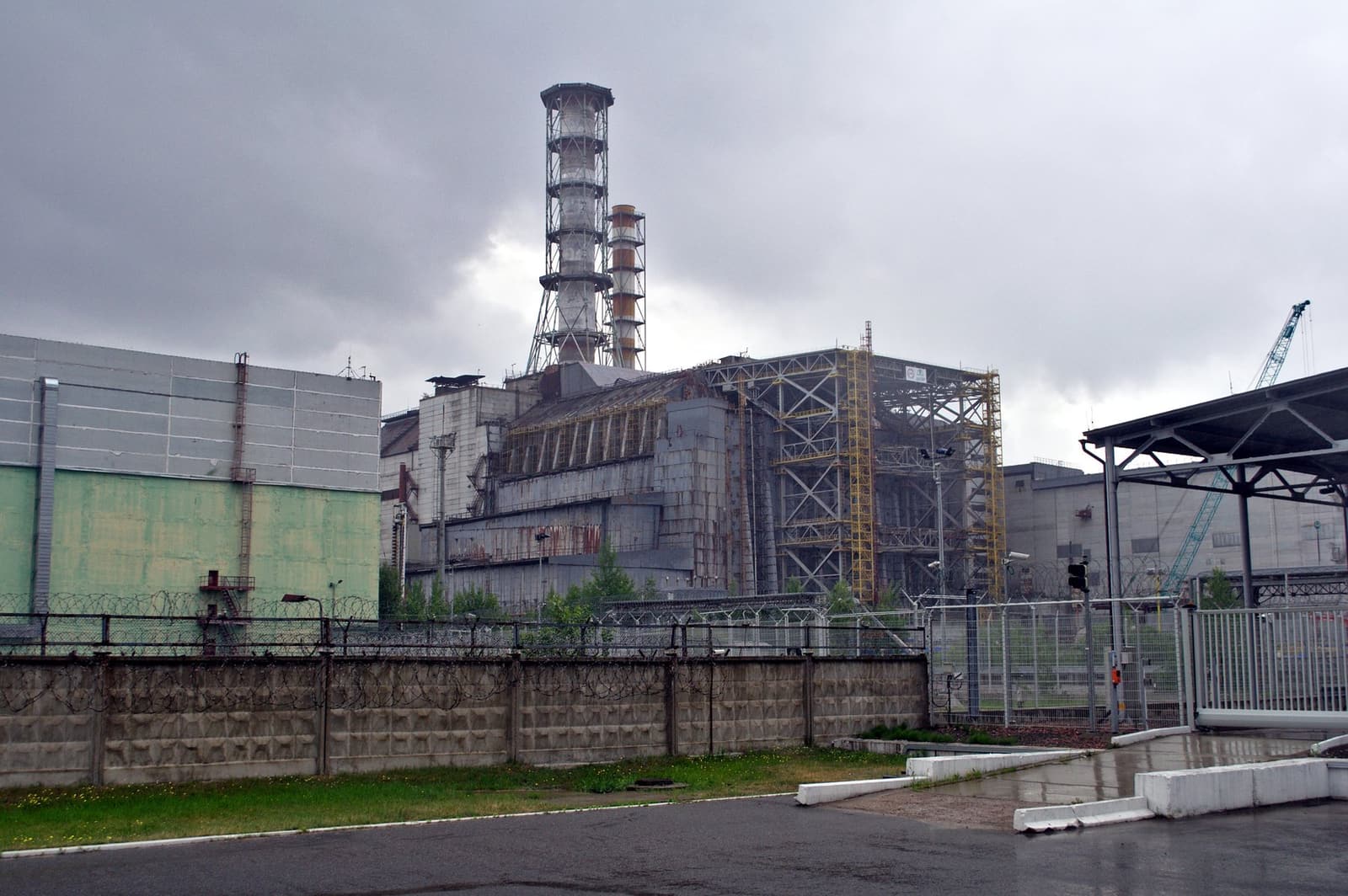
The core historical dispute around Chernobyl is not whether operators made mistakes. They did. The deeper dispute is about explanatory weight: was the catastrophe mainly a story of local human error, or a system-level failure that made catastrophic escalation far more likely once errors occurred?
This question matters beyond nuclear history. It is a template for how institutions write responsibility after high-consequence failures.
Timeline anchors: how the interpretation changed
- 26 April 1986: Unit 4 at Chernobyl explodes during a safety test sequence.
- 25–29 August 1986: the IAEA post-accident review meeting in Vienna produces the report later known as INSAG-1 framing.
- 1991: Soviet-era internal investigations (later translated and included by IAEA) become more visible in international discussion.
- 1992/1993 publication cycle: INSAG-7 (“Updating of INSAG-1”) is issued, explicitly shifting emphasis toward reactor design defects and safety-governance failures.
That sequence is the historiographic pivot: not from “operators innocent” to “operators guilty,” but from a single-cause narrative to a layered causality narrative.
Interpretation A: the operator-centered account
The early international account, built around 1986 materials, highlighted severe procedure violations during a turbine rundown test, including disabling protections and operating the reactor in an unstable regime. In this frame, the event looks like a chain of bad operational decisions under poor discipline.
Why this interpretation became dominant first is historically understandable:
- It matched the earliest official briefings available to international institutions.
- It provided immediate behavioral lessons for plant operations.
- It translated a technically complex event into a governable narrative: train better, enforce procedure, punish violations.
The strength of this account is practical clarity. Its weakness is explanatory depth: it under-specifies why one set of errors produced such an extreme physical outcome.
Interpretation B: the design-and-system account
INSAG-7 keeps operator actions in scope but states that newer evidence shifted emphasis toward RBMK control-rod and safety-system design defects, plus wider regulatory and management deficiencies across the Soviet nuclear sector.
In this interpretation, operator mistakes are a trigger, not the full cause model. The larger causal mechanism is interaction:
- a reactor with dangerous low-power characteristics,
- design vulnerabilities that could amplify transients,
- weak safety culture and weak institutional challenge,
- an operating environment where critical safety boundaries were not fully internalized or enforced.
This frame better explains why the same class of human error produced catastrophic runaway rather than a contained incident.
What later evidence stabilized
Across international assessments, several points become comparatively stable:
- The accident produced severe immediate human harm, with early worker fatalities and substantial radiation injuries.
- Large-scale evacuation and resettlement followed, with long-duration social and economic disruption.
- Long-run public health effects are uneven: a strong thyroid-cancer signal in those exposed young, but not a universal radiation-linked collapse across all disease categories.
These points do not settle every controversy, but they constrain historical overreach in both directions (catastrophist inflation and minimizing revisionism).
Debate map: where historians still disagree
1) Responsibility weighting
- Operator-first reading: proximate decisions remain decisive; design flaws matter but are secondary.
- System-first reading: design and governance created a high-risk envelope in which foreseeable human error could become catastrophic.
2) Counterfactual threshold
- Operator-first test: if a disciplined team could likely have avoided disaster under the same hardware, operator agency dominates.
- System-first test: if comparable error under that design could still have crossed into runaway behavior, design-governance dominates.
3) Policy lesson extraction
- Operator-first policy: procedure control, simulator rigor, command discipline.
- System-first policy: defense-in-depth design, independent regulation, transparent incident reporting, and international notification norms.
In practice, post-1986 global governance adopted a mixed lesson set, including emergency-notification and assistance conventions under IAEA auspices—evidence that institutional actors treated Chernobyl as more than a local crew failure.
Source statement vs inference boundary
What the sources directly state
- INSAG-1 came from the August 1986 post-accident review process.
- INSAG-7 explicitly says new information shifted emphasis from staff actions to design and broader safety-management defects.
- UNSCEAR documents the major exposure, evacuation, and long-run health pattern boundaries.
- International nuclear-safety conventions were strengthened in the post-Chernobyl period.
What this essay infers
The most durable historiographic conclusion is a stacked causality model: operator actions, unsafe design characteristics, and governance weakness were jointly necessary to produce the observed scale. Single-factor narratives persist because they are politically useful, not because they fit the full evidentiary record best.
Why this still matters
Chernobyl remains a live case study in post-accident memory politics. Institutions under stress still prefer blame models that are administratively simple. Historiography is useful precisely because it reweights evidence over time and makes causal structure harder to simplify into one villain.
For readers outside nuclear history, the transferable lesson is straightforward: when a system fails catastrophically, ask whether the inquiry changed after better technical evidence arrived. If interpretation did not move, the history is probably serving power before truth.
Sources
- IAEA — Summary Report on the Post-accident Review Meeting on the Chernobyl Accident (INSAG-1 context, Vienna meeting in Aug 1986)
- IAEA — The Chernobyl Accident: Updating of INSAG-1 (INSAG-7 overview and stated shift in emphasis)
- IAEA publication PDF (INSAG-7 full text)
- UNSCEAR — The Chornobyl Accident (exposure, evacuation, and health-impact boundaries)
- IAEA — Nuclear safety conventions (post-Chernobyl legal/institutional framework)
- World Nuclear Association — Chernobyl Accident 1986 (technical sequence and later investigation summary)
- Encyclopaedia Britannica — Chernobyl disaster (timeline and event synthesis)
- Wikimedia Commons source image — Reactor 4 at Chernobyl