Henri Dunant is easy to flatten into a moral emblem: a compassionate Swiss witness sees suffering at Solferino, feels horror, and somehow founds the Red Cross. That version is true as far as it goes, but it misses the narrower and more interesting mechanism. Dunant's durable achievement was conversion. He turned one battlefield shock into three portable things: a witness text, a civic organizing model, and a treaty demand that states could sign.[1][2]
That is why he belongs in biography / microhistory rather than hagiography. The central question is not whether Dunant cared about wounded soldiers. The question is why his care escaped the battlefield and changed institutions between 1859 and 1864. Many people had witnessed war before him. Many had helped the wounded before him. Dunant mattered because he moved from improvised mercy to a system that others could copy.[1][3][4]
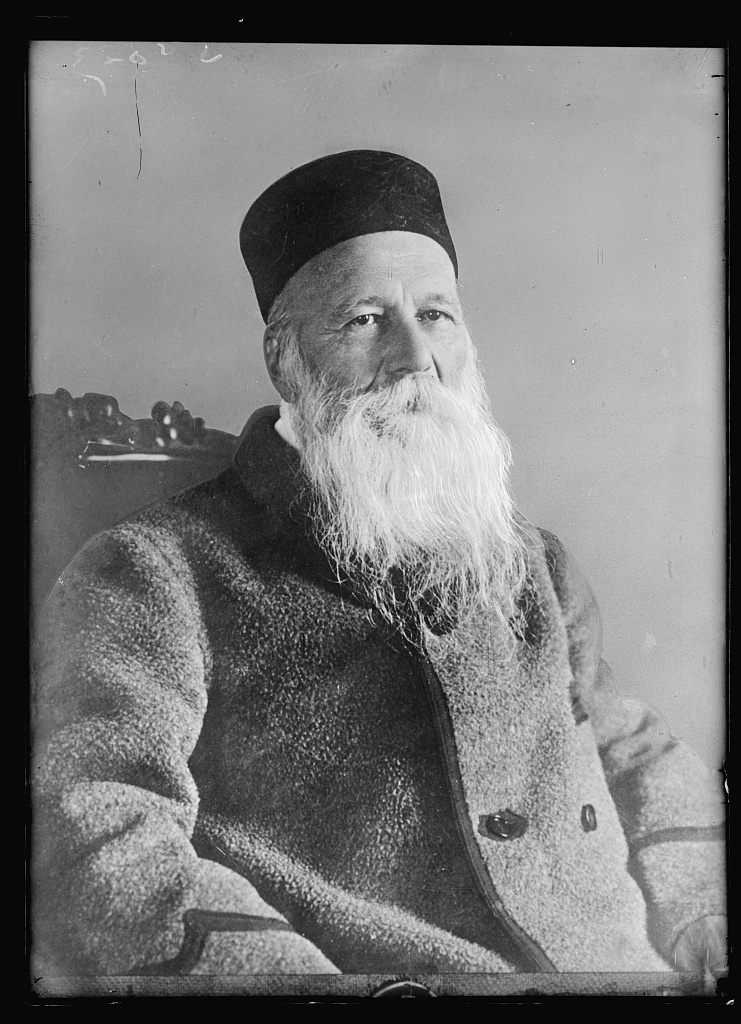
Image context: the lead image is a Library of Congress archival portrait from the American National Red Cross photograph collection. It suits this article because Dunant's historical importance lies in what followed the image of the humanitarian witness: he translated memory into organization and law.[5]
Five timeline anchors
- June 24, 1859: the Battle of Solferino leaves tens of thousands killed, wounded, or missing across the Franco-Sardinian and Austrian armies.[3]
- 1859, immediately after the battle: Dunant helps organize relief for wounded soldiers in and around Castiglione.[2][4]
- 1862: he publishes A Memory of Solferino, turning eyewitness experience into a campaigning text with practical proposals.[1][2]
- February 1863: Geneva's Public Welfare Committee forms a working group around Dunant's ideas, the embryo of the ICRC.[1]
- August 1864: delegates from a dozen countries adopt the first Geneva Convention, making care for wounded soldiers a legal obligation rather than a private hope.[1]
Those dates show the sequence clearly. Solferino was the trigger, but not the outcome. The outcome was a chain: battlefield, book, committee, conference, convention.
Solferino changed Dunant because it exposed a problem that charity alone could not solve
Britannica's summary of the battle is useful because it keeps the scale visible: Solferino was not a skirmish witnessed from afar, but a major clash whose aftermath left huge numbers of wounded men stranded in field and town.[3] Dunant had arrived in northern Italy as a businessman pursuing commercial concerns, not as a military planner or a professional reformer.[4] What he encountered was a scene in which ordinary compassion clearly mattered and yet was obviously insufficient.
That distinction matters. A battlefield crowded with untreated wounded men does not primarily present a problem of sentiment. It presents a problem of organization: who has access to the wounded, who brings water, who sorts the living from the dying, who protects medical personnel from being treated as enemy assets, and who decides whether care can cross lines of nationality.
In A Memory of Solferino, Dunant's recollection of Castiglione captures that threshold between pity and structure. He describes volunteers, especially local women, moving toward the wounded rather than away from them, and he emphasizes that once he refused to distinguish by nationality, many of the women around him did the same.[2] That detail is important because it reveals the seed of neutrality in practice before neutrality became doctrine. The wounded were not helped because they belonged to the right army. They were helped because they were wounded.
This is the first reason Dunant matters. Solferino did not only make him compassionate. It made him notice that compassion without an accepted operating principle was too fragile. It depended on local improvisation, personality, and luck.
The book mattered because it converted an experience into a reusable argument
The second move came in 1862, when Dunant published A Memory of Solferino.[1][2] If Solferino had remained only a private memory, the episode might have ended as one more vivid war recollection. The book changed the scale of the event. It made the battlefield transportable.
That transportability is the key historical mechanism. A witness can move readers who were nowhere near Lombardy. A printed text can cross borders, reach officials, and keep a crisis alive after the dead have been buried. The ICRC's founding history is explicit that Dunant put down his ideas in a campaigning book and that Geneva's Public Welfare Committee then took them up.[1] The book did not merely describe suffering. It pressed two linked proposals:
- states should accept a treaty obligation to care for wounded soldiers regardless of side;
- countries should create national relief societies able to support military medical services.[1]
That pair of proposals is what separates Dunant from a memoirist. He did not treat suffering as self-explanatory. He translated it into an institutional program. One proposal aimed upward at governments and law. The other aimed outward at civic organization. Together they formed a bridge between battlefield emergency and peacetime preparation.
This is also why Dunant's achievement should not be narrated as pure inspiration. Inspiration by itself dissipates. The book gave his shock a repeatable shape.
Geneva turned witness into committee, and committee into protocol
The transition from one author to one institution happened quickly. The ICRC history notes that Geneva's Public Welfare Committee formed a working group around Dunant's proposals, first meeting in February 1863 with Dunant as secretary.[1] This is the point where biography becomes administration.
Dunant's role here was neither solitary genius nor ceremonial mascot. He was the person who carried the problem into a civic setting where minutes, correspondence, and conference planning could begin. Once that happened, the origin story stopped depending on his personality alone. It became reproducible through meetings, invitations, and resolutions.
The following October 1863 conference pushed that reproducibility further. According to the ICRC history, the conference formalized the idea of national societies and agreed on a common emblem: the red cross on a white background to identify medical personnel on the battlefield.[1] That step looks symbolic, but it was operational first. A common emblem is not decoration. It is a recognition device. It tells soldiers, officers, and volunteers who is supposed to be protected and what kind of work is being done.
This is the third part of Dunant's conversion story. Solferino became not just a book and not just a committee, but a shared visual and organizational language. If the wounded were to be treated across front lines, then helpers had to be legible.
1864 is where Dunant's importance becomes historical rather than exemplary
The decisive shift came in August 1864, when delegates from a dozen countries adopted the first Geneva Convention.[1] The ICRC's formulation is exact and worth dwelling on: the convention made it compulsory for armies to care for all wounded soldiers, whatever side they were on.[1]
That sentence is the hinge of the whole biography. Until then, Dunant's achievement could still have remained admirable but contingent, a case of unusually effective campaigning. With the convention, the logic moved from exhortation into interstate obligation. The battlefield wounded man was no longer merely an object of charity. He was becoming the subject of a legal claim.
This is why Dunant's career between 1859 and 1864 should be read as a compression engine. He compressed one event into rules. He took a town full of improvised volunteers and pushed it toward a framework that armies and governments could no longer treat as optional sentiment.[1][2]
It is also why later memory sometimes misreads him. To remember Dunant only as the kind man at Solferino is to stop one step too early. His historical force lies in the fact that he did not stop there.
The boundary: Dunant did not invent mercy, and he did not personally control what came after
The strongest account of Dunant needs a limit built into it. He did not invent battlefield compassion. He did not by himself create everything that later became international humanitarian law. The ICRC history notes that business failures eventually pushed him out of Geneva and out of an active role in the Red Cross.[1] His life does not fit a simple founder's triumph.
That boundary actually sharpens the argument. Dunant mattered because he carried the crucial sequence far enough that it no longer depended entirely on him. Once volunteers had a model, once medical personnel had an emblem, and once governments had a convention, the idea could survive the founder's personal collapse.[1][4]
Seen from that angle, the later honors make better sense. By the time Dunant shared the first Nobel Peace Prize in 1901, the important fact was not that history had discovered a saint.[4] The important fact was that the institutional chain launched after Solferino had already taken root.
Why this biography still matters
History often celebrates origin figures because it wants a clean moral scene. Dunant offers something harder and more useful. He shows how witness becomes durable only when it changes format. The battlefield alone was not enough. The book alone was not enough. The committee alone was not enough. What mattered was the sequence that linked them.
That is why Dunant still reads as a modern figure. He understood that suffering must be made legible to institutions before institutions will reliably move. Solferino gave him the wound. His real achievement was giving Europe a script for what to do next.[1][2][3][4]
Sources
- International Committee of the Red Cross, "Founding and early years of the ICRC (1863-1914)" - Dunant's two proposals, the February 1863 working group, the October 1863 conference, and the August 1864 Geneva Convention.
- Henri Dunant, A Memory of Solferino (Project Gutenberg edition) - eyewitness account of Castiglione and the practical care of wounded soldiers after the battle.
- Encyclopaedia Britannica, "Battle of Solferino" - battle context, date, and scale of casualties that formed the immediate background to Dunant's intervention.
- Nobel Prize, "Jean Henry Dunant - Facts" - biographical overview linking Solferino, the 1862 book, the Red Cross initiative, and the 1901 Nobel Peace Prize.
- Library of Congress Prints and Photographs Division, "Dunant, (Jean) Henri (1828-1910)" - archival portrait item used as this article's lead image.