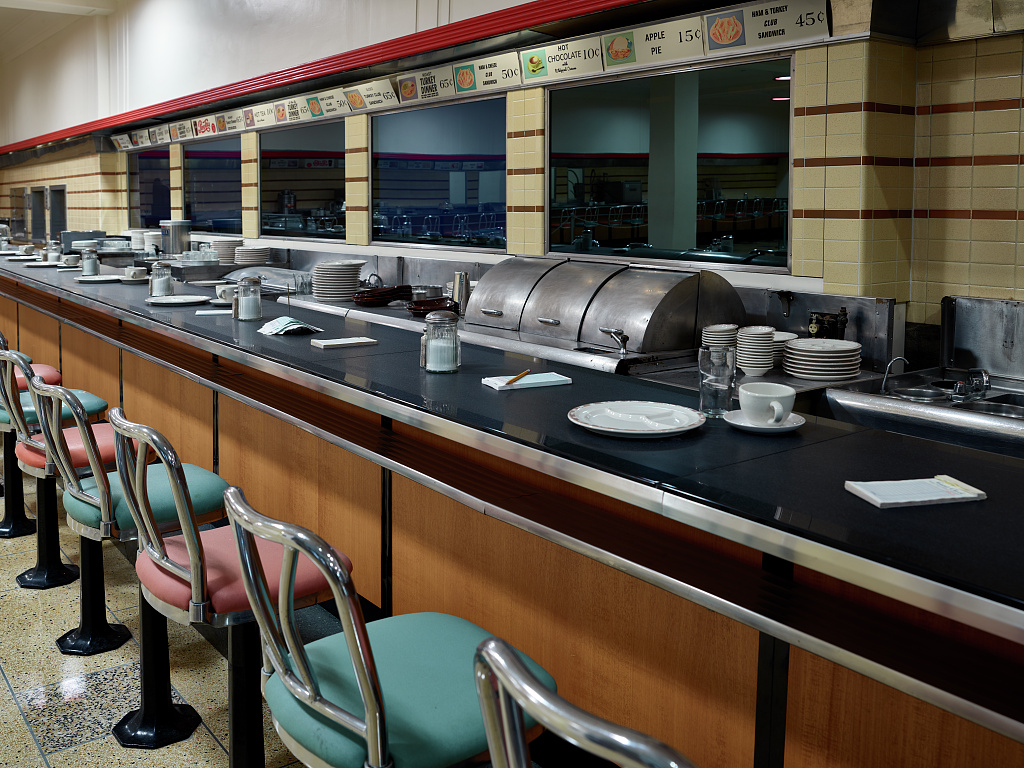
The Greensboro sit-ins are often remembered as a moral spark: four Black freshmen sit down at a Woolworth's lunch counter on February 1, 1960, and the modern student phase of the civil rights movement suddenly begins.[1][2] That memory gets the emotional truth right, but it can hide the more precise historical mechanism. Greensboro mattered because it turned a local protest into something startlingly portable. A tactic that had appeared before in other Southern cities became, in Greensboro, easy to recognize, easy to repeat, and difficult for local authorities and store managers to contain.[1][3][4]
That is the sharp question for an event reconstruction: why did this sit-in scale when earlier protests against segregated counters had remained more isolated? The answer sits in the interaction between place, choreography, and timing. The students chose a downtown branch of a national chain. They behaved with enough discipline that the first day's refusal looked calm rather than riotous. They came back with more bodies the next day. Then the protest widened from seated witness to organized boycott pressure, which meant the issue stopped being a one-afternoon embarrassment and became an operating problem for the city's merchants.[1][2][4]
Image context: the lead image shows the preserved Greensboro Woolworth lunch counter in the former store building. It suits this article because the event's power came from repeatedly returning to one ordinary commercial surface until that surface became politically unusable in its old form.[5][6]
Timeline anchors
- June 23, 1957: the Royal Ice Cream sit-in in Durham challenges segregated service three years before Greensboro, showing that the tactic did not begin in 1960.[3]
- February 1, 1960: Joseph McNeil, Franklin McCain, Ezell Blair Jr., and David Richmond sit at the Greensboro Woolworth lunch counter and ask for service.[1][2]
- February 2-4, 1960: the sit-in returns with larger student numbers, spreading from four bodies to a visible campus-backed action.[1][2]
- By April 1960: sit-ins have spread across the South, helping produce the student-network momentum that feeds SNCC's formation later that year.[1][4]
- July 25, 1960: Greensboro's downtown Woolworth and Kress lunch counters begin serving Black customers after months of protest and boycott pressure.[2][4]
Those dates already show why the story is bigger than one brave lunch break. Greensboro sits between a precedent and a diffusion wave. It was not the first challenge to segregated service, but it became the most reproducible one.
Greensboro was not first, but it was perfectly staged for repetition
The Greensboro action gains clarity when set beside Durham's Royal Ice Cream protest of 1957. NCpedia's account is explicit: the Durham action was earlier, serious, and legally consequential, but it remained comparatively isolated even as it tested segregated facilities in court.[3] That earlier history matters because it removes the sentimental temptation to call Greensboro an absolute beginning. The sit-in tactic already existed. What Greensboro changed was the scale at which the tactic could travel.
Why this city, then? Part of the answer is physical. The Greensboro Four chose a downtown F.W. Woolworth store, a place built for public visibility rather than secrecy.[2][5] A segregated lunch counter in a national chain condensed local custom and national branding into one scene. If four students sat down there and were refused service, the image could be understood immediately in cities far beyond North Carolina. It did not require special local knowledge. Everyone knew what a chain lunch counter was supposed to do. That common commercial setting made the injustice legible at a glance.[1][4]
Part of the answer is social timing. SNCC Digital Gateway notes that the four students had discussed action among themselves and then walked into a retail environment that was ordinary enough to expose segregation as daily procedure rather than exceptional violence.[1] They first bought small items, kept their receipts, and then requested service at the counter.[1][2] That sequence mattered. It made the contradiction plain: the store would take their money in one department but deny them the full use of the premises in another. The protest was therefore built as a demonstration of civic inconsistency, not just personal insult.
February 1 worked because the first confrontation stayed disciplined and visible
The first day did not produce immediate integration. It produced a stable image.[1][2] The four men remained seated until closing time after service was refused.[1][2] No one had to decode what was happening. The students were dressed carefully, spoke plainly, and occupied the stools in a manner that made the store's policy, not their behavior, look unreasonable.[1] That contrast was one of the event's hidden strengths.
In many confrontations, segregationists preferred scenes they could narrate as disorder. Greensboro's first sit-in denied them that convenience. The issue was stripped down to a simple proposition: if the students were quiet, paying customers in a public retail space, what exactly was the state and local custom defending? The answer, visible to onlookers, was racial hierarchy itself.[1][2]
This is where the lunch counter becomes more than furniture. The counter fixed the action in public space. It turned the protest into a repeated test with an audience: shoppers, clerks, downtown pedestrians, local reporters, campus peers. Every hour the students remained seated forced others to choose whether they would normalize the scene or carry it onward as news.[1][2][4] Greensboro did not win on day one, but it did something almost as important. It created a clean, reproducible image of disciplined refusal.
The second and third days changed the action from witness to method
A protest becomes historically catalytic when others can enter it quickly. SNCC's account makes that acceleration plain: the number of participants grew immediately as more students joined, including women from Bennett College, and the sit-in became a campus-backed campaign rather than a single quartet's gesture.[1] NCpedia's reconstruction follows the same sequence, showing how the action expanded across the next days and then fed wider demonstrations and boycotts in Greensboro.[2]
That enlargement changed the event's meaning. Four students can be dismissed as unusual personalities. Dozens returning the next day announce a method. Once new participants could step into the same choreography, the sit-in no longer depended on the singular charisma of the original four. It became procedural. Arrive. Sit. Ask for service. Remain calm. Return tomorrow. That simple sequence is one reason Greensboro traveled so quickly into other cities.[1][4]
The museum's permanent-exhibits history captures the scale of the diffusion: the Greensboro campaign became a spur to action across 13 states and 55 cities.[4] That phrasing matters. A movement does not spread because people admire bravery in the abstract. It spreads when bravery arrives with instructions. Greensboro offered a tactic that student groups elsewhere could adapt without waiting for elite organizations to design a full campaign first. The barrier to entry was lower than for a lawsuit and more visible than for back-room petitioning.
Boycotts are what turned the sit-in from a symbol into leverage
One of the easiest ways to flatten Greensboro is to tell it as a pure theater of conscience. The students sit, the nation watches, and justice slowly awakens. The historical record is less sentimental and more useful. The sit-in became effective because it did not stay only at the level of symbolic witness. It widened into picketing and economic pressure against downtown merchants.[2][4]
That change is decisive. A segregated lunch counter could survive a little embarrassment more easily than it could survive sustained disruption to business. Once Black customers and their allies redirected spending and made downtown segregation expensive, the issue moved from custom to cost.[2][4] The sit-in stools remained the image everyone remembered, but the image worked in tandem with a broader local campaign. In other words, moral clarity and operational pressure were fused.
This also explains why Greensboro mattered more than a one-day confrontation. If the event had remained only a photogenic first afternoon, it might still occupy commemorative memory, but it would not have proven the tactic's governing logic. The eventual desegregation of Greensboro lunch counters on July 25, 1960 came after months of cumulative action, not instant revelation.[2][4] The delay is part of the lesson. Segregation was vulnerable, but not fragile. It had to be made administratively and commercially harder to maintain.
Why Greensboro scaled nationally
The reconstruction now comes into focus. Greensboro scaled because five things aligned at once.
First, the tactic was legible. A segregated chain lunch counter was a recognizable stage in city after city.[1][4] Second, the performance was disciplined. The protesters' restraint made segregation look like the active source of irrationality.[1][2] Third, the script was repeatable. New students could join the next day without inventing a new ideology or waiting for permission.[1] Fourth, the action connected moral witness to economic pressure through boycotts and downtown disruption.[2][4] Fifth, Greensboro arrived at a moment when Black colleges, local activists, and national press circuits could carry a local method outward with unusual speed.[1][4]
That combination is why the sit-ins belong in event reconstruction rather than pure commemoration. The important point is not only that four students were courageous. The important point is that they, and the movement around them, found a form of action that could escape the room where it began.
Why the counter still matters
The original Woolworth counter now survives as a museum object, and the Smithsonian preserves a section from it as part of the national historical record.[4][5] That afterlife can tempt us into reverence alone. But the better reading keeps the object's working history intact. In 1960, the counter mattered because it was mundane. It sold an ordinary lunch in an ordinary store. Once students returned to it again and again, that ordinary surface became a machine for exposing the gap between retail modernity and civic inequality.
That is why Greensboro continues to matter. It demonstrates that a movement can scale when it finds a setting ordinary enough to be recognizable everywhere, a tactic simple enough to teach by example, and a pressure system durable enough to outlast the first burst of attention. The Greensboro Four did not invent dissent at lunch counters. They helped turn dissent into a method other people could carry.[1][2][3][4]
Sources
- SNCC Digital Gateway, "Sit-ins in Greensboro" - planning by the Greensboro Four, the first sit-in, the rapid growth in participation, and the wider student movement context.
- NCpedia, "Greensboro Sit-Ins" - local chronology, expansion of the protest, boycott pressure, and the July 25, 1960 desegregation of downtown lunch counters.
- NCpedia, "Royal Ice Cream Sit-In" - the 1957 Durham protest that shows the sit-in tactic predated Greensboro.
- International Civil Rights Center & Museum, "Permanent Exhibits" - the restored Woolworth counter, the six-month Greensboro campaign, and the spread to 13 states and 55 cities.
- Smithsonian National Museum of American History, "Section of Lunch Counter from F.W. Woolworth's in Greensboro, NC" - preserved counter section and object history.
- Library of Congress, "Lunch counter in the old Woolworth's where blacks held sit-ins to peacefully protest against segregation, Greensboro, North Carolina" - JPEG delivery URL for the photographic source used as the lead image.