The Haitian Revolution is often compressed into a single astounding result: enslaved people in Saint-Domingue defeated slavery, defeated empire, and founded Haiti in 1804. That result is true, but it can make the process look almost miraculous. A better historical question is mechanical: what made the plantation order fail so completely that a sugar colony became the first Black republic?
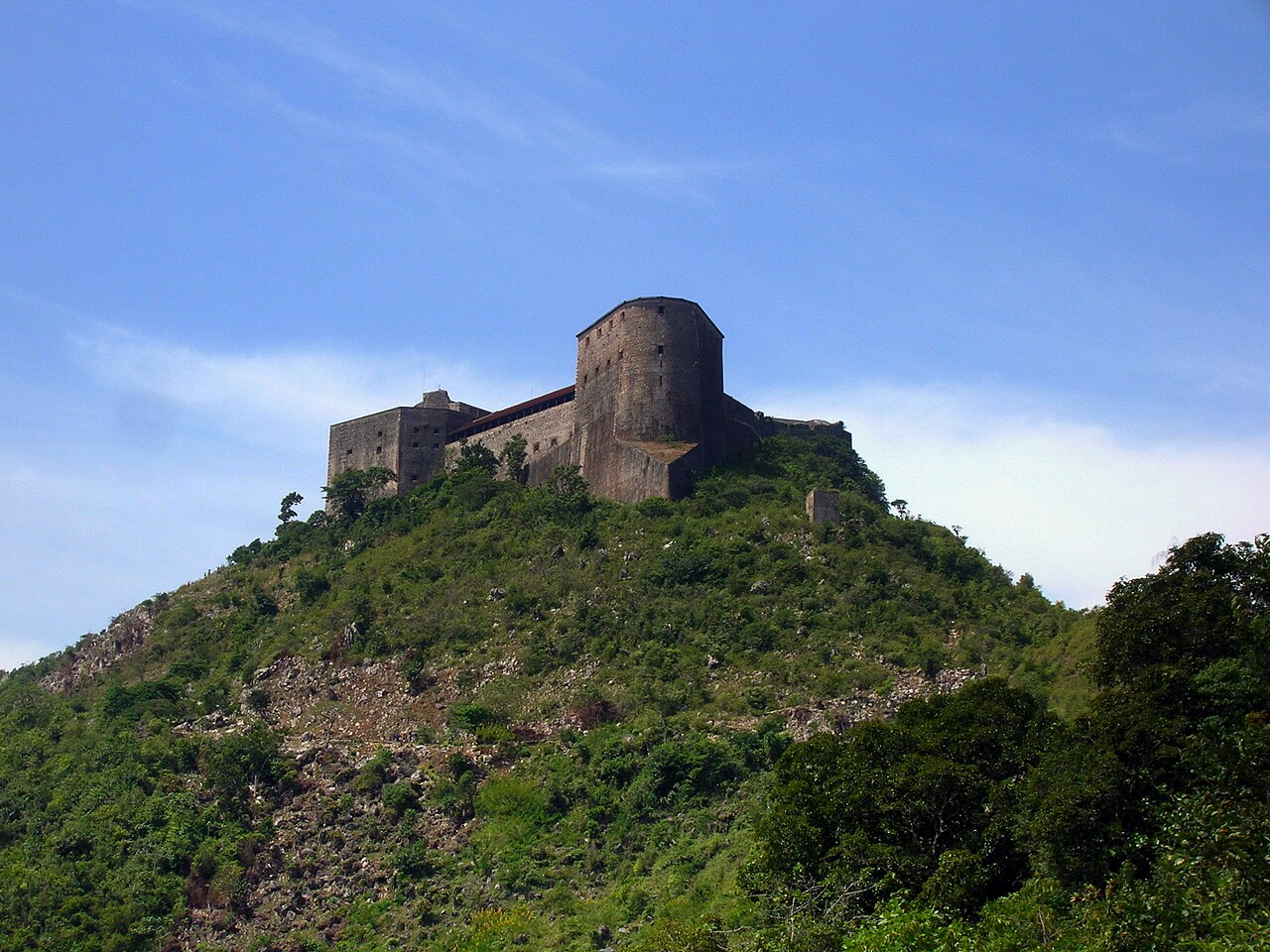
The answer is not one leader, one battle, or one decree. The revolution worked through four linked mechanisms. First, Saint-Domingue's wealth made the enslaved majority indispensable to the colony's daily operation. Second, revolt turned that labor force into a military and political actor. Third, the French Revolutionary wars made emancipation a survival policy rather than a moral concession. Fourth, Napoleon's attempt to restore control converted a struggle over autonomy and slavery into a war for independence. The John Carter Brown Library's bicentennial exhibition framed this as an Atlantic event, not only a Haitian national story, because diplomats, colonists, free people of color, merchants, and rival empires all had to react to it.[3] The Citadelle Laferriere, built after independence in the mountains above northern Haiti, belongs to the same chain: it shows that the new state understood freedom as something requiring defensive architecture, not only a signed declaration.[5][6]
The plantation made its own vulnerability
By the 1760s, Saint-Domingue had become the most profitable colony in the Americas, with slave-based sugar and coffee industries that tied French wealth, Atlantic shipping, and American merchants to plantation output.[1] That prosperity was also a structural weakness. The colony relied on an enslaved African majority whose labor could not be withdrawn without stopping the machine. The more productive Saint-Domingue became, the more it depended on people with every reason to destroy the system that made it rich.
This matters because the revolution did not begin in an empty ideological space. The French Revolution fractured the colony's white political class into royalist and revolutionary factions, while free people of color pressed claims to civil rights.[1] Those conflicts opened cracks above the plantation floor. Enslaved people in the northern plain then made those cracks unmanageable. On August 22, 1791, the mass rebellion began, and a local revolt became the first break in an Atlantic system that had treated Saint-Domingue's output as normal.[1][2]
A contemporary British account preserved by the Library of Congress described the early years as a calamity for the colony and watched British intervention through 1794 from an imperial angle.[2] Its bias is useful. The author did not need to admire the insurgents to record the scale of disruption. The revolt mattered because it turned planters, merchants, imperial officers, and neighboring slave societies into observers of a dangerous fact: the plantation could be made ungovernable from within.
Emancipation became a military technology
The second mechanism was the way war changed the meaning of abolition. At first, outside powers treated Saint-Domingue as an opportunity. Spain and Britain entered the conflict, and factions inside the colony looked for whichever alliance might defeat their enemies.[1][2] Toussaint Louverture's importance grew inside that unstable field, but the deeper point is not personal genius alone. The revolt forced every imperial actor to answer the same question: who could command armed labor in a colony where slavery had already lost practical legitimacy over large areas?
French civil commissioners in Saint-Domingue recognized that slavery could not simply be restored by paper authority. The Office of the Historian summarizes the hinge: revolutionary commissioners convinced Louverture that the new French government was committed to ending slavery, after which the war became a multi-sided civil and imperial conflict.[1] UNESCO's history of the National History Park places the sequence in the wider abolition timeline: the slave revolt resulted in abolition in 1793, and the National Convention generalized that decision across French colonies on February 4, 1794.[5]
That was not charity from Paris descending on a passive colony. It was policy under pressure. Emancipation became a military technology because it recruited loyalty, undercut rival empires, and gave formerly enslaved soldiers a reason to fight under the French revolutionary flag rather than for Spain, Britain, or local plantation restoration. Once that happened, slavery was no longer merely a labor regime to be debated by legislators. It was a battlefield condition. Any side that promised restoration had to fight people whose freedom now depended on keeping arms, land access, and political leverage.
Napoleon made autonomy too dangerous to trust
The third mechanism was imperial overreach. By 1801, Napoleon's Atlantic plan depended on Saint-Domingue. The Library of Congress account of the Louisiana Purchase puts the colony at the center of his North American design: Saint-Domingue was France's most valued Caribbean resource and the gateway to the Gulf approaches to Louisiana.[4] France could not easily occupy Louisiana and reconquer Saint-Domingue at the same time, so Napoleon moved first against the Black-led colony. In the fall and winter of 1801, he sent an army of about 20,000 under General Charles Victor Emmanuel Leclerc.[4]
This expedition changed the political problem. Before it, Louverture's regime had tried to preserve a French connection while making slavery's return impossible. After it, the French state looked less like an uneasy metropolitan partner and more like a restoration threat. Louverture was captured and deported; he died in France in 1803. But removing him did not solve France's problem. The expedition had clarified the stakes for commanders such as Jean-Jacques Dessalines and Henri Christophe: autonomy under France could be reversed by ships, troops, and orders from Europe.
That is why independence in 1804 was not only a nationalist conclusion. It was a security solution. If France retained sovereignty, emancipation could remain contingent. If the colony became Haiti, slavery's abolition could be attached to state survival. The revolution therefore moved from destroying plantation discipline to building a state able to keep that discipline from returning.
Recognition lagged behind military fact
The fourth mechanism was external isolation. Haiti could win the war before other states accepted what the victory meant. The Office of the Historian notes that France recognized Haitian independence only in 1825, and the United States waited until 1862.[1] That delay was not diplomatic trivia. It reflected the fear that a state born from slave revolt might unsettle slave societies elsewhere. U.S. policy shifted during the 1790s and early 1800s, but its hostility hardened around the fear that Haiti's example might travel.[1]
This is where the Citadelle's later symbolism becomes historically precise. UNESCO describes the National History Park's monuments as dating from the beginning of the nineteenth century, when Haiti had proclaimed independence, and says the Citadel's mountaintop position answered a strategy of interior protection rather than inherited coastal defense.[5] It was not a decorative ruin waiting to become heritage. It translated the revolution's final lesson into stone: recognition might be withheld, France might return, and the new republic needed geography, artillery, water systems, and labor organized around defense.
The causal chain therefore runs beyond January 1, 1804. The revolution succeeded because it made slavery militarily unenforceable, made emancipation politically nonnegotiable, made French sovereignty unsafe, and made defensive statecraft a condition of freedom. Each stage narrowed the choices available to enemies of the revolution. Planters could not simply resume production. Rival empires could not ignore armed Black politics. Napoleon could not rebuild a Caribbean empire without first solving Saint-Domingue, and his attempt helped make Haiti inevitable. Slaveholding neighbors could refuse recognition, but their refusal did not undo the military fact.
The Haitian Revolution's power lies in that conversion. It began inside a plantation system built to extract sugar and coffee from coerced labor. It ended by forcing the Atlantic world to confront a different kind of production: an enslaved majority had produced an army, a diplomatic problem, an abolition settlement, an independent republic, and finally a fortress state determined not to become a plantation again.
Sources
- U.S. Department of State, Office of the Historian, "The United States and the Haitian Revolution, 1791-1804" - overview of Saint-Domingue's economy, the 1791 revolt, U.S. policy shifts, and delayed recognition.
- Library of Congress, "An historical survey of the French colony in the island of St. Domingo" - catalogue record and summary for Bryan Edwards's 1797 contemporary account of the revolution's early years and British intervention.
- Brown University News Service, "John Carter Brown Library presents exhibition, conference on Haiti" - archive note on the Haitian Revolution, 1789-1804 exhibition and its Atlantic-world framing.
- Library of Congress, "The Louisiana Purchase" - essay explaining Napoleon's Saint-Domingue strategy, the Leclerc expedition, and the link to Louisiana.
- UNESCO World Heritage Centre, "National History Park - Citadel, Sans Souci, Ramiers" - official heritage description of the Citadel, independence context, defensive strategy, and universal significance.
- Wikimedia Commons, "File:Citadelle Laferriere.jpg" - source page for the 2006 photograph of Citadelle Laferriere used as the article image.