The Green Book is often remembered today as a moral symbol: proof that Black motorists in segregated America needed their own travel guide because ordinary road freedom was never really ordinary.[1][2] That is true, but it leaves the sharper historical question untouched. How did a thin annual booklet materially change travel outcomes in a country where a wrong stop for gas, food, lodging, or repairs could become humiliation, expulsion, or danger before nightfall?[1][3][4]
The strongest answer is practical. The Green Book worked because it turned scattered local knowledge into portable route infrastructure.[1][2][3] It gathered names, addresses, and categories of service that otherwise lived in word of mouth, church networks, postal routes, neighborhood business circles, and hard experience. Once printed, updated, sold cheaply, and carried from town to town, that knowledge stopped being purely local memory and became something closer to a map of conditional safety.[1][3]
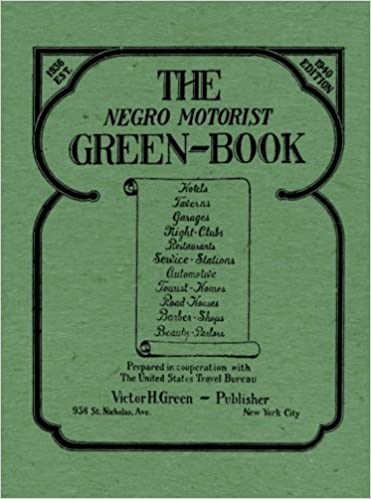
The lead image uses the National Park Service reproduction of the 1940 facsimile edition cover.[1] It belongs here because the article is about printed form as much as about segregation. The guide's historical power did not lie in abstract inspiration. It lay in the fact that a driver could fold it into a pocket, place it in a glove compartment, and use it to decide where to stop before a town decided the matter for him.
Timeline anchors
- 1936: Harlem postal worker Victor Green launched the first Green Book, initially centered on New York-area travel.[1][2][4]
- 1942-1946: publication paused during World War II because paper rationing interrupted the annual cycle.[1][3]
- 1949: Green began a partnership with Maher Travel Bureau that later supported the guide's international reservation function.[1]
- 1951: a railroad-focused special edition appeared.[1]
- 1953: an airline edition followed, and the guide increasingly folded foreign travel into its service world.[1]
- 1956: the directory narrowed its listings, dropping many everyday business categories and concentrating more heavily on lodging and restaurants.[1]
- 1962: circulation had grown to more than 2 million nationwide.[1]
- 1964-1965 and 1966-1967: the final two editions appeared after Victor Green's death, in the wake of the Civil Rights Act but before segregation's social afterlife had simply disappeared.[1]
First mechanism: it compressed local intelligence into a plannable route
The Green Book's first achievement was compression. The Smithsonian traveling-exhibition site describes it as a guide that helped African Americans travel "safely, and with dignity" during Jim Crow, while also serving the rising Black middle class and Black-owned businesses.[2] The National Park Service's historic-context essay is even clearer about function: the book was the starting point from which a safe journey could be planned.[1]
That wording matters. The guide did not eliminate racist conditions on the road. It reduced uncertainty by moving useful information from rumor into itinerary. A traveler did not have to enter every town blind and renegotiate every stop from scratch. He could identify, in advance, which boarding house, tourist home, restaurant, garage, barber shop, gas station, or resort had already been tested by other Black travelers and business networks.[1][3]
This is why the guide's categories matter historically. By 1962, the NPS notes, listings covered not only lodging and restaurants but also hair salons, barbers, gas stations, haberdashers, tailors, liquor stores, vacation resorts, and much else.[1] Those categories reveal that the Green Book was not merely about sleeping somewhere safely at night. It addressed the entire chain of ordinary movement. Segregation could break a journey at any point, not only at the hotel desk. A flat tire, a haircut before a business meeting, a meal on a long drive, or the need to refill a tank before dark could all become points of exposure. The guide mattered because it treated travel as a sequence of vulnerable handoffs rather than as a single destination problem.[1][3]
Second mechanism: it converted a book into a network
The guide also worked because it was never only a static directory. The Indiana National Park Service multiple-property study traces how it expanded through a "grassroots network of postal workers, business owner advertisements, and placement in gas service stations."[3] That sentence explains a great deal. Victor Green was a postal worker; he already lived inside a system built on addresses, routes, local knowledge, and circulation.[1][2][4] The Green Book borrowed that logic. It depended on repeated collection, correction, and redistribution.
Distribution was as important as editorial judgment. The same study notes that Esso advertisements encouraged Black travelers to use Esso service stations, and that the Green Book was sold in Esso stations across the country, broadening both its reach and the list of businesses it could support.[3] In other words, the guide expanded because it attached itself to real travel infrastructure. It did not wait passively on bookstore shelves. It moved through service stations, advertisements, community businesses, and recurring annual purchase habits.
Price mattered too. The Indiana study notes that it stayed at 25 cents through 1941, rose to $1 in the 1950s, and remained under $2 in its final years.[3] That is not a trivial detail. A route guide only becomes infrastructure when enough people can actually carry it. Cheapness helped transform the book from a specialty object into a routine planning tool.
Third mechanism: it did not only help motorists avoid danger; it redirected commerce
The Green Book's logic was defensive, but it was never only defensive. The Smithsonian exhibit describes it as an indispensable resource not only for travelers but also for successful Black-owned businesses.[2] The New American History teaching resource calls it an "Overground Railroad," meaning a visible network of safe commercial space rather than a hidden network of antislavery escape.[4] That phrase is interpretive, but it captures the economics well. The guide did not just route travelers around danger. It routed spending toward places where Black customers could be received with dignity.[2][4]
That commercial redirection helps explain why the guide lasted. It created a feedback loop. Travelers needed reliable places; listed businesses needed customers; the book linked the two and made both more legible.[1][2][3] The result was a pocket directory that worked like a market signal. To appear in the Green Book was to be marked as usable within a racially hostile geography. To buy from it was to strengthen a service world that segregation had made necessary.
This is also why the guide's success should not be described only in terms of fear. Fear was real, and the threat of sundown towns, roadside harassment, or forced humiliation shaped every mile.[1][4] But the Green Book also supported choice, preference, and even aspiration. The NPS essay notes that later editions included city articles, school lists, and eventually international listings and reservation services.[1] Those additions suggest that Black travel planning was not reducible to emergency avoidance. It was also about entering leisure, education, migration, and middle-class mobility on terms that segregation tried to deny.
Fourth mechanism: it adapted as Black mobility changed
The Green Book's long life came from adaptation. World War II paper rationing forced a hiatus from 1942 to 1946, but the guide returned with a changed cover style and a sharper sales logic.[1][3] The famous line "Carry your Green Book with you...you may need it" appeared in the 1946 edition.[1] That tagline worked because it named the guide's governing principle with unusual bluntness: danger was intermittent, ordinary, and hard to predict, so preparedness had to travel with the reader.
The same adaptive quality appears in the special editions. The 1951 railroad issue and 1953 airline issue recognized that Black mobility did not stop at the automobile.[1] The partnership with Maher Travel Bureau, which supported the guide's "Reservation Bureau," extended the publication's function beyond domestic driving and toward international movement.[1] By the 1963-1964 edition, the NPS notes, listings covered numerous foreign countries, including 30 African countries.[1] That shift shows the guide scaling from roadside directory to broader mobility broker.
The 1956 redesign is equally revealing. Beginning with that edition, the Green Book stopped listing many everyday service businesses and concentrated more heavily on lodging and restaurants.[1] One reading is that the guide had become more strictly traveler-centered. Another is that the publishers recognized where discrimination still most often endangered a long-distance trip. Either way, the change shows editorial recalibration rather than ritual repetition. The book kept adjusting its map of where mobility most often broke down.
Why the Green Book mattered for so long
The Green Book endured because civil-rights change arrived unevenly. Court rulings and statutes altered the legal framework, but they did not instantly standardize roadside behavior, local custom, or business practice.[1] That is why the final editions still appeared after the 1964 Civil Rights Act.[1] The guide remained useful in the gap between formal desegregation and trustworthy everyday enforcement.
So the best way to understand the Green Book is not as a simple list of safe hotels, and not only as an emblem of injustice already overcome. It was a moving piece of social infrastructure. Victor Green's achievement was to take fragile, local, perishable knowledge and give it national portability.[1][2][3][4] The book made Black mobility less improvisational by organizing the road into usable nodes: where to sleep, eat, refuel, repair, and be treated as a customer rather than as a problem. In segregated America, that was not a convenience. It was a mechanism.
Sources
- National Park Service, "The Green Book: An Historic Context" - historical overview, circulation, special editions, and the 1956 editorial shift.
- Smithsonian Institution Traveling Exhibition Service, "About - Negro Motorist Green Book" - on the guide's 1936 origin, its safety-and-dignity function, and its role in Black business life.
- Indiana Department of Natural Resources / National Park Service, "Green Book Sites in Indiana, 1936-1967" (PDF) - on Esso distribution, postal-worker networks, pricing, and the wartime publication hiatus.
- New American History, "The Negro Motorist Green Book" - on Victor Green's Harlem postal background and the guide's later interpretation as an "Overground Railroad."