The Ems Dispatch is often remembered in one dramatic sentence: Otto von Bismarck edited a telegram, France felt insulted, and the Franco-Prussian War followed.[1][3] That memory points in the right direction, but it is still too theatrical. The sharper historical question is not whether Bismarck tampered with the text. He did.[1][2] The sharper question is what kind of change the edit actually made. Read as a document, the dispatch did not create a conflict from zero. Its force came from something narrower and more dangerous. It stripped away sequence, explanation, and the last traces of diplomatic cushioning, making a still-developing exchange read like a completed public affront.[1][2][3]
That distinction matters because the war scare of July 1870 was already real before Bismarck touched the text.[1][3] The immediate dispute centered on the candidacy of Prince Leopold of Hohenzollern-Sigmaringen for the Spanish throne, a prospect the French government treated as a strategic encirclement risk.[3] By July 12, Leopold had withdrawn. The crisis might still have cooled. What changed at Bad Ems was that the French ambassador, Count Benedetti, pressed King Wilhelm I of Prussia for a further guarantee that the candidacy would never be revived, and Wilhelm refused to go that far.[1][3] Bismarck then took the king's account of that meeting and released a shorter public version on July 13.[1][2]
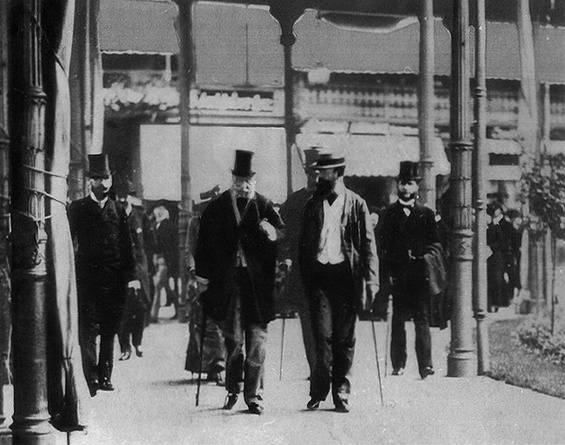
The cover image is therefore not decorative.[6] Bad Ems matters because this was not a cabinet-room abstraction. It was a courtly spa setting where access, refusal, messenger, and promenade etiquette all carried political meaning. The text remains the event's operating surface, but the place explains why a brief encounter could be transformed into a public question of honor.
Timeline anchors
- July 12, 1870: Prince Leopold withdraws his candidacy for the Spanish throne, reducing the immediate crisis but not ending French demands.[3]
- July 13, 1870: King Wilhelm I meets Benedetti at Ems and sends a report of the conversation; Bismarck edits the king's account for publication.[1][2]
- July 14, 1870: the revised dispatch circulates widely and is read in both countries as a public insult to national honor.[2][3]
- July 19, 1870: France declares war on Prussia; Bismarck's government presents the conflict as forced upon it by French aggression.[5]
Those dates matter because they restore tempo. The dispatch did not sit for weeks as a dead file. It moved through a compressed chain in which diplomatic conversation, textual revision, newspaper circulation, and war mobilization all happened inside a few days.[1][2][3][5]
1. The king's original report still sounds like a negotiation with room left in it
The most important historical fact about the dispatch is visible only when the original and edited versions are placed side by side.[1] In the original report, Wilhelm's account still contains sequence and procedure. Benedetti appears as persistent and importunate, but the situation has not yet been frozen into total rupture. The king reports that he had already told the ambassador he had nothing further to communicate, that he expected confirmation from the prince, and that he later decided, through an adjutant, not to receive Benedetti again because there was no new information to add.[1]
That is a very different political texture from the legend. The original report does not read like a shouted expulsion from a palace gate. It reads like an irritated sovereign trying to end an interview without enlarging his commitments.[1][3] There is already tension, and the French demand is already unacceptable to Wilhelm because it asks for a standing promise about the future. But the text still preserves the intermediate steps between request and refusal.
Those steps are exactly what diplomacy usually lives on. A monarchy can refuse, delay, report upward, or communicate through aides without every one of those acts becoming a national insult. The original version retains that elasticity.[1] It shows a conversation moving from one stage to another, with the king still treating the exchange as something that can be handled through channels rather than staged as a final confrontation.
2. Bismarck's edit works by compression, not by fabrication
The edited version is famous because it sounds harder, but the reason it sounds harder is specific.[1][2] Bismarck did not need to invent a new incident. He needed only to compress the old one. The published text cuts away the king's expectation of further news, removes much of the temporal sequencing, and reduces the communication chain to a blunt result: Benedetti's demand was refused, and the ambassador was informed that His Majesty had nothing further to say to him.[1]
That is the crucial transformation. A negotiable process becomes a finished scene. The text no longer feels like a report from inside an unfolding crisis. It feels like a public rebuff. In France, that wording could be read as the humiliation of a national representative. In Prussia and the wider German public, it could be read as the king having stood firm against an overreaching French demand.[2][3] The edit therefore sharpened the same text for two audiences at once.
Bismarck's own later recollection, preserved by the German History in Documents and Images archive, is revealing even if it must be handled cautiously as retrospective self-justification.[2] He remembered wanting the dispatch to sound less like a diplomatic note and more like an answer to a challenge. That memory fits the textual evidence. The publication does not alter the basic facts of the meeting so much as reframe their emotional grammar. Courtesy becomes coldness; sequence becomes impact.
This is why the dispatch should be read as a machine for redistributing honor.[1][2][3] The question was never only whether Benedetti asked too much, or whether Wilhelm reacted stiffly. The question was how the public would encounter the exchange once it was no longer buffered by protocol. Bismarck's edit pulled the exchange out of the courtly channel and pushed it into the newspaper channel, where shortness itself increased force.
3. The release mattered because war politics in July 1870 were already looking for a final public shape
A close reading should not turn the dispatch into magic.[3][5] The broader conflict between France and Prussia was already structured by rivalry over German unification, balance of power, and the Hohenzollern candidacy.[3] Britannica is explicit that the edited telegram became the immediate occasion for war, not the whole cause of it.[3] The dispatch matters because it gave the crisis a final, legible public form at the moment when both sides were already close to a trial of strength.
The diplomatic record published in Foreign Relations of the United States helps show how quickly Prussia moved from document release to political framing.[5] In the North German declaration communicated after war began, Bismarck's government argues that France had demanded an intolerable humiliation from the Prussian crown and had then chosen war when that demand was not met.[5] That later justification does not merely repeat the dispatch; it builds on the same logic. France must appear as the side that converted a dynastic dispute into a question of injured prestige and force.
Put differently, the dispatch was useful because it clarified who could plausibly claim to have been affronted.[1][3][5] In ordinary diplomatic language, ambiguity can buy time. In July 1870, ambiguity was what Bismarck no longer wanted. The edited text narrowed the interpretive field until the crisis read as a contest of public dignity. Once that happened, retreat became harder for everyone.
4. What the document can and cannot explain
The strongest historical reading therefore needs two boundaries. First, the dispatch did not single-handedly cause the Franco-Prussian War.[3][5] Structural antagonism, the Spanish succession issue, and the politics of German unification all mattered before the telegram was published.[3] Second, the dispatch was not trivial propaganda either. The difference between the original and edited versions is large enough to change how the same meeting could be understood by mass readers.[1][2]
That is why the episode stays so useful. It shows that political escalation does not always require falsehood. Sometimes it requires aggressive shortening. The original Ems report left room for the crisis to remain procedural. The edited dispatch made procedure disappear into verdict.[1] What had been one stage in an unresolved exchange now looked like the public settling of a matter of honor.
The document's afterlife rests on that lesson. Bismarck's achievement was not that he wrote a better sentence than everyone else. It was that he recognized how a small textual reduction could change the social meaning of an event already dense with rivalry and fear.[1][2][3] The Ems Dispatch worked because it cut away everything that made the conversation still look manageable.
Sources
- German History in Documents and Images, "Original and Edited Versions of the Ems Dispatch (July 13, 1870)" - side-by-side text of King Wilhelm I's original account and Bismarck's edited public version.
- German History in Documents and Images, "Bismarck Remembers the Evening the Ems Dispatch Was Edited" - Bismarck's later recollection of the publication decision, useful as retrospective evidence about intended tone.
- Encyclopaedia Britannica, "Ems telegram" - background on the Spanish succession crisis, the Bad Ems encounter, and the dispatch's role as the immediate occasion for war.
- Deutsches Historisches Museum, LeMO, "Emser Depesche" - concise historical overview of the dispatch, publication, and public reaction in July 1870.
- Office of the Historian, U.S. Department of State, Foreign Relations of the United States, 1870, Document 175 - diplomatic publication of the North German account explaining the road from the dispatch to the French declaration of war.
- Wikimedia Commons, "File:Wilhelm I at Bad Ems.jpg" - source page for the historical Bad Ems image used as this article's cover.