The petition listed possessions: horses, cattle, carriages, furniture. These were people who could enumerate what they owned. What they could not secure was the ground on which to keep it. In a petition written on 20 or 21 October 1865, three representatives of Edisto Island's freedpeople described the prospect of having property and still becoming homeless.[1]
Henry Bram, Ishmael Moultrie and Yates Sampson were addressing General Oliver Otis Howard, commissioner of the Freedmen's Bureau. Former landowners were seeking the return of estates on the South Carolina island. The committee's question was practical: if the same men controlled the land, housing and terms of employment, how much freedom would an emancipated worker be able to exercise?[1]
Read beside the government's orders and Howard's reply, the petitions reveal a disagreement about what made a labor agreement voluntary. Howard trusted that freedom, supervision and bargaining could improve the relationship. The petitioners wanted somewhere to stand outside it.
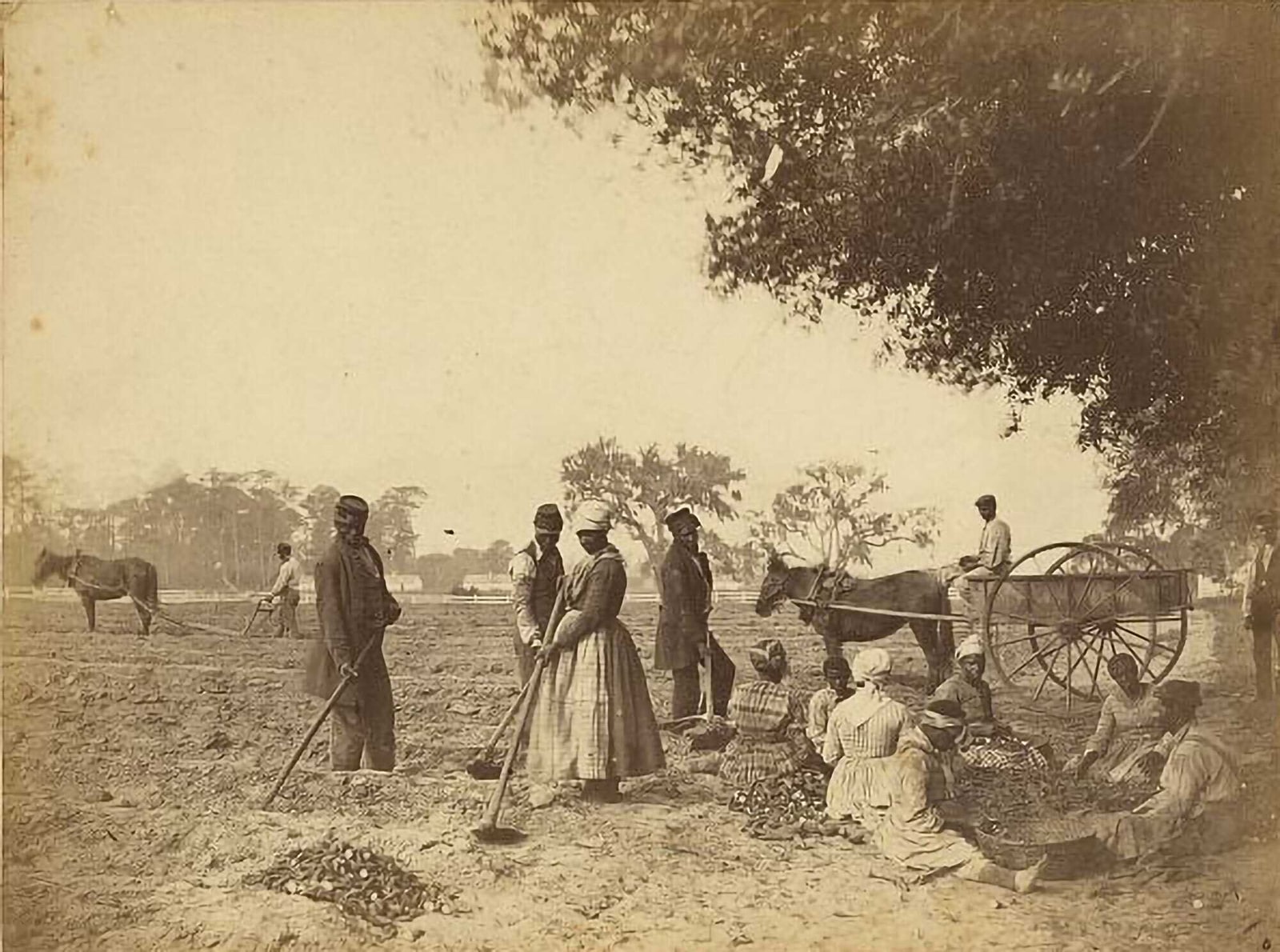
A promise with an unsettled title
The expectation of land had an official foundation. General William T. Sherman's Special Field Orders No. 15, issued on 16 January 1865, reserved a defined coastal area for settlement by formerly enslaved people. Families could receive up to forty acres of tillable ground. Military protection would continue until they could protect themselves or Congress regulated their title.[2]
The wording matters. The order provided for a written possessory title, subject to presidential approval. It established a system of settlement and protection while leaving ultimate ownership unsettled. It was neither a nationwide distribution program nor an unconditional grant of permanent ownership to every freed family.[2]
Yet uncertainty in the instrument did not make the promise imaginary. On 5 September, General Rufus Saxton, who administered the settlements, wrote to Howard that he had settled about 40,000 freedpeople under the order. He regarded the government's faith as pledged and opposed returning any of the allotted land to former owners. This was an official defending the commitments he had implemented, not simply a rumor circulating among hopeful settlers.[3]
Saxton's letter also made loyalty a claim upon the government. Why should people who had supported the Union lose their position to people who had tried to destroy it? That argument would reappear in the Edisto petitions. The settlers and their advocate were asking the victorious government to remember who had been its allies.[1][3]
What counted as a satisfactory arrangement?
An order issued under President Andrew Johnson's authority on 9 October acknowledged that Sherman's policy had created an expectation of continued possession. It also recorded former owners' requests for restoration and their promises to employ and care for freedpeople. Howard was directed to seek an arrangement satisfactory to both sides.[4]
The order's language placed two different hopes alongside each other: continued possession for the settlers, recovered estates for the owners. Calling for agreement did not resolve that conflict. It sent Howard to negotiate within it.
The committee's first petition explains why the proposed accommodation felt unsafe. Losing their homes would leave them, in their account, with three choices: the public road, the sea, or work for the returning owners on those owners' terms. Their inventory of movable possessions sharpens the problem. A horse or a carriage could be owned without providing an independent place to live and cultivate food.[1]
Their complaint about forgiveness is equally specific. The letter describes an enslaver who had inflicted violence and would permit continued residence only in exchange for planting at his price. Asking the injured person to forgive did not answer the immediate question of dependence. Past violence mattered because the person responsible could again control access to shelter and work.[1]
The petition ends its diagnosis with three compressed conditions: “Landless, Homeless. Voteless.” Addressed to Howard in October 1865, the sequence links economic insecurity, displacement and political exclusion. The committee feared being unable to change the rules under which it would have to bargain.[1]
Howard's confidence—and its limit
Howard's reply of 22 October accepted the desire for homesteads. He promised protection for land already purchased or subsequently bought, invoked the supervisory board, and argued that planters who combined against workers would find themselves without labor. He recommended leases, wages or purchases where possible, while pointing to Congress as the route to further assistance.[1]
There is a substantial position here: slavery's abolition had changed the relationship, and federal supervision might protect new agreements. Reading the reply solely as indifference would miss those commitments. Howard offered advocacy and expected employers' need for workers to restrain abuse.
But the committee had identified the obstacle to that expectation. Withholding labor was difficult if refusing a planter also meant losing one's home. Howard's answer assumed room to negotiate; the petitioners described how control of land could close that room. Their disagreement concerned the conditions under which a free person could actually refuse an offer.[1]
The offer to pay
On 28 October, the committee appealed directly to Johnson. This second petition placed accumulated labor alongside Union loyalty: “we have made These lands what they are.” The sentence claims a relationship to the soil grounded in work and residence. It asks the president to weigh that relationship against the returning owners' claims.[1]
Then comes an offer that complicates any reading of the petition as a request for a gift. The committee said settlers had taken up 16,000 acres on the island under government certificates and were ready to pay. Its demand was for a provision enabling freedpeople to purchase and hold homesteads, even small ones, in South Carolina.[1]
Willingness to buy did not withdraw the accusation that a promise was being broken. It specified a route by which families might retain independence. The Smithsonian's account of Reconstruction landownership explains the stakes: an independent farm could supply food and produce for sale, while exclusion from ownership left many freedpeople dependent on landowners for their livelihood.[5]
The surviving presidential petition bears an endorsement referring it back to Howard. That administrative trace establishes referral, not a grant of the requested land. The documents preserve an appeal and an official response; they do not by themselves establish the later property history of every signer or family.[1]
What they do establish is the committee's standard for freedom. Protection for a purchase mattered only if a purchase could be made. An employment contract offered choice only if a worker had some way to decline it. The desired homestead would give those formal possibilities a place in which to become real.
Sources
- Henry Bram, Ishmael Moultrie and Yates Sampson, petitions to O. O. Howard, 20 or 21 October 1865, and Andrew Johnson, 28 October 1865; Howard's reply, 22 October. Freedmen and Southern Society Project, University of Maryland—transcriptions from National Archives Record Group 105, with archival references and editorial notes.
- William T. Sherman, Special Field Orders No. 15, 16 January 1865. Freedmen and Southern Society Project, University of Maryland—complete order, including settlement boundaries, forty-acre limit and possessory-title conditions.
- Rufus Saxton to O. O. Howard, 5 September 1865. Freedmen and Southern Society Project, University of Maryland—defense of the coastal settlements and the government's commitments to freedpeople.
- Andrew Johnson, “Executive Order—General Orders: 145,” 9 October 1865. The American Presidency Project, University of California, Santa Barbara—instructions for Howard's negotiations with settlers and former landowners.
- National Museum of African American History and Culture, “Visions of Freedom: Land and Labor,” Searchable Museum—landownership during Reconstruction, the Edisto petition and the 1862 photograph of workers on Hopkinson's plantation.