The first two letters of recommendation in Sarah Bradford’s Scenes in the Life of Harriet Tubman begin by addressing Bradford. The third begins “Dear Harriet.” Frederick Douglass wrote it in Rochester on August 29, 1868. A reader opening the book in 1869 would turn from two men discussing Tubman with her biographer to a man discussing his own reputation with Tubman. What was his reputation doing in a book about her? [1]
The question had a price attached. Tubman’s family still owed money on their home. An introductory note dated December 1, 1868, explained how buying the book could help. Subscribers had covered the cost of printing, and William G. Wise of Auburn would receive the proceeds as trustee for Tubman. The expected customers were people who already knew something of her. For a buyer who knew her only by hearsay, Bradford put three familiar signatures within reach before the story began. [1]
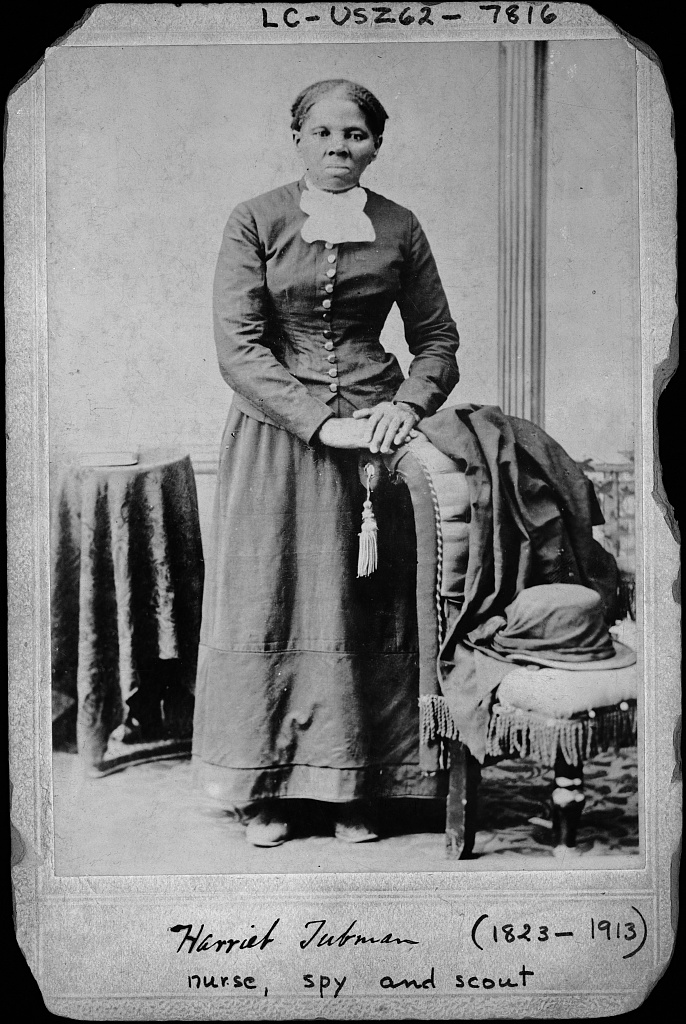
What a friend could sign his name to
The first endorser, Gerrit Smith, drew a careful line. He had heard Tubman speak in his family’s home and could judge her discernment from those visits. His knowledge of her rescues came from listening to her. Wendell Phillips, whose letter came next, recalled John Brown bringing Tubman into his house and introducing her as a general. Phillips could take his reader into the room where Brown said it. Brown in turn had vouched for the woman standing beside him. Even on these adjacent pages, confidence in Tubman came by different routes. [1]
Douglass took up the request for a commendation by telling Tubman how much he would value one from her. The courtesy lasts a sentence. Then he starts counting audiences. Crowds had gathered to hear him and had encouraged him as he worked. People escaping slavery had excellent reasons to travel with as little company as possible. For Tubman to have acquired an audience the size of his on any one of those journeys would have been a catastrophe. His fame gave him standing with a book buyer. Here he used it to explain how little fame could tell that buyer about the two people’s relative service. [1]
The people who could say “God bless you”
Listen for whose voices Douglass lets through. His own audience makes the sound of applause. From Tubman’s companions he gives the reader three distinct words, “God bless you.” He describes their sore feet. These people had walked far enough with Tubman to know what it meant to arrive with her. Douglass supplies neither a speaker’s name nor an occasion for the blessing. It reads as his rendering of the thanks she had earned over many journeys. Turning it into the transcript of a particular escape would cost those words their accuracy. [1]
One can set that passage beside a letter written for quite another reason. On December 29, 1854, in Wilmington, Delaware, Thomas Garrett reported to fellow abolitionist J. Miller McKim that Tubman had set out with six men and one woman. She and one of the men had worn through their shoes. Garrett had given them two dollars and undertaken to pay for a carriage. He still had to find out what the carriage had cost. In the middle of arranging transport, somebody had occasion to write down whose feet hurt. The detail brings Douglass’s language close to an experience Tubman shared with the people she guided. Which journey he had in mind, if any, remains open. [3]
There was a cost to keeping even a private account. William Still, who helped people passing through Philadelphia, sometimes hid his journal in a cemetery because the record could expose him to prosecution under the Fugitive Slave Act. In 1872 he published accounts of escapes in The Underground Railroad. The interval helps explain the shape of Tubman’s own book. By 1869 a printer could put testimony about clandestine journeys on sale. He could hardly supply the crowd of independent spectators a skeptical customer might wish had been present years before. [1][4]
At the foot of his letter Douglass turns toward the people Tubman might yet meet. He gives them his judgment of her truthfulness. That ending makes a modest but consequential demand on the purchaser who has just paid money on the strength of famous names. A reader might reasonably pick up the book because Frederick Douglass had signed it. A few pages in, Douglass asks that same reader to take Harriet Tubman at her word. [1]
Sources
- Sarah H. Bradford, Scenes in the Life of Harriet Tubman (Auburn, 1869), introductory note and preface, especially the three letters on pp. 5–8. Central Library of Rochester and Monroe County, digitized first edition.
- Harvey B. Lindsley, standing portrait of Harriet Tubman, circa 1871–1876. Library of Congress, photographic reproduction LC-USZ62-7816.
- National Park Service, The African American Experience Before Emancipation, reproducing Thomas Garrett’s December 29, 1854 letter to J. Miller McKim.
- National Park Service, “William Still Marker at 244 S. 12th Street, Philadelphia,” on Still’s private journal and its later use in print.