The Combahee River Raid is often compressed into one striking sentence: Harriet Tubman helped lead a Civil War mission that freed more than 700 enslaved people. The sentence is true, but too small. It can make the raid sound like a heroic interruption, a sudden river rescue driven by courage alone. The better reconstruction is more demanding and more interesting. Combahee worked because military command, local Black knowledge, river navigation, plantation intelligence, and the choices of enslaved families converged in one narrow overnight window.
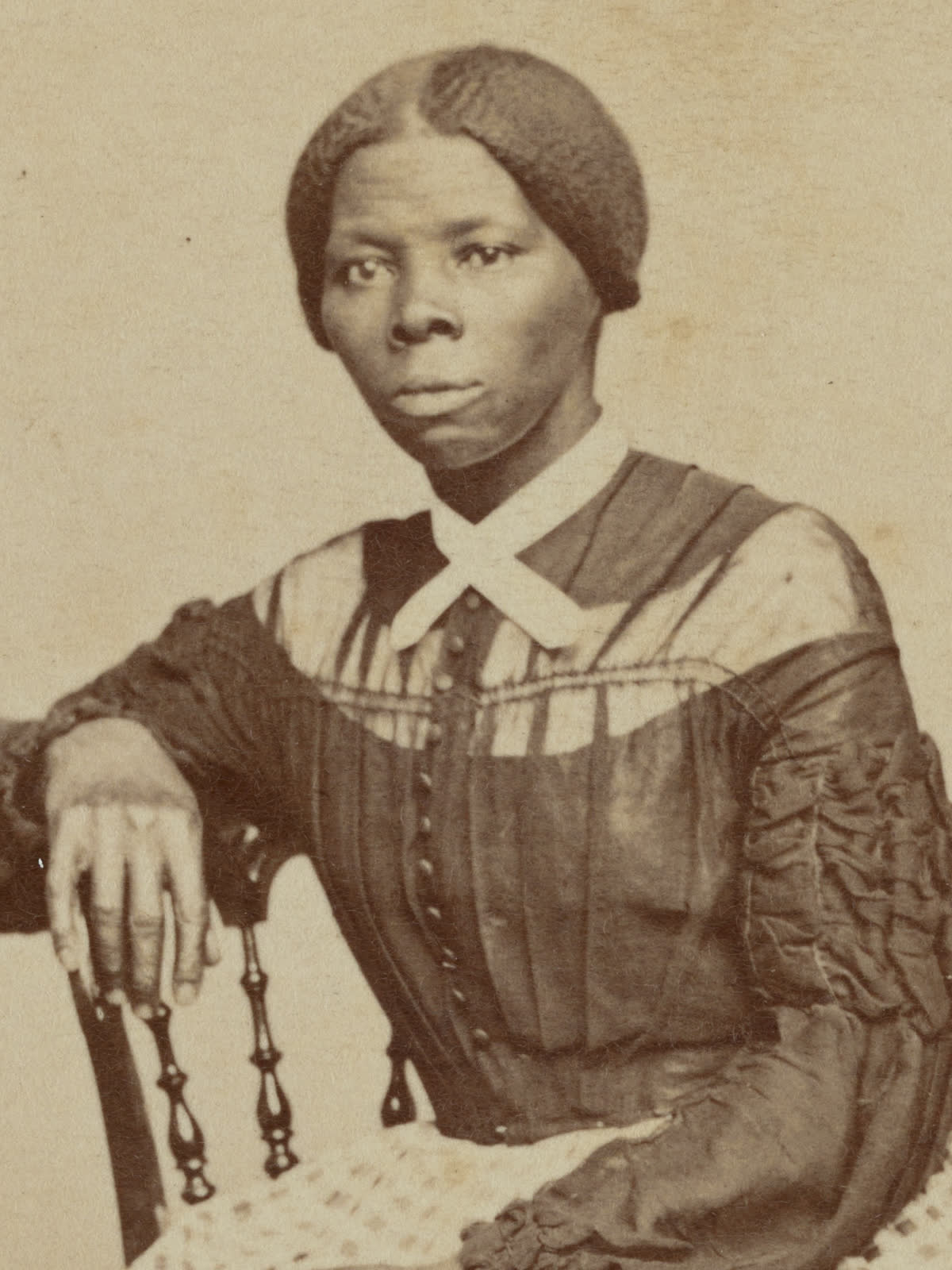
The raid took place on June 1-2, 1863, along the Combahee River in the South Carolina Lowcountry, after Union forces had established a coastal foothold around Port Royal and Beaufort. Colonel James Montgomery commanded the expedition, but Tubman's role was not ornamental. The National Museum of African American History and Culture identifies her as the first woman to lead a major U.S. military operation, working under Montgomery with African American Union soldiers in a raid that rescued more than 700 enslaved people.[2] The National Park Service gives the operational frame: the U.S. Army wanted to disable Confederate river defenses, cut supply access, destroy plantations being used in the Confederate war economy, and liberate enslaved laborers along the river.[1]
The sharp question is therefore not simply "Was Tubman brave?" The evidence already answers yes. The better question is: what made an armed raid become a freedom operation rather than just another destructive expedition?
The clock before the boats
- November 1861: Union forces captured Port Royal Sound, giving the U.S. Army and Navy a base in the Sea Islands and creating a zone where thousands of formerly enslaved people crossed toward Union lines.[3]
- 1862: Tubman worked in the Beaufort-Port Royal world as nurse, relief worker, scout, and intelligence organizer, building trust in the same terrain that would later matter operationally.[1][3]
- May 1863: Francis Izzard, a freedom seeker from near the Combahee, reached Beaufort and supplied information about river mines and Confederate positions.[1]
- June 1, 1863: Tubman, Montgomery, Black troops, artillerymen, and three gunboats left Beaufort for the river approach.[1]
- Early June 2, 1863: two boats entered the Combahee, struck plantation sites, drew Confederate response, and carried hundreds of people away from the rice fields toward Beaufort.[1][3][4]
Those dates matter because the raid was not improvised at the riverbank. It belonged to a larger wartime geography. The Sea Islands had become an intelligence frontier: enslaved people, freed people, pilots, soldiers, missionaries, commanders, and plantation refugees all moved information through Union-held space. The Combahee plan grew from that movement.
Intelligence came from below
The most important precondition was not the gunboat. It was local knowledge. NPS emphasizes that Gullah mariners, freedom seekers, pilots, and enslaved Combee people knew the creeks, rice fields, bridges, guard points, and Confederate obstructions along the river.[1] Confederate forces had planted torpedoes, meaning river mines, in a 40-mile river system where a northern officer with a map could still be dangerously blind.[1] A boat could not liberate anyone if it struck a mine before reaching the plantations.
This is where Tubman's wartime work changes shape. Popular memory often keeps her in the Underground Railroad frame: night travel, safe houses, coded routes north. Combahee shows a related but distinct competence. Here, freedom depended on moving military information toward a raid plan. Tubman and her network helped turn knowledge gathered from river people into usable operational intelligence. NPS notes that scouts and informants reported on bridge-trestle work and enemy guard strength.[1] That is not legend language. It is the language of target selection and route safety.
Francis Izzard's May 1863 escape is a good example of how the chain worked. He did not merely flee. According to NPS, he brought information about the locations of sea mines and Confederate positions.[1] His knowledge converted personal escape into collective possibility. The raid's moral center was liberation, but its practical engine was reconnaissance.
The expedition narrowed fast
The departure itself already shows how easily the operation could have failed. NPS lists the expedition as involving Tubman, Montgomery, soldiers of the 34th U.S. Colored Troops, the 3rd Rhode Island Heavy Artillery, and three gunboats: the Sentinel, the John Adams, and the Harriet A. Weed.[1] The Army Historical Foundation account also stresses the three-boat plan and the movement from Beaufort toward the Combahee after dark.[3]
But one boat, the Sentinel, ran aground near present-day Brickyard Point. That detail is more than scene color.[1] It meant the mission lost carrying capacity and probably time before it had reached the main target zone. The remaining boats, the John Adams and Harriet A. Weed, continued. By the early morning of June 2, they reached the river entrance near Fields Point, where Confederate pickets fled as Black soldiers appeared.[1]
The raid now had to do several things at once: land detachments, keep communication open, move upriver, avoid or pass obstructions, strike plantation infrastructure, signal to enslaved people that this was a liberation mission, and get everyone back before Confederate reinforcements could pin the boats or crowd the causeways. That simultaneous pressure explains why the event should be reconstructed as a sequence, not celebrated only as a result.
The river turned military action into mass choice
The expedition destroyed plantation owners' houses, rice mills, a cotton gin, and a sawmill; NPS counts seven plantations destroyed.[1] Civil War Monitor's 2025 feature by Edda L. Fields-Black places that destruction inside the Lowcountry rice economy: these plantations were not isolated estates but part of the provisioning system that fed and sustained Confederate power.[4] Burning infrastructure was therefore a military act.
Yet the defining fact of the raid is that enslaved people recognized the boats as a route out. NPS describes people in the rice fields running and swimming toward the gunboats while overseers fled.[1] The important word is not "rescued" alone, though rescue is accurate. The people along the river also acted. They interpreted the noise, spread word, moved toward the landing points, boarded under pressure, and transformed the expedition's return trip into a mass evacuation.
That distinction matters because old military narratives often reserve agency for commanders. Combahee does not fit that pattern. Tubman, Montgomery, soldiers, pilots, and sailors created the opening; enslaved families made the opening real by moving into it. Smithsonian's summary gives the headline number as more than 700 people rescued.[2] NPS gives the figure as more than 750 freed that day and adds that Tubman helped recruit more than 150 Combahee freedom seekers into the 2nd South Carolina Volunteers afterward.[1] The exact count varies by source framing, but the scale is the point: this was not a symbolic raid with a handful of fugitives. It was a large operation in which liberation, recruitment, and military disruption reinforced one another.
Confederate response came too late
The Confederate side did not simply sleep through the raid. The Army Historical Foundation account describes alarms, pickets, and reinforcements moving toward the causeways and river positions.[3] NPS notes that Confederates attacked after a communication line was established near Tar Bluff, but cannon fire from the Harriet A. Weed scattered them.[1] The river gave Union forces reach, but also imposed risk. A slow return, a grounded second boat, a blocked causeway, or a well-placed artillery response could have turned the evacuation into disaster.
This is where the raid's planning becomes visible in reverse. The operation succeeded because Confederate reaction lagged behind the boats' tempo. Intelligence had helped the Union force choose where to enter, how to avoid known dangers, and when to move. Once the boats were loaded with freedom seekers, the crucial problem was no longer attack but exit. The same river that had carried the raiders into plantation country had to carry a crowded, vulnerable freedom convoy back toward Beaufort.
What the event changed
Combahee did three things at once. First, it damaged plantation infrastructure tied to Confederate supply. Second, it freed hundreds of people from slavery in one night. Third, it demonstrated the military value of Black intelligence, Black soldiers, and local river expertise at a moment when the Union war effort was still being remade by emancipation and the enlistment of African American troops.[1][2][4]
That combined effect is why Tubman's role should not be reduced to inspiration. She was not merely present as a famous abolitionist. She helped connect the Union command structure to the knowledge world of people who knew the river from below: pilots, freedom seekers, scouts, and enslaved laborers whose information could not be replaced by official maps.[1][3] In that sense, the raid was a military event built from an antislavery information system.
The afterlife matters too. NPS notes that many Combee people later returned to rice farming along the river, while Tubman continued fighting for rights after the war and pressed the case that her Combahee service entitled her to a pension.[1] Fields-Black's recent scholarship, including Combee, has pushed the story further away from a one-hero myth and toward a wider reconstruction of the people freed, the soldiers involved, and the rice-plantation society the raid disrupted.[4][6]
The Combahee raid worked because freedom had a river plan. It had boats, guns, timing, and command; it also had names, crossings, creek memory, mine locations, plantation rumor, and people ready to run when the chance came. Tubman's genius was not only that she led. It was that she helped make many kinds of knowledge usable at the same moment, so that a raid could become a crossing.
Sources
- National Park Service, "We Called Ourselves Combee: Freeing the Enslaved Along the Combahee River" - operational sequence, local intelligence, vessels, plantation destruction, liberation count, and aftermath.
- National Museum of African American History and Culture, "The Combahee Ferry Raid" - overview of Tubman's role, Montgomery's command, Black soldiers, and the rescue of more than 700 enslaved people.
- Army Historical Foundation, "The Jayhawker and the Conductor: The Combahee Ferry Raid, 2 June 1863" - military narrative of the boat movement, Confederate response, and expedition context.
- Edda L. Fields-Black, "The Liberators: Combahee River Raid of 1863," Civil War Monitor, Spring 2025 - modern historical synthesis linking the raid to Lowcountry rice slavery and wartime liberation.
- Wikimedia Commons, "File:Carte-de-visite portrait of Harriet Tubman (cropped).jpg" - photographic source page for the Benjamin F. Powelson portrait used as the article image.
- Oxford University Press, Combee: Harriet Tubman, the Combahee River Raid, and Black Freedom during the Civil War by Edda L. Fields-Black - book record for the major recent study of the raid and its participants.