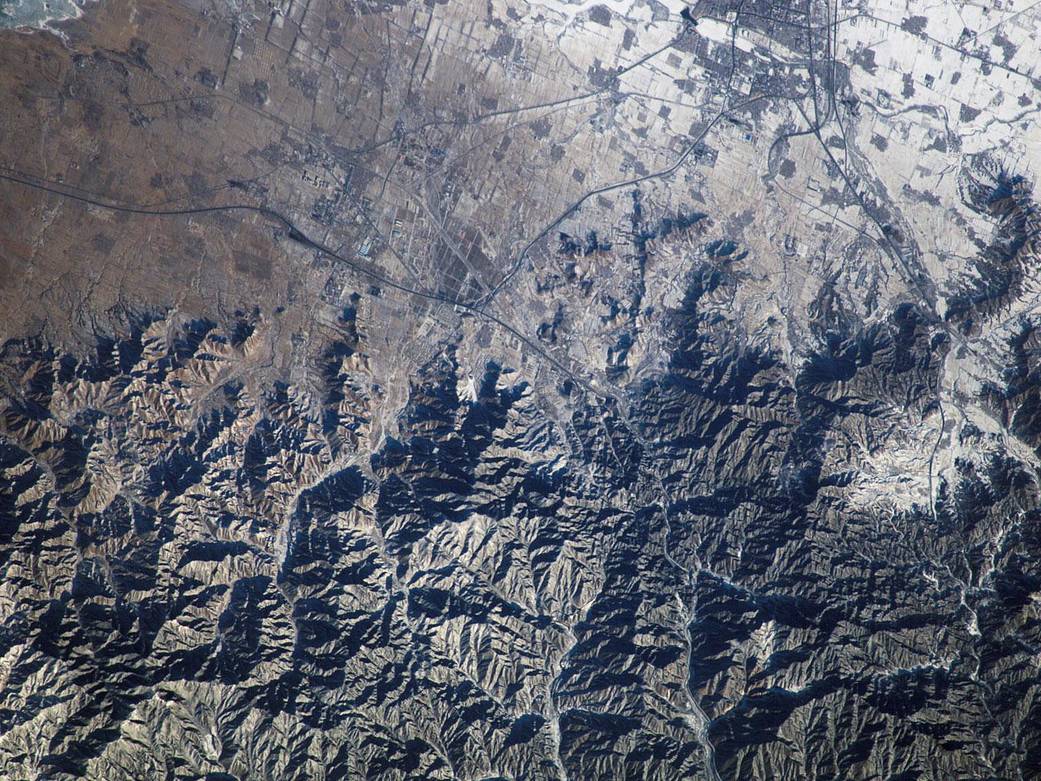
The sentence is famous because it sounds precise: “the Great Wall is visible from space.” But historically, that sentence has bundled together at least three different claims:
- visible from the Moon with the naked eye,
- visible from low Earth orbit with the naked eye,
- detectable from orbit with high-zoom optics and post-processing.
When these three are separated, the argument changes from patriotic folklore to an evidence problem about contrast, altitude, and instrument limits.
Timeline anchors: how the claim traveled
- 1932: a Ripley’s Believe It or Not! item popularized the moon-visibility claim in mass culture, decades before human spaceflight.[2]
- 1969 onward: after Apollo 11, public Q&A repeatedly tested whether lunar observers could identify human structures; this sharpened the moon-vs-orbit distinction in public discussion.[2]
- 2003: Yang Liwei, after a 14-orbit Shenzhou 5 mission, said he did not see the Great Wall, triggering textbook revisions in China and a fresh myth debate.[2][3]
- 2004: ISS astronaut Leroy Chiao captured a telephoto image of Inner Mongolia that NASA later treated as wall-visible in photo form, while emphasizing the wall was difficult or impossible to see unaided from orbit.[1][2]
- 2021: ESA astronaut Thomas Pesquet repeated the same boundary condition from ISS operations: not visible in the tiny viewfinder as an obvious line, but photographable with geographic guidance and a 1150 mm lens from roughly 400 km altitude.[5]
This sequence already tells us the core story: the claim survived not because evidence was strong, but because its wording never clarified how visibility was being measured.
What the strongest sources actually say
NASA’s image note on the Chiao photo is unambiguous on the high-level claim: the wall is not visible from the Moon and is difficult or impossible to see from Earth orbit without high-powered lenses.[1]
Scientific American’s reconstruction adds two operational details that matter for interpretation:
- low Earth orbit begins around 160 km (about 100 miles), where naked-eye observation still depends heavily on contrast;
- even from low orbit, visibility can become possible only under narrow lighting/atmospheric conditions and with favorable shadow geometry.[2]
ESA’s 2021 account is consistent with NASA’s boundary: ISS altitude around 400 km, guided aiming, and long focal length were needed to produce a usable image.[5]
Britannica’s summary gives the conservative synthesis: typically not visible from space in naked-eye terms, occasionally detectable from low orbit under favorable conditions.[4]
Across agencies and reference summaries, there is no support for the strongest folklore version (“visible from the Moon with naked eye”).
Myth vs evidence: where the claim holds and where it fails
Claim A: “The Great Wall is visible from the Moon.”
Evidence status: rejected.
- The myth predates spaceflight and persisted culturally, but modern astronaut reporting and agency framing do not support moon-level naked-eye visibility.[1][2][4]
- At lunar distance, terrain-scale contrast dominates; “long” does not mean “visually separable.”
Claim B: “The Great Wall is visible from low Earth orbit.”
Evidence status: conditionally true only under a narrow definition.
- If “visible” means straightforward naked-eye identification in routine viewing, evidence remains weak and often negative.[1][2][3][4]
- If “visible” means camera-assisted detection with long lenses, prior geographic cueing, and favorable light, evidence supports occasional success.[1][2][5]
Most public arguments collapse these two definitions into one sentence, which is why they never resolve.
Two strongest interpretations
Interpretation 1: the classic claim is mostly a myth sustained by repetition
Support:
- pre-space-age spread through popular media,
- repeated astronaut-era corrections,
- institutional rollback (for example textbook edits) after direct flight testimony.[2][3]
Under this interpretation, the slogan persisted because it was memorable, not because direct observation repeatedly confirmed it.
Interpretation 2: the claim is not entirely false but instrument-dependent
Support:
- Chiao’s ISS image and ESA’s recent account both show that with long focal length, navigation cues, and favorable conditions, sections can be extracted photographically.[1][5]
Under this interpretation, the folk sentence fails as stated, but a technical restatement survives: sometimes detectable from low orbit with optical assistance.
What would materially change the assessment?
A controlled astronaut observation protocol would move this from anecdote to measured evidence: repeated passes, logged visibility conditions, predefined target segments, and side-by-side naked-eye vs instrument outcomes. Until then, confidence should remain asymmetric:
- high confidence that moon-level naked-eye visibility is false,
- medium confidence that low-orbit unaided visibility is rare or unreliable,
- high confidence that camera-assisted detection can work under constrained conditions.
Why this history still matters
This is not only a space trivia correction. It is a compact case study in how claims harden:
- a vivid pre-scientific phrase,
- educational repetition,
- partial technical exceptions,
- endless argument from mismatched definitions.
For historians of knowledge, the Great Wall sentence is useful precisely because it is wrong in one register and partly right in another. The job is not to pick a side; it is to keep the boundary conditions visible.
Sources
- NASA image article, “Great Wall” (Leroy Chiao ISS photo note)
- Scientific American, “Is China’s Great Wall Visible from Space?”
- BBC News (2004), “China ends Great Wall space myth”
- Britannica, “Can you see the Great Wall of China from space?”
- ESA Multimedia, “Great Wall of China from space” (Thomas Pesquet, ISS)
- Britannica, “Great Wall of China” (construction timeline and scale context)