Charter 77 is often remembered through the people who carried it: Vaclav Havel, Jan Patocka, Jiri Hajek, Pavel Kohout, Ludvik Vaculik, and the larger circle of writers, workers, clergy, musicians, former reform Communists, and ordinary citizens who signed at real personal cost. That memory is necessary, but it can hide the stranger force of the document itself. The declaration dated January 1, 1977 does not sound like a revolutionary manifesto in the usual sense. It sounds like a legal audit written by people who had learned that law could become embarrassing when a state had already signed it.[1][2][3]
The text's central move is simple and sharp. It does not ask Czechoslovakia to import an alien political theory. It points to obligations the state had formally accepted: the Czechoslovak Constitution, the 1975 Helsinki Final Act, and the United Nations human-rights covenants that had entered Czechoslovak law in the mid-1970s.[1][2][4] Charter 77 turns those promises back toward daily life. Its claim is not "we have a party program." Its claim is closer to this: your own legal language says one thing, your institutions do another, and citizens have a duty to make the gap visible.
That is why a close reading should begin with tone. The declaration is not trying to thrill the crowd. It is trying to make denial administratively harder.
The Opening Narrows The Target
The World History Commons text presents Charter 77 as a loose, informal association concerned with respect for civil and human rights, while its introduction places the declaration in the aftermath of the 1976 prosecution of the Plastic People of the Universe and other underground musicians.[1] That origin matters, because the document does not treat cultural repression as a side issue. It reads it as evidence of a broader system in which rights exist on paper but not in practice.
The declaration's first important restraint is negative: it repeatedly refuses the form of a political party. The source excerpt says Charter 77 was "not an organization" and had no rules, permanent bodies, or formal membership.[1] That phrase is doing more than lowering expectations. It blocks the regime's easiest category. If the state could describe Charter 77 as a rival party, conspiracy, or underground command structure, repression could be framed as protection against illegal politics. The declaration instead presents itself as a civic initiative whose only durable membership test is whether a person accepts the public responsibility to defend rights already recognized by law.[1][2]
This does not make the document timid. It makes it hard to prosecute honestly. A classic oppositional program says, "replace this system with our platform." Charter 77 says, "read your own signatures." Its opening therefore shifts the burden of explanation. The dissidents do not need to prove that human rights are legitimate from nowhere. The government must explain why ratified rights, constitutional promises, and Helsinki language stop mattering at the police station, workplace, school office, newspaper desk, or passport counter.[1][2]
Legalism Becomes A Public Method
The declaration's most important word is not freedom, though freedom is everywhere behind it. The key word is respect: respect for civic and human rights "in our own country and throughout the world," as the World History Commons excerpt renders the claim.[1] Respect is less dramatic than liberation, but it is more precise for what Charter 77 was trying to do. A right that is already formally recognized does not need theatrical discovery. It needs implementation, documentation, pressure, and witnesses.
That legalist method is visible in the U.S. Helsinki Commission's later compilation of Charter documents. The Commission described Charter 77 as focused on whether the laws and regulations to which the state had committed itself were being put into practice, and it stressed that the initiative grew after Czechoslovakia's publication of the international covenants made the discrepancy between formal promises and daily police practice harder to ignore.[2] In other words, Charter 77 treated international agreements not as diplomatic decoration but as usable civic instruments.
This is the document's quiet radicalism. It turns official legality into a trap for official power. The state had welcomed the prestige of signatures, declarations, conferences, and international legitimacy. Charter 77 asked citizens to read those documents as enforceable moral and civic claims. That is why the declaration's prose can feel deliberately plain. Its power does not come from metaphor. It comes from citation.
"No Platform" Is The Platform
The declaration also insists that Charter 77 does not set out its own program of political or social reform.[1] Read lazily, that can sound evasive. Read closely, it is one of the document's strongest design choices.
By avoiding a comprehensive program, Charter 77 made room for people with different convictions, faiths, professions, and political histories.[1][3] That breadth was not decorative pluralism. It was operational. A narrow ideological platform would have sorted signatories before the state even had to act. A rights-monitoring initiative could gather Catholics, Protestants, secular liberals, former Communists, underground musicians, philosophers, technicians, and workers around a more limited but sturdier public claim: the state must answer for the rights it had already promised.
The COURAGE registry's description of the archival document captures the practical sequence: Havel, Landovsky, and Vaculik tried on January 6, 1977 to deliver the declaration to the Federal Assembly, the Czechoslovak government, and the press agency, but were stopped and detained by State Security; the declaration then circulated and provoked restrictive measures and persecution.[3] That episode explains why "no platform" was not passivity. The physical act of delivery was the politics. The document was made to enter offices, files, newsrooms, foreign broadcasts, police reports, and later archives.
The regime understood this danger. Britannica summarizes Charter 77 as a petition urging the government to observe human rights outlined in the Helsinki Accords, and notes that intellectuals and activists who signed were arrested and detained while the movement continued through the following decade.[4] The state did not need to fear a conventional party headquarters to fear Charter 77. It had to fear a reproducible practice: name a violated right, document a case, circulate the evidence, and force the gap between promise and practice into public language.
The Citizen Is Not A Spectator
The declaration's most demanding sentence is the one that moves responsibility beyond the state. It says, in effect, that responsibility for the condition of civic rights falls above all on political power, but not only on it; every citizen carries a share of responsibility for the general situation and for the observance of enacted covenants.[1][2]
That is a careful and risky sentence. It avoids a simple morality play in which a pure society waits passively under a bad state. Charter 77 asks citizens to become answerable too. Silence is not treated as innocence. It is treated as part of the field in which rights either become real or remain paper.
This is where the declaration links law to behavior. It does not imagine rights as objects handed down from institutions to grateful recipients. It imagines them as claims that must be maintained by citizens willing to document breaches, help victims, suggest remedies, mediate conflicts, and insist on public accountability.[1] That helps explain why Charter 77 could survive beyond the first wave of police disruption. The document did not depend on one charismatic speech. It described a repeatable civic role.
Havel's later account of Charter 77, preserved by the Vaclav Havel Center, makes the same point from memory: he described it as a collection of basic human-legal requirements and as a voice that held a mirror up to the country's conditions.[6] The mirror metaphor is apt, but the declaration itself is even more procedural than that. It is a mirror with footnotes.
The Afterlife Belongs To The Method
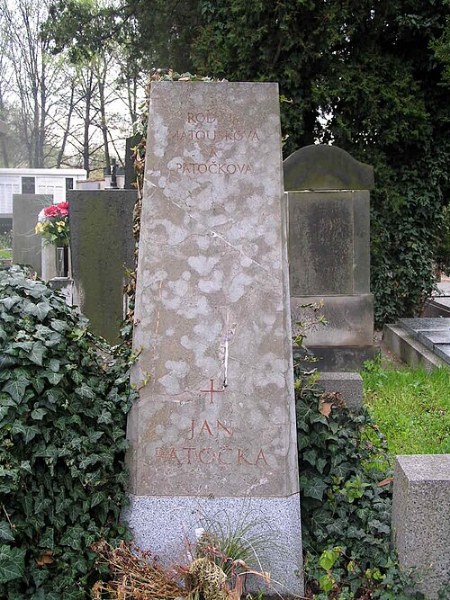
Charter 77 did not topple the regime in 1977. Its signatories faced surveillance, interrogations, job losses, restrictions on family members, detention, prison, and exile.[2][3][4] Jan Patocka, one of the first spokespeople, died in March 1977 after intense police questioning, a fact that made the moral cost of the initiative visible almost immediately.[2] The document's importance lies partly in the fact that it kept working under those conditions.
The official Charter 77 fiftieth-anniversary document page places the declaration beside Havel's April 8, 1975 open letter to Gustav Husak and the final Charter statement of November 3, 1992.[5] That long arc matters. It shows Charter 77 less as a single frozen petition than as the opening move in a documentary practice that outlived its first police seizure. By 1989, when Czechoslovakia's communist system collapsed and Havel became president, the language of civic responsibility, legality, and public witness had already been rehearsed for more than a decade.[4][5][6]
The close-reading conclusion is therefore narrower than legend but stronger than commemoration. Charter 77 did not win because it had the most elaborate program. It won historical durability because it made a disciplined claim: rights already recognized by the state must become observable in ordinary life. The declaration's refusal to act like a party, its dependence on legal citations, and its insistence on shared civic responsibility made it portable. Anyone could learn the method.
That is why the document still reads with such pressure. It does not ask the reader to admire dissidents from a safe distance. It asks a more uncomfortable question: when public promises and daily institutions diverge, who is willing to make the discrepancy visible?
Sources
- World History Commons, "Declaration of Charter 77," primary-source excerpt and teaching context for the January 1, 1977 declaration.
- Commission on Security and Cooperation in Europe, Human Rights in Czechoslovakia: The Documents of Charter '77, 1977-1982, official U.S. Helsinki Commission collection and contextual introduction.
- COURAGE Registry, "Charter 77, 1. 1. 1977," archival item page with document scans, delivery context, and source credit to the National Museum of the Czech Republic.
- Encyclopaedia Britannica, "Charter 77," overview of the Czechoslovak human-rights petition, Helsinki context, arrests, and continuation of the movement.
- Charter 77 - 50 Years, "Documents," document index listing the Charter 77 declaration, Havel's 1975 letter to Husak, the final statement, and signatory materials.
- Vaclav Havel Center, "Vaclav Havel: Charter 77," 2010 interview transcript on Charter 77's purpose, public voice, documents, and role under communism.