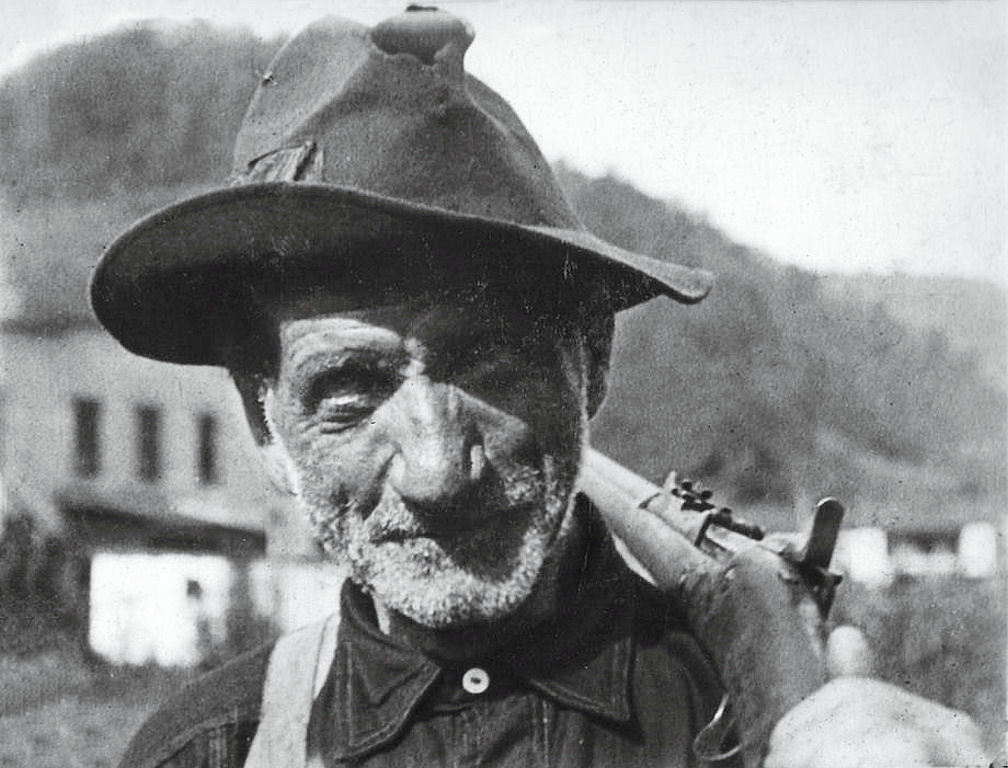
Blair Mountain is easy to summarize and hard to remember well. The compressed version says that in late August and early September 1921, thousands of union miners marched through southern West Virginia, met armed defenders along Blair Mountain, fought for several days, and stopped when federal troops arrived.[1][2] That is true as far as it goes. It is also too clean. It makes the battle sound like a closed labor-history episode rather than a long argument over who gets to name a mountain, protect a battlefield, and decide whether working-class violence counts as public history.
The sharper memory question is this: why did Blair Mountain survive at all? It did not become famous through an uninterrupted chain of monuments, textbooks, and public anniversaries. The West Virginia Mine Wars Museum describes the Mine Wars as history that was long tucked away in the mountains, overshadowed by stories about industrial capital and only later pulled into broader public view.[3] The battlefield itself faced another kind of forgetting: ownership disputes, surface-mining pressure, and a National Register listing that had to be defended years after it was first granted.[2][5]
This essay treats Blair Mountain as a memory-and-commemoration problem. Its survival depended on three stubborn things: the ridge where the miners fought, the community archive that kept the red-bandana story alive, and the archaeological evidence that made the land speak after paper memory had been thinned.
A battle that ended by surrendering upward
The march toward Blair Mountain grew out of the West Virginia Mine Wars, the sequence of labor conflicts that stretched from the Paint Creek and Cabin Creek strikes of 1911-1912 to the confrontation at Blair Mountain in 1921.[3] Miners were not marching only for wages in the narrow sense. The National Park Service frames their immediate goal as reaching Mingo County, where miners had been jailed under martial law, and crossing Logan County, where Sheriff Don Chafin had assembled forces to protect coal-operator interests.[1]
The geography matters. Blair Mountain was not a symbolic backdrop. It was a long ridgeline that stood between the marchers and Mingo County.[1] The Cultural Landscape Foundation describes the battlefield as stretching for roughly ten miles along Spruce Fork Ridge in Logan County, with steep ridges, narrow valleys, and company-town terrain shaping how the conflict unfolded.[2] Memory here begins with contour. A person trying to understand the battle has to picture a march hitting a defended mountain line, not a parade arriving at a town square.
On the night of August 30, 1921, John Wilburn led a group of miners up the mountain; a dawn encounter with Chafin's deputies turned lethal and marked the beginning of the battle, according to the National Park Service account.[1] For the next several days, the two sides fought with rifles, machine guns, and other weapons along the ridge.[1][2] The National Park Service also records that Chafin ordered airplanes to drop gas bombs and improvised explosive bombs on the miners, a detail that turns the episode from a local gunfight into something closer to a battlefield of industrial modernity.[1]
The ending is one reason the memory remained complicated. Federal troops arrived with planes and munitions, and the miners laid down their arms.[1][2] The National Park Service emphasizes that many miners did not see themselves as rebelling against the federal government; they understood the Army's arrival as a return of lawful order against state and local power aligned with operators.[1] The National Trust likewise notes that many miners, including World War I veterans, surrendered rather than fight soldiers they regarded as fellow servicemen.[5]
That ending resists the usual categories. It was an armed uprising, but not a simple anti-government revolt. It was a defeat, but not a complete moral collapse. It was a labor battle, but also a constitutional argument about whether local authority had become private power in uniform.
The red bandana became a portable memorial
Blair Mountain's public memory has often moved through the red bandana. The point is not costume nostalgia. A bandana is portable, cheap, visible, and hard to make official. It fits a history that survived around kitchen tables and local institutions before it had the weight of national preservation language behind it.
The West Virginia Mine Wars Museum describes its own mission as preserving stories of coal miners and families who fought for workers' rights, civil rights, and justice in the early twentieth century, and it explicitly frames the Mine Wars as a multi-racial, multi-lingual union effort.[4] That matters because the red-bandana memory can be flattened into a generic "armed miners" image if the social composition disappears. The battle's commemorative force depends on recognizing a labor coalition built across ethnic and racial lines under brutal local conditions.[4][5]
The 2021 centennial shows how commemoration changed scale. The museum's centennial page describes a statewide festival around Labor Day Weekend, with more than twenty-five events: concerts, readings, films, reenactments, labor symposiums, church services, online programming, and public history projects.[4] That range is important. A single monument can freeze a past event into one approved meaning. A festival, especially one spread across communities, lets memory remain argumentative. It can hold grief, solidarity, scholarship, and regional economic hope in the same frame.
The museum also connects commemoration to route-making. After the centennial, it described work toward "Courage in the Hollers," a participatory mapping project meant to counter the invisibility of public memory along the roughly fifty-mile marching trail.[4] That is a telling phrase: invisibility of public memory. Blair Mountain did not vanish because nobody cared. It was made hard to see in the forms outsiders tend to recognize: signs, curricula, protected landscapes, and permanent markers.
The battlefield had to be protected as evidence
The memory struggle became literal in the fight over the battlefield's protected status. The Cultural Landscape Foundation says the Blair Mountain Battlefield, covering 1,669 acres, was listed in the National Register of Historic Places on March 30, 2009, then delisted within nine months after a lawsuit.[2] In April 2016, U.S. District Court Judge Reggie B. Walton vacated that delisting; on June 27, 2018, the Keeper of the National Register relisted the battlefield.[2]
That sequence turns preservation into a second battle, fought through property records, administrative review, and the language of historical significance. The National Trust's July 2, 2018 statement says the federal court had ruled that the National Park Service acted unlawfully in removing the battlefield from the Register, and that later review confirmed that a majority of actual property owners had not objected to the listing.[5] This is not merely procedural trivia. For a landscape threatened by mountaintop removal mining, being listed as a historic battlefield changed what kinds of destruction could be publicly contested.[5]
Archaeology strengthened that claim because it made memory material. The West Virginia Mine Wars Museum's centennial page describes digs between 2006 and 2009 along Spruce Fork Ridge that found evidence of guerrilla war and helped support efforts to save much of the battlefield from strip mining.[4] The Cultural Landscape Foundation likewise points to shell casings, buried guns, earthworks, foxholes, and defensive entrenchments as evidence concentrated in the landscape.[2]
Those artifacts do something written memory cannot do alone. They answer the dismissive question: where is the proof? A shell casing in the ridge does not explain the politics of the coalfields by itself, but it anchors interpretation to place. It says that the mountain was not only a metaphor for labor struggle. It was worked, climbed, defended, fired across, and later searched for physical traces.
What commemoration should preserve
The danger in commemorating Blair Mountain is turning it into a slogan so clean that it loses its historical friction. It was not simply "workers versus bosses," though that is one real axis. It was also miners versus company-town power, state and local authority versus federal intervention, racial and ethnic solidarity versus coalfield segmentation, public law versus private force, and preservationists versus the later economic logic that could treat a battlefield as removable overburden.[1][2][4][5]
A good memorial practice should preserve those tensions. It should remember 1911-1912 as the wider Mine Wars beginning, August 30 to early September 1921 as the battle's sharp military window, 2009 as the first modern listing fight, 2018 as the relisting that restored federal recognition, and 2021 as the centennial moment when local memory deliberately reached for statewide public form.[1][2][3][4][5]
The cover photograph helps because it refuses abstraction.[6] A miner with a rifle can be misused as simple militancy. Read in context, though, the image points to the battle's strange final posture: armed men who had fought local power surrendered upward to federal troops because they still imagined a difference between public law and coalfield rule.[1][5] That distinction is why Blair Mountain remains useful history. It does not ask readers to romanticize violence. It asks them to notice what happens when ordinary political remedies are blocked long enough that a ridgeline becomes the place where law, labor, and memory collide.
Blair Mountain is remembered because people kept insisting that the mountain was not empty. It held a march route, a battlefield, a labor coalition, a suppressed local inheritance, and buried artifacts. The ridge kept evidence underfoot until public history caught up.
Sources
- National Park Service, "The Battle of Blair Mountain" - federal account of the march, fighting on the ridge, aerial bombing, federal intervention, surrender, and National Register context.
- The Cultural Landscape Foundation, "Blair Mountain Battlefield" - landscape history, battlefield geography, archaeological evidence, 1,669-acre National Register listing, delisting, and 2018 relisting timeline.
- West Virginia Mine Wars Museum, "What Were the Mine Wars?" - museum framing of the Mine Wars from the 1911-1912 strikes to Blair Mountain and the problem of under-remembered labor history.
- West Virginia Mine Wars Museum, "Battle of Blair Mountain Centennial: 2021" - centennial programming, public-memory projects, mapping work, and archaeological surveys along Spruce Fork Ridge.
- National Trust for Historic Preservation, "Statement on the decision by the National Park Service to reaffirm the listing of the Blair Mountain Battlefield on the National Register of Historic Places," July 2, 2018 - relisting, property-objection dispute, preservation threat, and labor-history significance.
- Wikimedia Commons, "File:Blair-miner.jpg" - archival 1921 Blair Mountain photograph used as the article image.