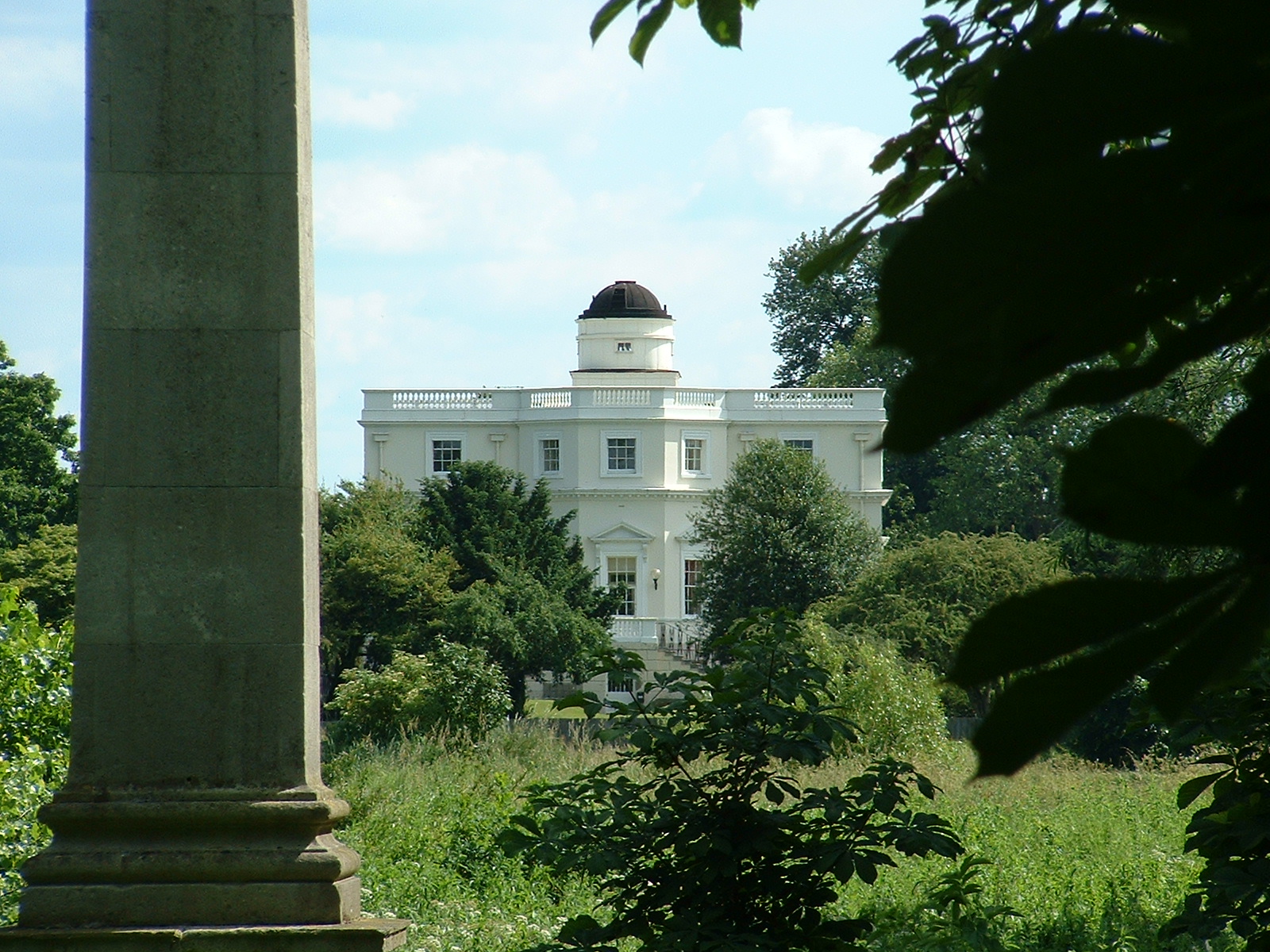
The Carrington Event is often remembered as one iconic moment: an astronomer sees a sudden white flash on the Sun, and the Earth answers with red skies and failing telegraph lines. The record becomes more useful when treated as an event chain rather than a heroic scene. Between late August and early September 1859, observers documented a two-storm sequence in which an earlier auroral disturbance was followed by a faster, harder solar-terrestrial shock that arrived with little operational buffer.[3][4]
That distinction matters because it changes what we learn from 1859. The historical signal is less about spectacle and more about system coupling: observational astronomy, geomagnetic response, ionospheric current, and communications infrastructure all moved in one compressed loop. In that loop, uncertainty remained real, but the sequence itself became difficult to dismiss.
1) Event timeline: why this was not just one night
A reconstruction anchored to primary and technical sources gives a stable chronology.
- 28 August 1859: the first major auroral phase began, with low-latitude sightings and widespread disturbances already visible in records later synthesized by scientists.[3]
- 1 September 1859 (late morning, Greenwich context): Richard Carrington and Richard Hodgson independently recorded an intense brightening over a sunspot group, now treated as the first observed white-light flare.[1][2]
- ~17 hours later (into 2 September 1859): a severe geomagnetic storm phase hit Earth, with strong aurora and major telegraph disruption across multiple regions.[3][4][5]
The timeline is historically important because it links three layers that had usually been discussed separately in the nineteenth century: a solar optical observation, ground magnetic disturbance, and communication-system malfunction.
2) What the flare observation established, and what it did not
Carrington’s and Hodgson’s reports did not solve solar physics on the spot. What they did provide was an observational anchor with explicit timing and location of the bright solar phenomenon.[1][2] In historical method terms, this is crucial: even when causal mechanism was still debated, the event had a timestamped sky-side reference.
In other words, 1 September gave investigators a stable “upstream” marker. That marker later became the hinge for comparing magnetic traces, auroral timing, and infrastructure anomalies.
The boundary condition is equally important. A single visual observation does not, by itself, quantify full geoeffective intensity. Later research had to revisit storm strength estimates, magnetic indices, and inference methods with modern frameworks.[4] The record is strong enough for sequence reconstruction, but not perfect enough for one-number certainty.
3) Telegraph failure as infrastructure evidence, not anecdote
Telegraph reports are often retold as colorful stories about sparks and operators. Read as infrastructure evidence, they carry more weight. Contemporary and retrospective compilations indicate that a substantial share of global line length experienced severe disruption, including sustained periods of unusable service.[3]
That is historically significant for two reasons.
First, telegraph systems were among the most time-sensitive networks of the era. When they failed, operators noticed immediately because workflow depended on continuity, not delayed reporting.
Second, telegraph failures co-moved with magnetic disturbance windows. This temporal coupling strengthened the argument that the event was not local weather noise or isolated hardware failure, but an externally driven geophysical shock interacting with network design constraints.[3][4]
The strongest operational lesson is that the system did not fail at a single node. It failed as a distributed current problem across long conducting lines and grounded equipment. In modern language, the 1859 event was an early infrastructure-scale induced-current incident.
4) Why the two-storm structure changes interpretation
A one-storm narrative implies a single surprise hit. A two-storm narrative implies sequencing effects.
The August 28 phase likely altered both observational attention and near-Earth plasma conditions, while the September 1–2 phase delivered the better-known extreme disruption.[3][4] Researchers have long discussed whether preceding activity can condition the interplanetary environment in ways that affect later transit and impact characteristics. Even when exact magnitudes remain debated, this framing is better aligned with the documentary pattern than a one-shot myth.
From a historical reasoning perspective, this prevents a common error: treating the Carrington Event as an isolated freak snapshot. The archival signal points toward clustered activity and compounded risk, which is exactly the pattern modern operators fear in tightly coupled infrastructure systems.
5) Competing interpretations and what would change the assessment
Two interpretations remain live in technical literature and historical synthesis.
Interpretation A: maximalist intensity view. In this reading, the September storm was so extreme that it clearly dominates all modern analogs, and historical magnetic traces can be converted into very large storm-index estimates.[4]
Interpretation B: constrained-uncertainty view. In this reading, the event was still exceptional, but some legacy estimates rely on sparse or method-sensitive conversions, so confidence intervals should remain explicit.[4]
These interpretations are not mutually exclusive on core facts. Both accept severe disruption and low-latitude aurora. They differ on numerical extremity and reconstruction confidence.
What would materially shift judgment?
- More complete digitization and calibration of nineteenth-century magnetograms from multiple observatories.
- Better cross-checked telegraph outage logs with precise start/stop times and geolocation.
- Harmonized methods for back-calculating modern storm indices from heterogeneous historical instruments.
Until those improvements land, the most defensible claim is strong but bounded: 1859 was an extreme, globally consequential space-weather event with multi-system coupling, while exact peak values remain estimation-sensitive.[3][4]
6) Why this event still belongs in decision history
The Carrington reconstruction still matters because it is one of the first well-documented cases where scientific observation, public sky phenomena, and infrastructure damage entered the same evidentiary frame within hours.
This compressed loop is the decision-history artifact. It shows that warning value does not live only in prediction models; it also lives in whether institutions can join observations across domains fast enough to act.
In 1859, that institutional integration was embryonic. Observers, telegraph operators, and newspapers produced fragments that were later assembled by scientists.[3] Today, the instrumentation is better, but the coordination problem remains familiar: measurements arrive quickly, confidence evolves unevenly, and operators must decide before uncertainty fully collapses.
Seen in that light, the Carrington Event is not merely the story of “the biggest storm.” It is the early template of a recurring governance challenge: high-impact physical events arrive through coupled technical systems, and the cost is set by timing, interoperability, and the quality of evidence handoff.
Sources
- Richard C. Carrington, Description of a Singular Appearance seen in the Sun on September 1, 1859, Monthly Notices of the Royal Astronomical Society 20 (1859). DOI
- Richard Hodgson, On a curious appearance seen in the Sun, Monthly Notices of the Royal Astronomical Society 20 (1859). DOI
- James L. Green et al., Duration and extent of the great auroral storm of 1859, Advances in Space Research 38(2), 2006 (PMC version).
- E. W. Cliver et al., The 1859 space weather event revisited: limits of extreme activity, Journal of Space Weather and Space Climate 3 (2013).
- NOAA NESDIS, What Was the Carrington Event?
- Encyclopaedia Britannica, Geomagnetic storm of 1859.
- Wikimedia Commons, image source used in this article.