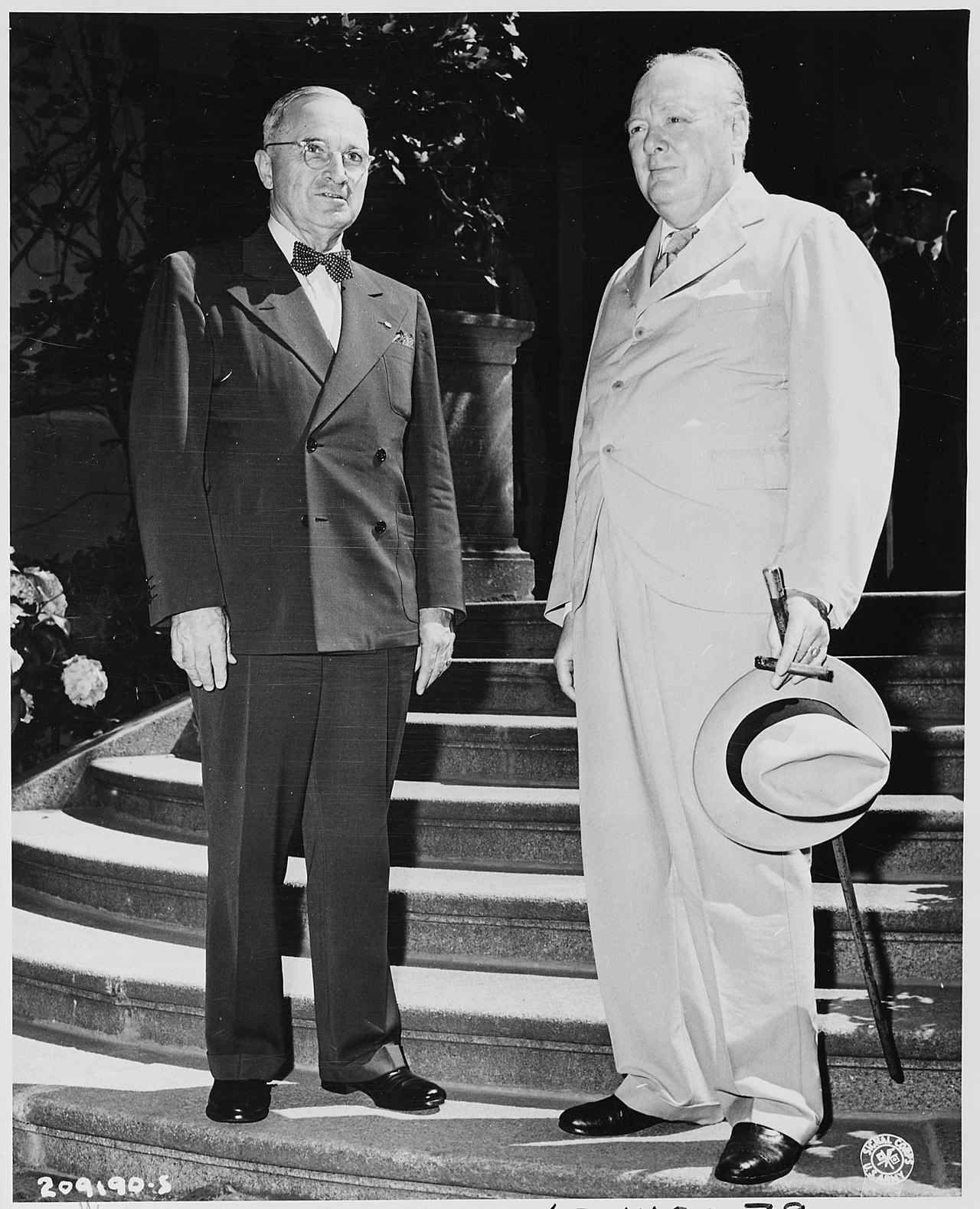
Most summaries of Japan’s surrender in 1945 focus on military shock and chronology: 26 July declaration, 6/9 August atomic bombings, 8/9 August Soviet entry, 15 August imperial rescript, 2 September signature in Tokyo Bay. The sequence is real, but it can hide a legal-design detail that mattered for implementation: Paragraph 12 of the Potsdam Declaration.
Read Paragraphs 12 and 13 together, and the text does something more precise than an ultimatum slogan. It demands unconditional surrender of Japanese armed forces (Paragraph 13), while placing Allied occupation on a conditional political timetable: occupation forces would be withdrawn once objectives were achieved and a “peacefully inclined and responsible government” had been established “in accordance with the freely expressed will of the Japanese people” (Paragraph 12).[1][2]
That pairing created a governance bridge between coercion and postwar legitimacy. This article reconstructs that mechanism and its limits.
1) What the document actually binds, clause by clause
The Potsdam text is often quoted for its closing warning of “prompt and utter destruction.” But the operative architecture spans several linked clauses:
- Paragraphs 6–11 define demilitarization, accountability for war crimes, and basic political-economic conditions.
- Paragraph 12 defines a withdrawal condition for occupation forces.
- Paragraph 13 demands immediate unconditional military surrender.[1][2]
In strict legal reading, “unconditional” modifies the surrender of armed forces, not a blank check for an endless occupation without end-state criteria. The declaration combines coercive military language with a bounded political endpoint.
That structure mattered because the Allies had two problems to solve at once in mid-1945: end Japanese military resistance quickly, and avoid reproducing an open-ended postwar vacuum in East Asia.
2) Why Clause 12 was institutional, not rhetorical
Paragraph 12 is short, but institutionally dense. It names three conditions in one sentence:
- Basic war aims must be achieved.
- Occupation is temporary, not permanent by design.
- Final legitimacy is tied to domestic political form (“freely expressed will”).[1]
Placed in July 1945, this clause served as an implementation hinge. It gave Allied policymakers room to insist on hard military compliance while signaling that postwar governance would not remain purely external command indefinitely.
The Office of the Historian’s Potsdam reconstruction reinforces this reading: the declaration came from a conference already trying to convert wartime alliance language into postwar administrative structures, including occupation regimes and ministerial coordination.[3]
3) The August decision window: text meets shock events
Between 26 July and 15 August 1945, decision pressure changed rapidly: Hiroshima (6 August), Soviet declaration of war and invasion of Manchuria (8/9 August), Nagasaki (9 August), then imperial acceptance process.[3][4]
A monocausal narrative (“one event alone forced surrender”) does not match the documentary landscape. What the text-based view adds is narrower and more robust: when Japanese leaders faced collapsing military options, the declaration already contained a written pathway that linked surrender to a post-surrender political horizon rather than pure annihilation language.[1][4]
That does not mean Clause 12 “caused” surrender by itself. It means the clause shaped what could be negotiated and administered once military defeat became unavoidable.
4) From declaration to execution: continuity in the Instrument of Surrender
The Instrument of Surrender signed on 2 September 1945 explicitly accepts the Potsdam provisions and then operationalizes command authority under the Supreme Commander for the Allied Powers (SCAP).[5]
This is where the July clause architecture becomes concrete administration:
- Potsdam supplies the normative sequence (demilitarize -> occupy conditionally -> reconstitute responsible governance).
- The Instrument supplies the command channel (Japanese state authority subject to SCAP for implementation).[5]
Taken together, the two texts show a staged design rather than an improvisational legal patchwork.
5) What this close reading explains better than the headline version
The common headline version captures urgency but flattens institutional logic. A close reading explains three otherwise awkward facts in one frame:
- Why the declaration is simultaneously punitive and reconstructive.[1][2]
- Why occupation could be justified as necessary yet formally temporary.[1]
- Why surrender documents could combine unconditional military language with a political end-state condition tied to Japanese governance form.[1][5]
In this frame, Clause 12 is not decorative liberal language attached to a hard ultimatum; it is the textual hinge that keeps coercion and reconstruction in one legal sequence.
Strong competing interpretation, and boundary condition
A strong competing interpretation says Clause 12 was secondary language because battlefield shocks alone settled the outcome in August 1945. The sequence of events supports the weight of military shock.[3][4]
The boundary condition is administrative translation. Without a written political endpoint in the declaration, post-surrender governance would still have occurred, but with weaker doctrinal clarity about occupation purpose and exit logic. Clause 12 did not remove coercion; it constrained coercion inside a declared postwar direction.
Why this remains decision-relevant
For modern crisis design, this episode offers a practical template: documents that end wars work best when they do two jobs at once—impose immediate compliance and define a credible political horizon. Military compellence without governance architecture can win the week and lose the decade. Potsdam’s Clause 12 shows an early attempt to avoid that trap.
Sources
- National Diet Library, Potsdam Declaration (July 26, 1945).
- U.S. Department of State, FRUS 1945 Berlin Conference Vol. II, Doc. 1382 (text of proclamation).
- U.S. Department of State, Office of the Historian, The Potsdam Conference, 1945.
- Encyclopaedia Britannica, Potsdam Declaration.
- National Diet Library, Instrument of Surrender (September 2, 1945).
- Wikimedia Commons, photograph used for article image (Truman and Churchill at Potsdam, NARA photo).