The Bay of Pigs is often remembered as a humiliation in one sentence: John F. Kennedy inherited a CIA-backed exile invasion, approved it, and watched it collapse in less than three days.[1][2] That shorthand is not wrong, but it hides the mechanism that made the defeat so fast. Brigade 2506 did not first fail because it landed badly or because every fighter on the beach broke at once. The operation failed because its political design had already narrowed its military options. Washington wanted an invasion large enough to topple Fidel Castro and quiet enough to deny direct U.S. authorship. Once those two demands collided, the invasion lost the air umbrella and logistical depth it needed to survive.[2][3]
That is why the most useful way to reconstruct April 15-19, 1961 is to follow the operation through its shrinking margin of error.[1][3] The beachhead at Zapata was chosen in part because it looked less overtly American than a landing near Trinidad, yet that shift also left the brigade farther from likely anti-Castro support and more exposed to geographic confinement.[1][2][3] The air plan was pared back to preserve deniability, yet surviving Cuban aircraft then hit the very ships carrying fuel, ammunition, and communications gear.[1][3] By the time desperate cables were asking for air cover on April 19, the battlefield was already too tight.[5][6]
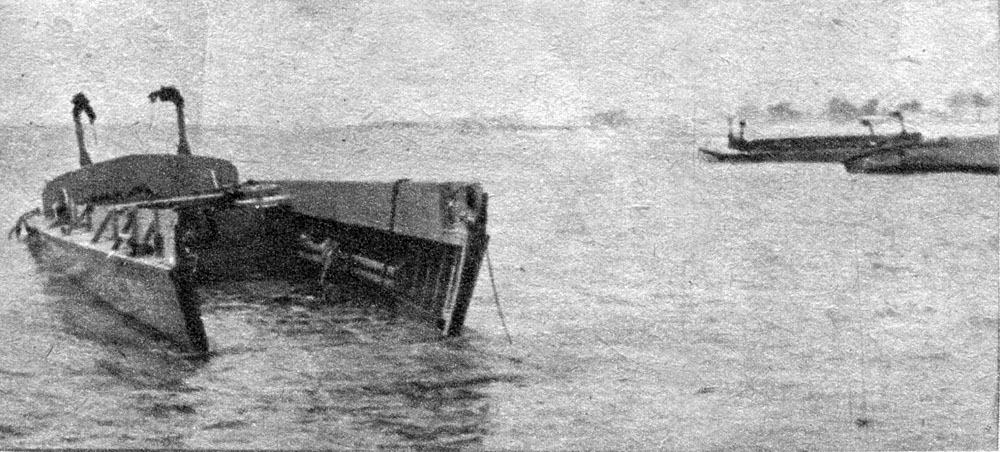
Image context: the cover uses a real archival photograph of Brigade 2506 landing craft approaching the Bay of Pigs beaches.[7] It fits this article because the central question is operational. The invasion looked dramatic at the shoreline, but its decisive weakness lay in what had to travel with those boats: ammunition, fuel, radios, and air protection strong enough to keep the beachhead alive.
Before the shooting started, the plan had already been narrowed by politics
The operation Kennedy inherited in early 1961 had been shaped under Eisenhower as a covert action program that would train Cuban exiles, strike Castro's air force, and establish a lodgment from which a broader uprising or provisional government might emerge.[2][3] By March 15, 1961, Kennedy approved a version of the plan, but the administration kept worrying about the same question: how to make a serious landing look less like a U.S. invasion.[3] That pressure produced one of the most consequential choices in the whole episode, the move away from Trinidad toward the more isolated Zapata area near the Bay of Pigs.[1][2][3]
The substitution mattered because geography was part of the combat system. The JFK Library's account notes that the Bay of Pigs site was more than 80 miles from the Escambray Mountains, where planners hoped anti-Castro guerrillas might offer depth or refuge if the landing bogged down.[1] The Office of the Historian makes the same point in broader terms: the final landing site was judged more covert, but it also reduced the brigade's political and logistical flexibility.[2] In other words, deniability was purchased with maneuver space. If the landing force failed to break out quickly, it would be operating on a narrow coastal shelf bordered by swamp, poor roads, and an interior that would not instantly rise for it.[1][2]
That tradeoff also helps explain why the air plan carried such weight. A force landing in a confined zone with limited escape options needed the Cuban air force neutralized early and decisively.[3] Yet the very effort to keep Washington's hand hidden kept trimming the visible signature of U.S. support. The operation was never a clean covert sabotage mission, but it was also never allowed to function like a fully owned amphibious campaign. That gap between the size of the objective and the caution built into the means sat underneath everything that followed.[2][3]
April 15: the first air strike succeeded tactically and failed politically
On April 15, 1961, B-26 bombers flown by Cuban exiles attacked Castro's airfields in an effort to destroy the small Cuban air force on the ground before the landing.[2][3] The tactical logic was sound. If Castro kept aircraft in the sky, the invasion fleet and its supply line would be exposed from the first hours.[1][3] But the strike also created the political scene Kennedy most feared. One of the attacking pilots landed in Miami pretending to be a Cuban defector, and the cover story quickly came under scrutiny at the United Nations and in the press.[2][3]
That political backlash altered the military calendar. The documentary record in FRUS shows how arguments over a follow-up strike and over the visibility of U.S. involvement overtook the operational need to finish the job.[3][4] The result was not total cancellation of air activity forever; it was something worse for an invasion built on timing: uncertainty, delay, and reduction at the moment when suppression of Castro's aircraft had to be overwhelming.[2][3][4] The operation entered D-Day with deniability still being managed in Washington while the battlefield requirement was for finality.
April 17: the landing began, but the beachhead immediately had to pay for the surviving Cuban aircraft
Brigade 2506 landed in the Bay of Pigs area on April 17 at Playa Giron and Playa Larga.[1][2][3] The opening phase did not produce instant annihilation. Exile troops got ashore, some positions were taken, and the invasion still depended on rapid consolidation plus continued supply.[1][3] But the surviving Cuban air arm now mattered immensely. Castro's T-33 jets, Sea Furies, and B-26s did not need to destroy everything at once. They only had to make the brigade's logistics fragile enough that time would start working against the beachhead.[1][3]
That is exactly what happened. The supply ship Rio Escondido, which carried aviation fuel, ammunition, and communications gear, was sunk. Houston was hit and eventually beached after attack.[1][3] Those losses are the operational hinge of the invasion. They did more than reduce tonnage. They narrowed the brigade's future minute by minute. Fuel was harder to move. Ammunition could no longer be treated as a reserve to support expansion inland. Radios and other matériel essential for command coherence became scarcer under pressure.[1][3] Once the ships were burning, the landing stopped being a problem of tactical courage and became a problem of a beachhead consuming its own remaining life support.
The location amplified every loss. Zapata was not a forgiving coast from which to improvise a second act. The swamps and road network restricted movement; the hoped-for linkage to a wider anti-Castro insurrection did not materialize at the necessary scale; and the brigade could not simply dissolve into a friendly interior if the beach line failed.[1][2][4] What looked on paper like a clandestine landing site now behaved like a trap. The more covert choice became the more confining choice.
April 18 and April 19: Washington was still trying to preserve boundaries after the battlefield had already erased them
By April 18, the administration was no longer dealing with an abstract covert problem. It was dealing with a shrinking enclave whose survival depended on decisions Washington had postponed or diluted earlier.[3][4] The FRUS summary makes clear that the United States kept wrestling with how much overt support to provide, even as the invasion force's condition worsened.[3] At the same time, Castro's forces were consolidating, the brigade's ammunition position was deteriorating, and the political hope that the landing would trigger a self-sustaining internal revolt had plainly outrun reality.[2][3][4]
The desperation of April 19 is visible in the cables. FRUS preserves urgent messages asking for air cover and warning that the brigade could not hold without it.[5][6] The surviving issue was no longer whether plausible deniability had been preserved in theory. It was whether aircraft could arrive in time to keep the beachhead from collapsing in practice. A final dawn effort was organized from Puerto Cabezas, Nicaragua, but the record shows how improvised and constricted the rescue attempt had become.[6] The well-known time-zone mix-up that left escort arrangements misaligned was not a comic footnote. It was the final proof that the operation's political and military clocks had never been synchronized.[1][6]
Four American airmen flying B-26 support missions were killed on April 19.[1] Their deaths mark the point at which the logic of deniable war gave way to a battlefield that no longer respected categories. U.S. involvement was already structurally deeper than the public story allowed, yet it was still not deep enough to supply the kind of decisive, sustained combat power the brigade needed. That contradiction is why the invasion can look, in retrospect, both heavily backed and fatally unsupported at the same time.
Why the collapse was so fast
The Bay of Pigs unraveled quickly because several dependencies broke in the same order. First, deniability limited the air campaign that was supposed to clear the way.[2][3][4] Second, surviving Cuban aircraft then struck the ships that carried the brigade's staying power.[1][3] Third, the Bay of Pigs landing site offered poor exit routes and weak access to the anti-Castro depth planners had imagined.[1][2] Once those three layers aligned, the brigade did not need to be surrounded forever to be beaten. It only had to remain pinned long enough for ammunition, fuel, and time to run in the wrong direction.
That sequence also clarifies what this invasion was not. It was not a simple story in which covert planners forgot the existence of air power, nor was it only a morality play about presidential hesitation. Kennedy's hesitation mattered, but it mattered inside a design that had already fused incompatible goals.[2][3] The administration wanted a politically deniable opening and a militarily decisive outcome. The first requirement kept weakening the measures that might have enabled the second. Once the landing began, the operation had no slack left.
Aftermath: defeat became public, and the lesson outlived the beachhead
By the end of the fighting, about 114 members of Brigade 2506 had been killed and 1,189 captured.[1] The prisoners were later released in exchange for food and medical supplies, but the strategic damage was immediate.[1][2] Castro emerged strengthened inside Cuba. Kennedy publicly accepted responsibility. Within Washington, the invasion became a durable lesson in what happens when covert action expands toward war without being allowed to become war on its own terms.[2][3]
That is why the Bay of Pigs remains worth reconstructing in sequence. The landing did not merely fail because events turned unlucky on the shoreline. It failed because every hour from April 15 to April 19, 1961 exposed the same structural mismatch more clearly. An invasion that needed overwhelming preparatory force was fitted to a deniable frame; a beachhead that needed depth was placed in confinement; and a supply chain that needed protected time was left exposed to surviving aircraft.[1][2][3] The beachhead collapsed fast because the contradiction was built in before the first boat reached shore.
Sources
- John F. Kennedy Presidential Library and Museum, "The Bay of Pigs" - overview of the landing plan, the Zapata site, the loss of shipping, the April 19 air effort, and brigade casualty totals.
- U.S. Department of State, Office of the Historian, "The Bay of Pigs Invasion and its Aftermath, April 1961-August 1962" - milestone overview of the planning logic, political constraints, and consequences.
- U.S. Department of State, Foreign Relations of the United States, 1961-1963, Volume X and Cuban Missile Crisis and Aftermath Supplement, "Summary X: The Invasion of Cuba, April 1961" - official documentary synthesis of planning, air-strike debates, and battlefield collapse.
- U.S. Department of State, Foreign Relations of the United States, 1961-1963, Volume X, Document 142 - editorial note on the pre-invasion air-strike dispute, the shift in assumptions about internal resistance, and the narrowing of operational options.
- U.S. Department of State, Foreign Relations of the United States, 1961-1963, Volume X, Document 145 - April 19 battlefield telegram reflecting the brigade's urgent requests for air support as the beachhead collapsed.
- U.S. Department of State, Foreign Relations of the United States, 1961-1963, Volume X, Document 150 - April 19 telegram on the final air-support arrangements from Puerto Cabezas and the operational limits of the rescue attempt.
- Wikimedia Commons, "File:2506-landing (1).jpg" - archival photograph of Brigade 2506 landing craft used as the article image.