In 1996, a government Promenade project helped turn a former immigration depot in Port Louis, Mauritius, into a place of remembrance. In 2004, a conservation project began removing alterations that the Promenade had introduced. Both projects belonged to the history of preserving Aapravasi Ghat, yet they left different answers to a deceptively difficult question: what should a memorial let people see?[1]
The later work sought to recover evidence of the depot through which indentured labourers had passed. Remembering their arrival required attention to ordinary structures: accommodation, kitchens, washing places, a hospital. Their usefulness as historical witnesses depended on whether visitors could distinguish the surviving institution from its subsequent remaking.
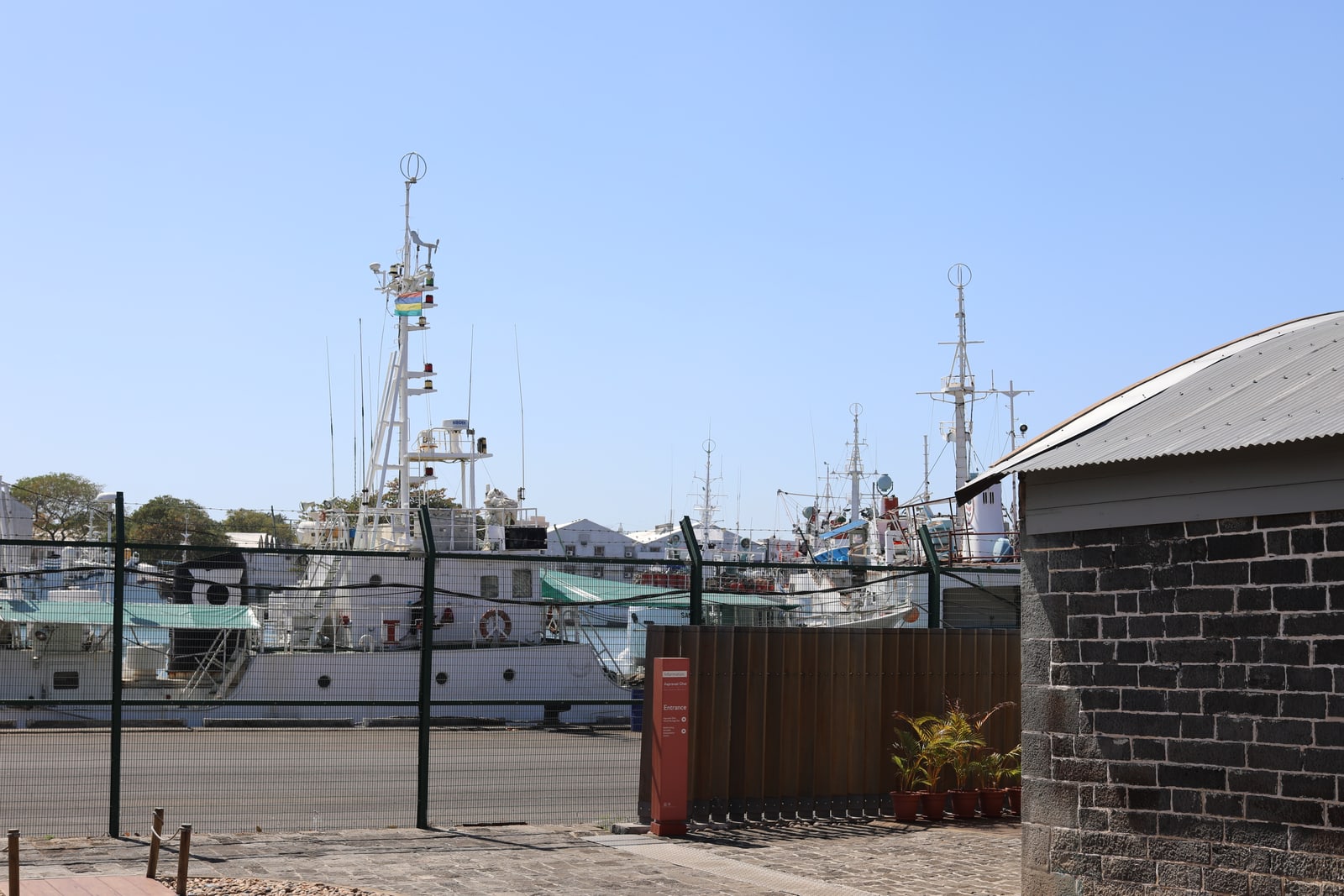
An arrival remembered through a later building
The site's history contains two beginnings that should stay separate. Large-scale indentured migration to Mauritius began in 1834. The surviving depot at Trou Fanfaron was built in 1849, after other Port Louis buildings had served that purpose. The earlier arrivals belong to the history commemorated here; they did not pass through a building that had yet to exist.[2]
Britain promoted Mauritius as an experiment in supplying plantation labour through indenture as it moved away from slavery. The site's statement of heritage value places it within the resulting movement of almost half a million indentured labourers to the island. It also recognizes the memories, traditions and values that migrants carried and passed to their descendants.[3]
Inside the depot, migration became administrative work. Staff registered people, issued tickets and passes, allocated workers to estates and supervised departures. These functions help explain why an unassuming room or fragment of wall can matter. They locate the procedures that shaped migrants' lives, giving commemoration something more specific than an arrival story.[2]
A staircase offers a compelling image of crossing into a new country. Kitchens and accommodation add the waiting, bodily needs and institutional control that a single symbolic threshold can leave out.
A place saved after substantial loss
Cyclone Carol damaged the site in 1960. Immigration archives moved to the Mahatma Gandhi Institute in 1976; motorway construction destroyed much of the complex during the following decade. National Monument recognition came in 1987. In 2001, 2 November became a public holiday commemorating the first indentured arrivals, and the Aapravasi Ghat Trust Fund was created.[2]
These changes preserved different things: records, a remnant of a building complex, an anniversary on the national calendar. Their separation matters. A public ceremony can continue after a room disappears; an archive can survive away from the place that produced it. Bringing them together again takes interpretation.
The heritage statement records that less than half the depot's 1865 area survives. Among its remaining components are housing-shed remains, kitchens, lavatories and the hospital block. The memorial therefore asks a small surviving place to convey a much larger institution.[3]
The 1996 Promenade was one response. The Trust Fund's later management plan describes its conversion of the depot into a commemorative place, then records the removal of its alterations during conservation. That is evidence of changed priorities. It does not establish that the earlier designers were indifferent to history, or tell us all their reasons for each intervention.[1]
Repair could obscure the evidence
The conservation specialists were unusually explicit about the difficulties. In its April 2006 evaluation, ICOMOS criticized modern materials used to reroof the hospital block in 2000 and the blocking of a large cart-house arch. It also found inadequate documentation, no conservation plan or archaeological strategy, and missing formal consent for work. These were separate criticisms of interventions and of the process used to authorize and record them.[4]
ICOMOS supported removing inappropriate 1990s additions, but it also demanded justification for attempts to restore an earlier appearance. Exposed archaeology included fragile asphalt flooring and lime plaster. Revealing a surface could create a fresh obligation to protect it. Restoration needed evidence of its own, so that future observers could understand what had been changed.[4]
The later management plan describes the 2004–2010 campaign as grounded in archaeology, drawings from the depot's 1864–1865 remodelling, technical reports and photographic records. Those drawings supplied a reference against which physical remains could be understood.[1]
Read together, the documents show why an old-looking finish is an insufficient test. An open arch can explain movement through a building. A recorded repair can distinguish surviving material from replacement. Without those distinctions, a visitor may confidently read a recent intervention as evidence of nineteenth-century life.
Recognition did not finish the work
Aapravasi Ghat entered the World Heritage List in 2006, while conservation continued. The listing acknowledged the site's association with the indentured diaspora; it did not make the surrounding city stand still.[1][2]
The Trust Fund's 2016–2017 annual report looks back on UNESCO decisions in 2010, 2011 and 2012 urging Mauritius to prevent demolitions of historic buildings in the buffer zone. It describes subsequent planning guidance and management revisions as partially achieving the aims of protection and coordinated management.[6]
Those recommendations carried preservation beyond the monument's boundary. Preserving a landing place also means retaining enough of its surroundings to explain why it was there. A carefully conserved room loses part of its historical meaning if the port district around it becomes unreadable.
The Trust Fund's research programme extends the inquiry to sugar estates and to traditions associated with indenture. Its stated purpose includes documenting immigrants' lives after their stay at the depot. Arrival is a starting point for that investigation, and a limit to what the surviving buildings can tell us unaided.[5]
Aapravasi Ghat's strongest commemorative promise lies in that willingness to keep looking. The remains give remembrance a place; records help explain its rooms; research follows people beyond the gate. The conservation story asks visitors to notice the labour involved in making those connections—and the care needed to keep the evidence visible.
Sources
- Aapravasi Ghat Trust Fund, Management Plan 2020–2025 (2020), printed p. 40 and footnote 27 — the 1996 Promenade, 2004–2010 conservation campaign, archival drawings and documentation.
- Aapravasi Ghat Trust Fund, Brief History of the Aapravasi Ghat World Heritage Site (2009), pp. 1–3 — depot construction and functions, twentieth-century losses, National Monument status and public commemoration.
- “Retrospective Statement of Outstanding Universal Value for the Aapravasi Ghat Site,” published by the Aapravasi Ghat Trust Fund — migration, commemorative significance and surviving structures.
- ICOMOS, “Aapravasi Ghat (Mauritius), No. 1227” (April 2006), printed pp. 24–25 — advisory evaluation of restoration, documentation and fragile archaeological remains.
- Aapravasi Ghat Trust Fund, “Research” — historical, archaeological and intangible-heritage research, including the connection between the depot and sugar estates.
- Aapravasi Ghat Trust Fund, Annual Report 2016–2017, printed p. 39 — UNESCO recommendations on buffer-zone demolitions and the Trust's assessment of subsequent protection and management.
- Suyash Dwivedi, “Apravasi Ghat Mauritius 01.jpg” (14 August 2018), Wikimedia Commons — original photograph and attribution, CC BY-SA 4.0.