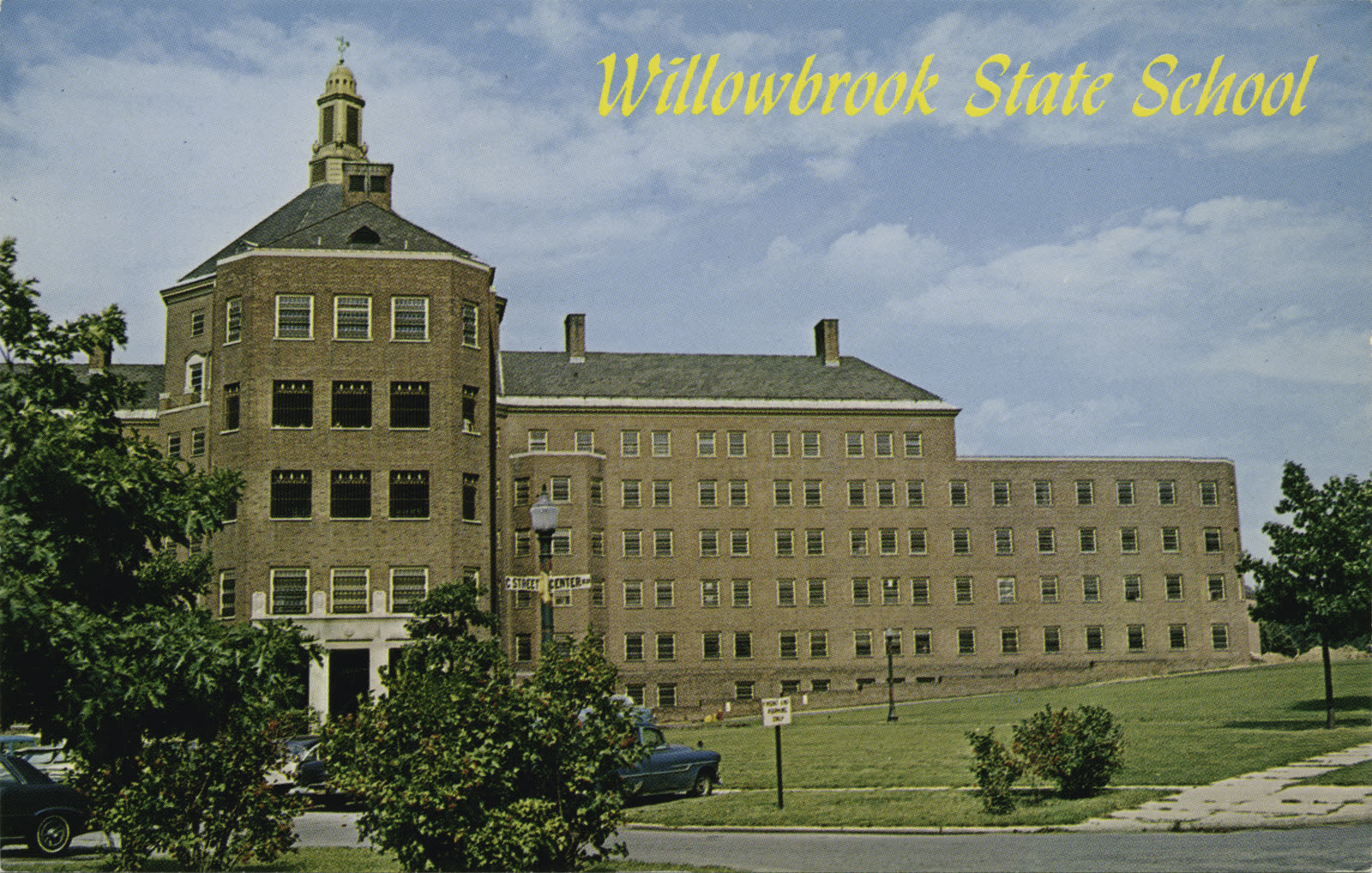
The Willowbrook hepatitis studies are hard to write about because the simplest moral sentence is true and still incomplete. Between the mid-1950s and early 1970s, researchers at Willowbrook State School on Staten Island deliberately exposed institutionalized children with intellectual disabilities to hepatitis virus in order to study the disease and possible prevention.[1][2][3] That is the fact that makes the case endure in research ethics.
The harder historical question is why respected physicians believed the work could be defended. Their argument did not rest on pure denial. Hepatitis was endemic at Willowbrook. The institution was overcrowded. Many newly admitted children were likely to encounter infection anyway. The research did contribute to hepatitis knowledge, including distinctions between forms of viral hepatitis and the protective use of gamma globulin.[2][3] The defense therefore tried to turn bad background conditions into an ethical rationale: if disease was already waiting inside the institution, controlled exposure might be safer and more useful than uncontrolled exposure.[1][3]
That logic is exactly why Willowbrook matters. The case is not only a scandal about one site. It is a warning about a recurring public-health temptation: when a population is already harmed by deprivation, researchers may begin to treat that deprivation as permission.
The basic chronology
Willowbrook opened as a state institution after World War II and became one of the best-known symbols of institutional neglect in New York. By the 1960s, public accounts described extreme overcrowding, and later disability-rights memory places the school's 1987 closure inside a broader struggle against institutionalization.[6] The hepatitis studies sit inside that physical and political world.
The research program began after infectious-disease consultants were brought into a facility where hepatitis was a persistent problem.[1][2][3] In a 1958 New England Journal of Medicine paper, Robert Ward, Saul Krugman, Joan Giles, A. Milton Jacobs, and Oscar Bodansky reported studies of infectious hepatitis at Willowbrook, framing the work as an investigation of natural history and prevention.[2] Later summaries and ethics case materials describe designs that included deliberate infection by oral administration of local hepatitis strains, sometimes after gamma globulin prophylaxis, with parental permission obtained for participation.[1][3]
The controversy did not wait until late twentieth-century hindsight. Henry Beecher's 1966 article, "Ethics and Clinical Research," included the artificial induction of hepatitis in institutionalized children as one of his examples of ethically troubling research in mainstream medicine.[4] In 1982, historian David Rothman sharpened the critique by asking whether Willowbrook and Tuskegee could really be treated as "studies in nature." His answer was no: researchers were not passive observers of unavoidable events, and taking advantage of deprivation created duties to relieve suffering, not license to intensify it.[5]
Krugman's 1986 retrospective defense, published in Reviews of Infectious Diseases, shows why the dispute remained live. He presented the studies in historical context and asked readers to make an independent judgment about their ethics.[3] That invitation is useful, but only if the judgment keeps the full structure visible: scientific benefit, institutional setting, consent pressure, disability, childhood, and deliberate exposure all have to be read together.
Interpretation one: the studies were controlled exposure in an already dangerous place
The strongest defense begins with a real public-health problem. Hepatitis was not an invented risk at Willowbrook. The Bioethics Research Center case summary notes that hepatitis was a major problem there and that Krugman argued children were bound to encounter the same strains under natural institutional conditions.[1] On this view, the experimental unit offered better staffing, isolation from other infections, closer observation, and a chance that gamma globulin or controlled infection would reduce future risk.[1][3]
This interpretation also points to the knowledge gained. The 1958 paper belongs to a period when hepatitis classification, transmission, and prevention were still being worked out.[2] Later histories of the studies emphasize that the work helped distinguish hepatitis types and clarify immune protection.[1][3] A purely anti-science version of the story misses that. Willowbrook was not meaningless cruelty dressed up as research. It was research that produced knowledge.
The question is whether that is enough. The defense depends heavily on inevitability: the idea that infection was so likely that research exposure did not materially worsen the child's situation. It also depends on consent: the idea that parental permission could make the choice legitimate.[1][3] Those are the two hinges on which the case turns.
Interpretation two: deprivation cannot become permission
The critique starts by breaking the word "inevitable." If an institution is dirty, crowded, and disease-prone, the public-health obligation is to fix those conditions, not to convert them into a laboratory. Rothman's abstract captures the point cleanly: he rejected the claim that Willowbrook was merely a study of nature and argued that researchers who used overwhelming social deprivation incurred obligations to relieve their subjects' suffering.[5]
That critique changes the moral grammar. Endemic hepatitis may explain why researchers were interested in Willowbrook, but it does not settle whether they were entitled to induce infection. A background risk is not the same as consent to a guaranteed exposure. Even if many children would have encountered hepatitis in ordinary residence, the study changed probability, timing, control, and purpose. The exposure became something done to a child for a research question.
Consent does not fully rescue the design either. The Bioethics Research Center summary notes that parental permission was sometimes shaped by the overcrowded facility's wait lists: experimental-wing placement could influence parents who lacked resources to care for their children elsewhere.[1] That is not ordinary voluntariness. It is a choice made under institutional scarcity. The child could not assent. The parent faced a system in which admission, care, and research participation were entangled.
Beecher's 1966 critique matters because it located Willowbrook inside respectable medicine, not outside it.[4] His broader point was that ethically dubious research was not confined to criminal fringe actors. Willowbrook therefore unsettles the comfortable division between "bad people doing bad research" and "good institutions producing science." The problem was not that no one could articulate a benefit. The problem was that benefit language could coexist with subjects who had little power to refuse.
The debate map
The historiography is best read as three competing claims, not one flattened verdict.
First, the scientific claim: Willowbrook contributed to hepatitis research. That claim is credible. The studies belonged to the pre-vaccine era of viral hepatitis inquiry, and later defenders could point to real disease-control questions.[2][3]
Second, the contextual claim: Willowbrook was already a dangerous institution. That is also credible. The school became a major disability-rights symbol because of conditions, lawsuits, and closure after decades of protest.[6] Hepatitis risk was part of that environment.[1]
Third, the ethical claim: because disease was already likely, deliberate infection could be justified. This is the weak link. It converts neglect into a premise for research rather than an emergency demanding correction. The fact that a child is trapped in a dangerous setting does not lower the threshold for using that child. It raises the threshold.
That is why the "study in nature" defense is so dangerous. It can sound modest: researchers are only observing what would happen anyway. But Willowbrook shows how quickly that modesty can become false. Researchers were not only observing. They were selecting children, administering virus, organizing exposure, and answering questions whose benefits would flow largely beyond the individual subject.[1][2][5]
What Willowbrook still teaches
Willowbrook's lasting lesson is not that pediatric research is impossible, or that infectious-disease studies can never be ethical. It is more specific. Research with children, disabled people, institutionalized people, or anyone dependent on a scarce service has to treat power as part of the protocol. Consent is not just a signature. It is the conditions under which refusal remains real.
The case also teaches that bad background risk cannot be used casually as a comparator. If a child faces a high chance of harm because an institution is unsafe, the ethical response cannot be to make the harm scheduled, measured, and publication-ready. Public health is allowed to learn from deprivation. It is not allowed to make deprivation do extra work for science.
This is why Willowbrook remains uncomfortable even when the science is acknowledged. The most serious critique does not need to deny that the studies produced knowledge. It says knowledge was bought through a structure that made refusal fragile and turned preventable institutional danger into experimental opportunity. That is the warning worth keeping: when suffering is called "natural," look for the institution that made it so.
Sources
- Bioethics Research Center, "Hepatitis Studies at the Willowbrook State School for Children" - case summary on the 1956-1971 studies, deliberate infection, parental permission, wait-list pressure, and Krugman's ethical rationale.
- Robert Ward, Saul Krugman, Joan P. Giles, A. Milton Jacobs, and Oscar Bodansky, "Infectious hepatitis; studies of its natural history and prevention," New England Journal of Medicine, 1958 - PubMed record for the primary research paper from the Willowbrook hepatitis program.
- Saul Krugman, "The Willowbrook hepatitis studies revisited: ethical aspects," Reviews of Infectious Diseases, 1986 - PubMed record for Krugman's retrospective defense and historical framing.
- Henry K. Beecher, "Ethics and Clinical Research," 1966, reprinted in Bulletin of the World Health Organization via PubMed Central - classic ethics critique that included artificial induction of hepatitis in institutionalized children.
- David J. Rothman, "Were Tuskegee & Willowbrook 'studies in nature'?" Hastings Center Report, 1982 - PubMed record summarizing Rothman's rejection of the passive-observer defense.
- Museum of the City of New York, "Disability Rights in New York, 1968-2017" - exhibition page placing Willowbrook's 1987 closure in disability-rights and deinstitutionalization history.
- Wikimedia Commons, "File:Willowbrook State School (NYPL b15279351-105038) - cropped.jpg" - source page for the NYPL archival postcard scan used as the article image.