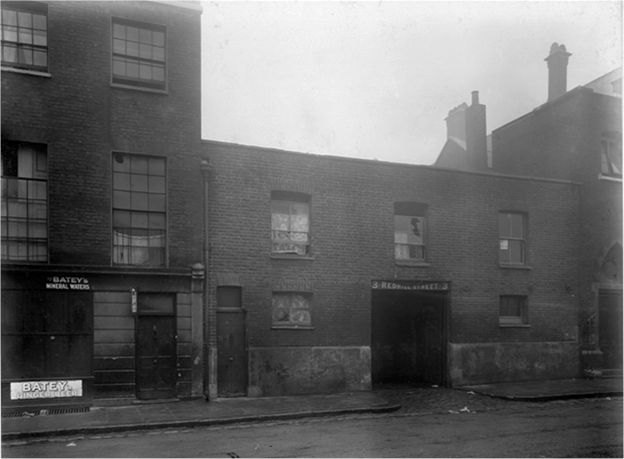
Edwin Chadwick's 1842 sanitary report is easy to praise for the wrong reason. Read from the far side of germ theory, it can look like an almost-right document trapped inside a wrong explanation. Chadwick believed foul air, decomposing matter, damp, filth, and overcrowding were the active pathway by which disease spread. Later bacteriology would correct that causal model. But if the close reading stops there, it misses why the report changed public health.
The report's sharper achievement was not a perfect microbiology. It was a way of making the city itself legible as a health record. Chadwick joined mortality registration, eyewitness inspection, housing descriptions, drainage failures, water supply, refuse removal, ventilation, and legal authority into one argument: premature death was not only an event inside bodies. It was being produced by modifiable surroundings and by weak municipal machinery.[1][2]
That is why the document still matters. It is a pre-germ-theory report with a systems instinct. It names the wrong invisible agent in places, but it keeps finding the right public-health surface: the rooms, drains, courts, cesspools, streets, and institutions through which exposure was organized.
The Report Begins By Refusing Anecdote
The first pages make a methodological move before they make a sanitary one. Chadwick says that partial descriptions of working-class residences would give only a faint idea of the problem, because isolated examples could be dismissed as rare misfortunes.[1] He therefore pairs descriptive testimony with registration data. The report selects 1838 because general registration had made cause-of-death returns more usable, and it presents mortality as the frame through which local observation should be read.[1][2]
The numeric anchors are not incidental. Chadwick reports 282,940 registered deaths from specified diseases in England and Wales in 1838, excluding old age, violence, and unspecified causes; the total deaths that year were 342,529.[1] He gives the following year's total as 338,979 and describes the whole-population death rate as 21 per thousand.[1] Then he narrows to epidemic, endemic, and contagious diseases, including fever, typhus, and scarlet fever, at 56,461 deaths in one year.[1]
The point is not that every number is modern in quality. The point is that Chadwick is trying to change the evidentiary scale. A poor court or damp cottage is not only a sad scene. It is an instance inside a national mortality pattern. Public health begins when the local smell, the doctor's visit, the registrar's return, and the law's failure can be made to speak to one another.
"Removable Circumstances" Is The Key Phrase
Chadwick's opening letter says his attention was directed to the "chief removable circumstances" affecting the health of poorer classes.[1] That phrase carries the whole document. The report is not mainly asking whether poverty is tragic. It is asking which parts of the tragedy are engineered, tolerated, or left legally unfixable.
This is why the descriptions of Tiverton, Truro, Dorset, and other places are so granular.[1] The report lingers over open drains, marshy ground, defective ventilation, damp floors, crowded rooms, decomposing refuse, narrow passages, cesspools, and houses without adequate light or weather protection. Those details are not background color. They are the causal units Chadwick can see. When he lacks microbes, he uses surfaces and flows.
That approach could mislead. A recent review of Chadwick's sanitary role places him inside the miasma theory of disease while contrasting his sanitation program with John Snow's later identification of contaminated water at Broad Street in the 1854 cholera outbreak.[3] That is the essential boundary. Sanitary reform improved many conditions, but a theory centered on bad air could still misunderstand waterborne transmission.
Yet the boundary should not erase the insight. Chadwick's "removable circumstances" language made prevention a political and administrative duty. If disease was linked to the built environment, then health could not be left to bedside treatment alone. Drainage, cleansing, water, ventilation, housing regulation, and local authority became part of the health apparatus.[1][3]
The Report Turns Poverty Into Infrastructure
The most uncomfortable feature of the report is also one of its strengths. Chadwick does not present working-class sickness as a simple deficit of personal behavior. He does describe habits, cleanliness, and moral effects in the period language of Victorian reform, and that paternalism should not be softened. But the report repeatedly returns to constraints: houses built on wet ground, courts without drainage, landlords who leave defective arrangements in place, and laws that lack effective sanitary powers.[1]
English Heritage's historical account describes the report as combining statistics and graphic description to convey findings that linked poverty, poor sanitation, and disease.[2] That combination is the reason the text had political force. It did not merely pity the poor. It implied that official neglect had a measurable death toll.
The same account makes the turning point visible from the policy side: the 1838 inquiry led into a 15-year public-health reform campaign, and the 1842 report helped create momentum for the Public Health Act of 1848 and the General Board of Health.[2] The sequence matters: inquiry, report, public controversy, legislation, board. Chadwick's document was not a neutral survey that happened to be shelved near reform. It was built to move from observation to administration.
The afterlife began almost immediately. The Internet Archive record for Chadwick's 1843 supplementary report shows the sanitary inquiry extending into the practice of interment in towns, a reminder that the 1842 report opened a broader administrative field rather than closing a single file.[4]
The Miasma Error And The Public-Health Win
A fair reading has to hold two ideas together. First, Chadwick's atmospheric explanation was incomplete and sometimes dangerous. The report often treats organic decay and foul air as the central pathway of disease, while later cholera evidence would show how contaminated water could carry infection.[1][3] A sanitary program built only around smell could miss a clean-looking but contaminated pump or reservoir.
Second, many reforms Chadwick favored still attacked real disease pathways even when the explanation was wrong. Removing fecal waste, reducing overcrowding, improving water supply, building drains, and cleaning courts can reduce exposure to pathogens even if the reformer thinks the victory is over bad air. Public health often advances this way: an imperfect causal theory identifies a real environmental interface, then later science clarifies the mechanism.
That is the report's most durable lesson. Health evidence does not always begin with a complete mechanism. Sometimes it begins with a repeated distribution of harm, an observable exposure pattern, and a practical question about what can be changed. Chadwick's report made that kind of reasoning administratively serious before laboratory bacteriology could make it biologically precise.
Why It Still Reads Like A Public-Health Document
The report's afterlife is not only historical. It helps explain why modern public health remains uncomfortable to narrow medicine. A clinic can treat fever, dehydration, injury, infection, asthma, or diarrhea. But a city can make those conditions more likely before a clinician appears. Chadwick's vocabulary is old, and parts of his social outlook are hard to read now, but his main structural claim is still recognizable: health is produced through housing, water, waste, air, crowding, labor, and authority as well as through doctors.
That claim is why the 1842 report belongs in the health archive rather than only in Victorian social reform. It converted city administration into a health question. It argued that premature death could be counted, mapped through living conditions, and reduced by changing the environment. Even where Chadwick's theory of transmission failed, his evidence sequence helped invent a modern expectation: public authorities can be judged by whether their streets, dwellings, drains, and water systems prevent avoidable disease.[1][2][3][4]
Read closely, the report is not a relic of pre-scientific public health. It is one of the documents that made public health possible as a state obligation. It teaches a disciplined humility: the causal model may change, but the duty to investigate removable harm remains.
Sources
- Edwin Chadwick, Report on the Sanitary Condition of the Labouring Population and on the Means of Its Improvement (1842), Delta Omega/ASPPH PDF text.
- English Heritage, "Sir Edwin Chadwick" - biography covering the 1838 sanitation inquiry, the 1842 report, the 1848 Public Health Act, and Chadwick's public-health role.
- P. Mary Vaishali and N. Boopathy, "Edwin Chadwick: A Pioneer of Public Health Reform and His Role in Sanitary Awakening," Cureus, 2024 PDF - review covering miasma theory, Snow, the 1842 report, and the Public Health Act of 1848.
- Internet Archive, "Report on the sanitary conditions of the labouring population of Great Britain. A supplementary report..." - archival metadata and scans for Chadwick's 1843 supplementary report on interment in towns.
- Wikimedia Commons, "File:London-slum-1880s.jpg"; source page for the archival London slum photograph used as the cover image.