Wastewater surveillance is best understood as a timing technology, not a diagnostic substitute. The mechanism is simple but easy to misuse: infected people shed biological signal before many of them test in clinics, sewage aggregates that signal at the sewershed level, laboratories turn that messy stream into trend metrics, and public-health teams decide whether those trends justify action.
When the mechanism is handled well, it buys time. When it is handled poorly, it produces confident-looking noise.
Timeline anchors: when the mechanism proved itself
- 2013 (Israel): wild poliovirus type 1 was detected in sewage in Rahat with no paralytic case reported at detection time, triggering investigation and immunization response.[1]
- 2020 (COVID first-wave period in New Haven): wastewater/sludge SARS-CoV-2 RNA tracked outbreak dynamics and led some operational indicators, especially hospitalizations and report-date case counts.[2]
- 2020 onward (U.S. national scale-up): CDC’s NWSS built a broad surveillance network; by 2026 CDC reports data from about 1,500 sites each week and updates public dashboards every Friday.[3][4]
- 2022 (New York polio event): vaccine-derived poliovirus type 2 linked to one paralytic case was also detected in wastewater, including detections from samples collected 25 days before symptom onset and 41 days after.[5]
The pattern across these episodes is consistent: wastewater is strongest at trend detection and early warning, not at assigning individual-level risk.
The causal chain, step by step
1) Shedding happens before systems can fully see clinical disease
Many infections generate asymptomatic or pre-symptomatic shedding. That means a community can be epidemiologically active while hospitals still look quiet. In polio, paralysis is only a small share of total infections; in respiratory-virus waves, clinical testing can lag behavior and access.
This first step is why wastewater can beat traditional dashboards in some settings: it captures population excretion, not just who sought care.
2) Sewershed aggregation converts many invisible infections into one measurable stream
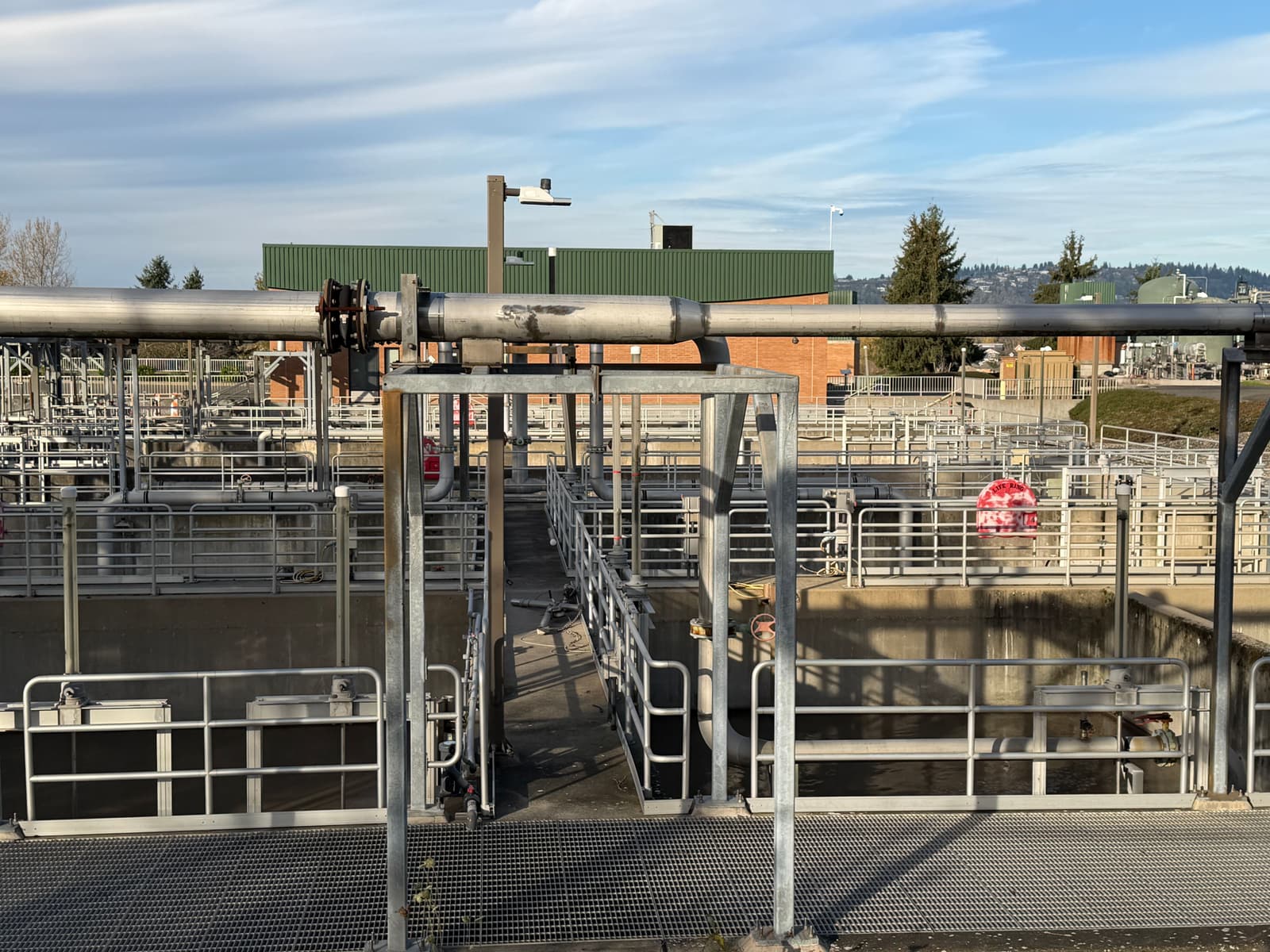
A wastewater treatment plant aggregates contributions from thousands to millions of residents. One person’s shedding is noisy; a sewershed’s aggregate can be interpretable when sampled repeatedly. CDC’s guidance reflects this logic by emphasizing trend interpretation at site, state, and national levels and by recommending repeated sampling rather than one-off grabs.[4]
This is also why wastewater is privacy-preserving by design at operational scale: it is community-level signal, not household diagnostics.[4]
3) Laboratory normalization turns raw concentration into trend-ready metrics
Raw wastewater concentration alone is unstable. Rainfall, flow dilution, lab method changes, and outliers can distort interpretation. CDC’s wastewater viral activity level framework addresses this by standardizing to site-specific low baselines, log-transforming values, and removing clear outliers before public comparison across place and time.[3]
In other words, the core analytical move is not “detect virus = panic,” but “normalize repeated measurements = assess direction and magnitude of change.”
4) Decision value comes from lead time, not precision fantasy
A useful signal is one that arrives early enough to change action. In the New Haven SARS-CoV-2 dataset, wastewater/sludge signal was associated with leads versus hospital admissions (1–4 days) and versus report-date positive tests (6–8 days), while lead versus specimen-date test series was small.[2]
That distinction matters: if your clinical reporting is already fast, wastewater adds modest marginal lead; if your reporting chain is delayed, wastewater can materially improve decision timing.
5) Policy trigger design determines whether the signal helps or harms
The New York 2022 polio response illustrates the operational end of the chain: wastewater detections were integrated with vaccination-coverage review, expanded surveillance, provider alerts, and vaccination clinics, rather than treated as a standalone headline.[5]
Wastewater works when institutions pre-commit to trigger rules (for example: sustained rise over baseline + corroborating syndromic data + readiness to deploy vaccines/testing). It fails when teams treat each spike as an isolated media event.
Why false confidence appears so easily
Wastewater monitoring is often described as “early warning,” which is true but incomplete. The failure mode is over-reading single-point changes while under-investing in denominator context.
Three recurrent distortions:
- Hydrology distortion: heavy rain, industrial discharge shifts, or site flow changes alter concentration independent of incidence.
- Method drift: assay or lab workflow changes create apparent trend breaks.
- Coverage illusion: one high-performing site can be mistaken for broad regional insight.
CDC’s own documentation repeatedly frames wastewater as a complement to clinical and hospital data, not a replacement.[4]
Two competing interpretations of 2026 wastewater policy
Interpretation A: wastewater is now core surveillance infrastructure
Evidence for this view is strong: national-scale site coverage, standardized metrics, routine public updates, and multi-pathogen expansion suggest wastewater has moved from experimental work to operational epidemiology.[3][4][6]
Interpretation B: wastewater remains high-noise, context-dependent signal
This view is also credible: site comparability constraints, denominator instability, and lead-time variability mean wastewater can be over-trusted if governance is weak. The same datasets that provide early warning can mislead teams that skip cross-validation.[2][3][4]
Both interpretations can be true at once. The reconciliation is governance quality: the technology is mature enough for frontline use, but only when institutions enforce disciplined interpretation.
What high-quality deployment looks like in practice
A health department or hospital network should treat wastewater as a standing operations feed with explicit boundaries:
- Sampling discipline: stable cadence (CDC recommends twice weekly as a baseline) and method continuity.[4]
- Validation stack: wastewater trends reviewed alongside emergency visits, lab positivity, and hospitalization trends.[4]
- Action thresholds: pre-defined trigger levels for communication, testing access expansion, vaccine outreach, or facility preparedness.
- Retrospective audit: after each surge, compare wastewater-triggered actions against observed outcomes to recalibrate thresholds.
Without those four elements, wastewater monitoring becomes interesting telemetry. With them, it becomes actionable early-warning infrastructure.
Bottom line
The mechanism behind wastewater surveillance is not mysterious: shedding -> aggregation -> normalization -> trigger-based action. Its real-world value is the time it can buy before clinical systems fully register a wave. The strategic question for 2026 is no longer whether wastewater can detect outbreaks; it is whether institutions can convert imperfect early signal into disciplined, proportionate response.
Sources
- WHO Disease Outbreak News (2013) — Poliovirus detected from environmental samples in Israel
- Peccia et al., Nature Biotechnology (2020) — Measurement of SARS-CoV-2 RNA in wastewater tracks community infection dynamics
- CDC NWSS data methods — quality checks, comparability, and WVAL methodology
- CDC NWSS about data — use cases, limitations, update cadence, recommended integration with other surveillance
- CDC MMWR (2022) — New York paralytic polio case and wastewater detections
- CDC NWSS overview page — national wastewater monitoring scope
- Manor et al., PNAS (2018, open via PMC) — Epidemiology of the silent polio outbreak in Rahat, Israel
- WastewaterSCAN methods and implementation notes (Stanford/Emory-led)
- Wikimedia Commons source image — Gresham Wastewater Treatment Plant aeration basins (2025)