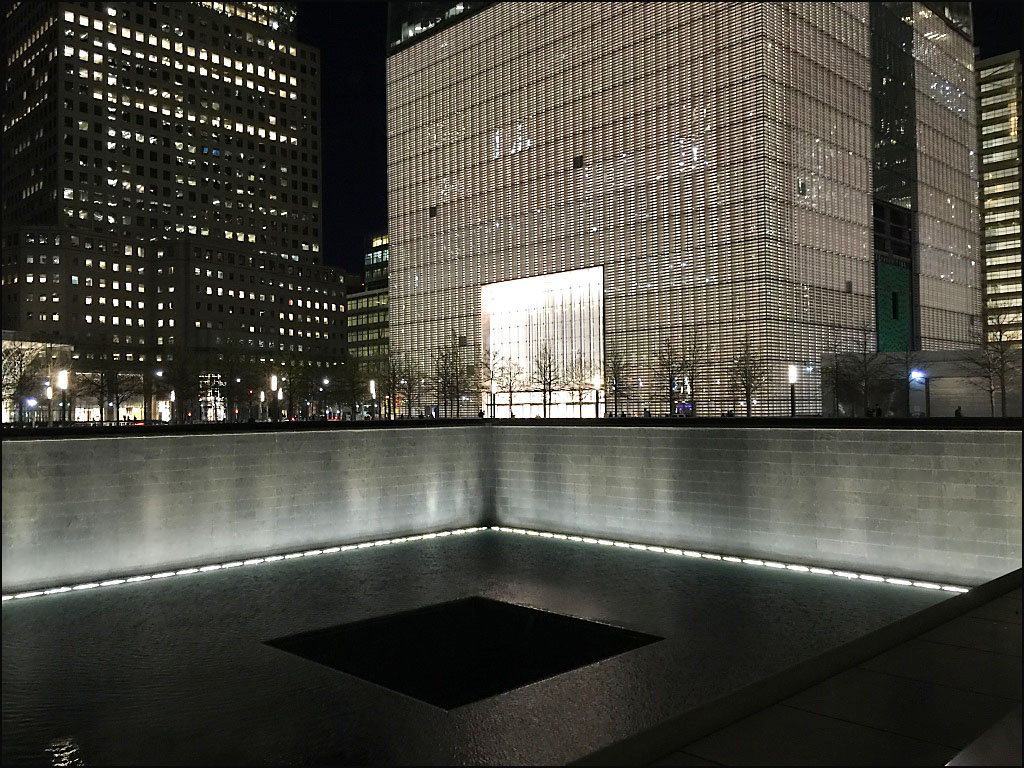
The key health question after 9/11 was never only toxic exposure. It was also memory durability: could a system built in emergency time keep attention on illnesses that appeared years later, after cameras left? In this case, commemoration and policy were coupled. Naming rituals, anniversary ceremonies, and site-based memorial practice did not treat disease, but they helped keep political and administrative attention alive long enough for long-horizon care architecture to be funded and renewed.
Timeline anchors: from attack shock to long-latency governance
- 2001-09-11: attacks kill 2,977 people and injure thousands across New York, the Pentagon, and Shanksville.[1]
- 2002-05-30: formal end of Ground Zero recovery operations after about nine months; this date later becomes an annual commemoration point for sick and deceased responders and survivors.[1]
- 2011-01-02: President Obama signs the James Zadroga 9/11 Health and Compensation Act (Public Law 111-347), establishing the WTC Health Program in federal law.[3]
- 2015-12-18: Zadroga reauthorization (Public Law 114-113) extends WTC Health Program authorization to 2090.[3]
- 2019-09-27: Public Law 116-59 raises enrollment caps for responders and survivors in the WTC Health Program.[3]
- 2025: VCF reports nearly $2 billion awarded in that year and $16.8+ billion to 71,000+ claimants since reopening in 2011, showing the scale of long-tail compensation demand.[5]
That sequence matters because the disease burden unfolded on a slower clock than public attention. Governance had to be renewed repeatedly, not declared once.
How commemoration became a health-governance mechanism
Three memory channels mattered:
- Name-reading continuity. Annual ceremonies repeatedly read names of those killed, sustaining family-centered public presence instead of letting 9/11 become abstract monument language.[1][2]
- Date architecture. September 11 and May 30 created recurring civic deadlines where institutions had to account for unfinished health consequences.[1]
- Physical site anchoring. The Memorial Glade and related practices made post-attack illness visible as part of the event’s continuing history, not a separate policy silo.[1]
None of this substitutes for epidemiology or treatment. But for long-latency conditions, memory rituals can keep the denominator of concern from collapsing between appropriations cycles.
What policy infrastructure eventually stabilized
The post-2011 structure separates missions but links them operationally:
- WTC Health Program: monitoring and treatment of certified 9/11-related conditions, authorized through 2090, delivered through specialized centers and a nationwide network.[4][8]
- VCF: financial compensation for qualifying physical harm/death; separate administration, separate deadlines, but certification linkage to health-program determinations for many claims.[4][5]
Clinical scope is broad and latency-aware. Covered-condition pathways explicitly include respiratory, digestive, mental-health, musculoskeletal, and cancer tracks, with formal latency criteria for cancer certification.[6]
By the early 2020s, the care network had reached over 117,000 responders and survivors across nearly all U.S. congressional districts, signaling that this became national longitudinal care infrastructure rather than a local short-term clinic response.[7]
Competing interpretations
Interpretation A: commemoration was a causal policy input
Under this reading, recurring rituals and public naming stabilized attention, reduced political forgetting, and increased the odds of legislative renewal and administrative continuity. The mechanism is indirect but plausible: memory institutions preserve salience; salience supports budget and statutory endurance.
Interpretation B: commemoration was mostly symbolic; science and advocacy did the real policy work
This view argues that legal design, claims administration, epidemiology, and organized advocacy would have produced similar outcomes even with less ritual commemoration. In this account, ceremonies track policy momentum more than they create it.
The strongest evidence today supports a mixed model: biomedical evidence and legal advocacy were decisive for program design, while commemoration helped keep the issue legible over decades when latency and attrition could have fragmented public focus.
What would materially change this assessment
A stronger test would compare policy durability and enrollment/claims throughput across periods or jurisdictions with different commemoration intensity, while controlling for exposure burden and organized advocacy capacity. If outcomes remain unchanged under lower memory intensity, the causal role of commemoration would weaken.
Why this case is still high-value for health systems
Long-tail disasters force a practical governance choice: either build memory into institutions, or rely on episodic outrage. The 9/11 health arc suggests that when illness emerges over decades, commemoration can function as a scheduling device for accountability, helping care and compensation systems stay active after the original emergency timeline ends.
Sources
- National September 11 Memorial & Museum — Commemoration
- National September 11 Memorial & Museum — 20th Anniversary (name-reading protocol and ceremony structure)
- CDC WTC Health Program — Laws (2010 act, 2015 reauthorization, 2019 enrollment-cap changes)
- CDC WTC Health Program — Understanding Different September 11th Assistance Programs (
vcfcompare) - September 11th Victim Compensation Fund (VCF.gov) — 2025 Annual Report summary and program status
- CDC WTC Health Program — Covered Conditions (including latency framework)
- Reibman J, et al. The World Trade Center Health Program: an introduction to best practices (Arch Environ Occup Health, 2022; PMC)
- NYC 9/11 Health — WTC Health Program overview (eligibility frame and authorization context)