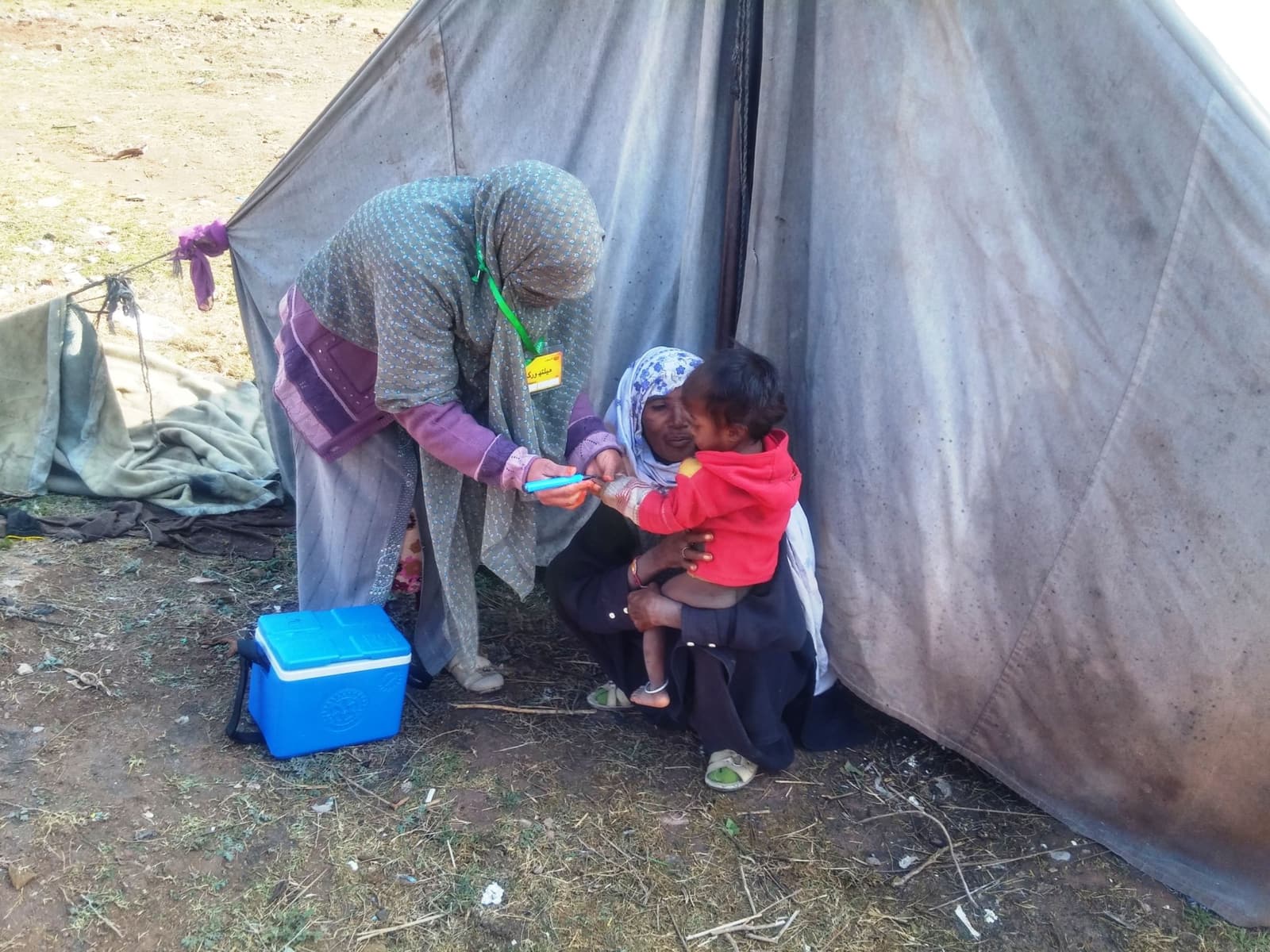
If eradication were only a question of money and political will, polio should already be a completed chapter. The world has sustained a multi-decade campaign, cut wild-virus burden by more than 99%, and certified most regions polio-free. Yet full global closure remains unfinished in 2026.
A comparative history with smallpox helps explain why. The two campaigns share mass vaccination, international coordination, and surveillance systems, but they differ in one critical way: the operational difficulty of finding and stopping the last chains of transmission.
Timeline anchors: two campaigns, two endgame tempos
- 1967: WHO launches the Intensified Smallpox Eradication Programme (as documented in global historical reconstructions).[1]
- 1977: the last naturally occurring smallpox case is recorded (Somalia).[2][3]
- 1980: the World Health Assembly declares smallpox eradicated.[3]
- 1988: the World Health Assembly launches the Global Polio Eradication Initiative (GPEI).[4]
- 2015 and 2019: wild poliovirus type 2 and type 3 are declared eradicated.[5]
- 2016: type 2 is removed from oral polio vaccine use in the coordinated OPV switch process.[6]
- 2026: wild poliovirus transmission remains endemic in Afghanistan and Pakistan, even after global incidence fell by over 99% from 1988 baseline estimates.[4]
The key historical puzzle is not whether eradication tools exist. It is why one campaign reached global zero and lock-in, while the other keeps revisiting endgame instability.
Comparison 1: visibility of infection and surveillance burden
Smallpox had brutal clinical visibility: patients were usually identifiable once rash illness developed, and classical containment could focus on known cases and contact rings.[2][3]
Polio presents a harder signal problem. WHO notes that only a fraction of infections become paralytic, with roughly 1 in 200 infections causing irreversible paralysis; among paralytic cases, 5–10% die when respiratory muscles are affected.[4] That means transmission can continue silently before health systems detect it.
Operational implication: smallpox endgame surveillance could often pivot from visible case detection to ring response, while polio requires persistent high-sensitivity surveillance plus repeated immunization activity even when case counts appear low.
Comparison 2: vaccine-platform asymmetry in the final mile
Smallpox eradication relied on a vaccine-and-containment model that, despite known adverse effects, did not create a long-run post-eradication transmission loop in the field once natural transmission stopped.[2][3]
Polio eradication has required balancing two vaccine realities:
- OPV offers strong programmatic advantages for mass campaigns and mucosal immunity.
- Under low-coverage conditions, OPV-derived viruses can circulate and, in rare cases, regain neurovirulence, creating vaccine-derived outbreak risk.
PAHO’s technical guidance describes exactly this mechanism and records the 2016 global withdrawal of type 2 from OPV after wild type 2 eradication.[6]
This creates a historically different endgame geometry from smallpox: the program must suppress both residual wild-virus transmission and vaccine-derived outbreak pathways when coverage or surveillance weakens.
Comparison 3: geography, conflict, and campaign continuity
Both eradication campaigns depended on repeated local execution, but the present polio endgame is concentrated in settings where insecurity, displacement, campaign interruptions, and trust deficits can repeatedly reopen transmission windows.[4][5]
In other words, the last-mile unit is not a country average. It is the district-level continuity of access, staffing, cold-chain reliability, and social acceptance over multiple rounds.
Smallpox history also involved conflict and weak systems, but the campaign closed before today’s endgame had to repeatedly manage a parallel vaccine-derived transmission dynamic at scale.
Two interpretations of the current stall
Interpretation A: this is a temporary implementation trap
Under this reading, polio’s remaining gap is primarily operational. If surveillance sensitivity, campaign quality, and cross-border coordination hold long enough in remaining reservoirs, the current lag is still compatible with eventual eradication closure.[4][5]
Interpretation B: this is a structural endgame problem
This view argues that polio eradication is uniquely vulnerable to cycles of low coverage and surveillance disruption, meaning endgame instability is not an exception but a recurring structural feature unless immunity and detection thresholds are continuously maintained at very high levels.[4][6][7]
Both interpretations are plausible. The difference is time horizon: short-run optimism about campaign quality versus long-run realism about system fragility.
What this comparative history changes in practice
The practical lesson is that “99% progress” is not a near-linear path to completion. In eradication work, the last percentile can be harder than the first ninety.
For policy and operations, three watchpoints matter most:
- Surveillance quality signals, not only case totals (especially in low-incidence windows).
- Coverage durability in high-risk districts across consecutive rounds.
- Outbreak-control speed when vaccine-derived detections emerge.
Smallpox proved eradication is possible. Polio proves that the final architecture of detection, immunity maintenance, and local execution decides whether possibility becomes closure.
Sources
- Our World in Data — Smallpox historical timeline and eradication program context
- WHO Q&A — Smallpox (last natural case, certification timeline, containment logic)
- CDC — About Smallpox (1977 last natural case; 1980 eradication declaration)
- WHO fact sheet — Poliomyelitis (1988 launch, >99% decline, endemic-country status, severity profile)
- Global Polio Eradication Initiative — History of polio milestones (WPV2 and WPV3 eradication milestones)
- PAHO — Poliomyelitis technical overview (2016 type-2 OPV switch and vaccine-derived transmission pathway)
- Our World in Data — Polio data and endgame framing
- Wikimedia Commons source image — Polio Vaccination Campaign (Pakistan)