On March 3, 1931, the House of Commons was given a table of deaths. It showed that 4,144 women in England and Wales had died from causes attributed to pregnancy and childbearing in 1920; in 1929, the count was still 2,787. A government committee had judged that at least half the deaths it examined were preventable. Yet when an MP asked how many women had received no antenatal supervision, the government had no answer.[1]
That exchange exposed a public-health problem hidden inside an apparently simple statistic. Britain could count many maternal deaths, but a count could not reconstruct the missed warning, the delayed call, the journey to hospital, the absent blood, or the decision made too late. A death certificate supplied an endpoint. It did not show the route.
The confidential enquiry into maternal deaths, established nationally in England and Wales in 1952, was an attempt to recover that route. Its durable invention was not a drug or a machine. It was a learning circuit: identify a death, assemble the records, let clinicians outside the immediate case examine what happened, remove names, find recurring failures, and return the lessons to the health service.[2] The question was no longer only, “How many women died?” It became, “What would have had to happen differently for the next woman?”
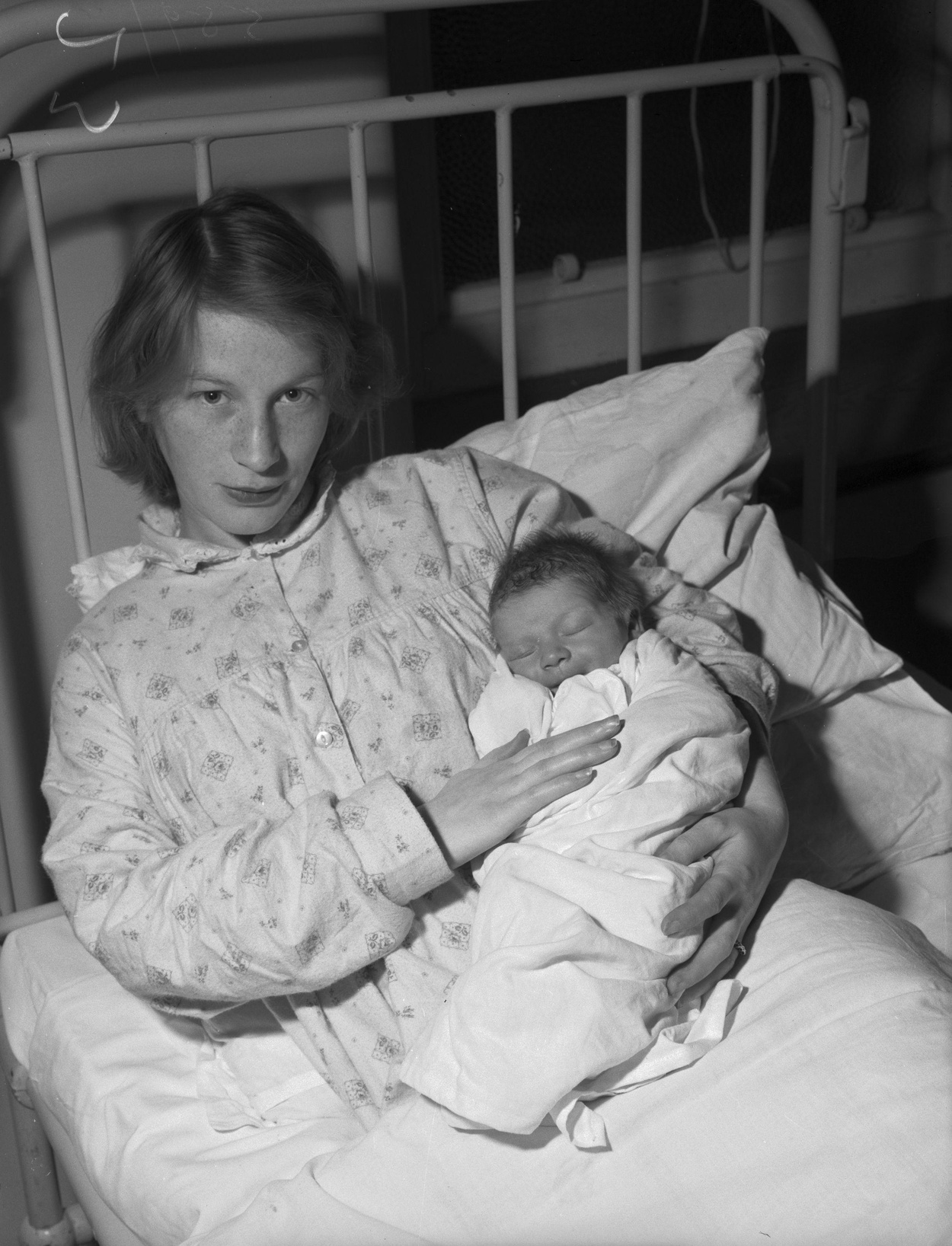
Image context: the cover does not depict a death or an enquiry case. Its value is more exact than that: it places the national review system back in the ordinary physical world it was designed to examine—a mother, a newborn, a bed, and a maternity service in the decade when confidential review became continuous.[7]
Before 1952, a national number without a national route
The enquiry did not begin on blank paper. Britain had conducted a smaller investigation before the Second World War, and maternal mortality had already fallen sharply through a mixture of social change, antibiotics, blood transfusion, better obstetric practice, and wider access to care. The creation of the National Health Service in 1948 also made it more plausible to treat outcomes across hospitals and regions as a shared public responsibility rather than a collection of private misfortunes.[2][3]
But the prewar record revealed why a permanent review mechanism was still needed. The annual totals moved up and down without explaining themselves. In the 1931 parliamentary exchange, the government could report eleven years of deaths and repeat a committee's estimate of preventability, but it could not connect those totals to antenatal supervision for the women who died.[1] The missing information was not a minor statistical footnote. It was the difference between describing a burden and locating a remedy.
In 1952, after an international obstetrics conference in London and discussions between the president of the Royal College of Obstetricians and Gynaecologists and Ministry of Health official George Godber, the new national enquiry began.[2] The first report, published in 1957, covered deaths in 1952–1954. That delay was part of the original bargain: this was not a rapid alert feed. It was a deliberate triennial reconstruction of deaths whose details were often scattered among homes, general practitioners, ambulances, maternity units, operating theatres, and post-mortem reports.[2][3]
A death registration became the first link in a chain
The early workflow was simple enough to describe and radical enough to matter. Registration of a pregnancy-related death started the process. Information was requested from the general practitioner and local obstetrician. The file moved to a regional assessor, usually a senior obstetrician, and then to Ministry advisers in obstetrics, anaesthesia, and pathology for final assessment.[2]
Confidentiality held that chain together. Reports were treated as privileged professional material so clinicians could describe errors and constraints candidly without turning the enquiry itself into a disciplinary hearing. The cases were then aggregated. No reader of the national report needed a woman's name or a hospital's name to see that the same failure had occurred in different places.[2]
One early pattern shows why the method was more useful than a table of causes. Women who suffered a retained placenta and severe bleeding after a home birth were sometimes placed in an ambulance and sent to hospital without transfusion or manual removal of the placenta. Some arrived close to death. Read one at a time, such cases could look like isolated emergencies. Read together, they exposed a broken transfer pathway: recognition, immediate treatment, transport, blood availability, and receiving care were being treated as separate tasks even though haemorrhage made them one race against time.[2]
The enquiry did not invent every corrective measure. Obstetric “flying squads,” blood transfusion, antibiotics, safer anaesthesia, and improved management of the third stage of labour had their own histories. What confidential review contributed was a way to see where those capacities failed to meet the patient. It converted the last hours of a woman's care into evidence about the design of the service.
Success changed the deaths the enquiry had to understand
The first triennium makes the old burden concrete. In 1952–1954, more than 1,400 maternal deaths were recorded in England and Wales. Haemorrhage accounted for 234 and “toxaemia”—the period term encompassing pre-eclampsia and eclampsia—for 200.[3] These were dangers recognisable as obstetric crises: bleeding, seizures, ruptured uterus, obstructed labour.
Half a century later, the pattern was different. In 2003–2005, the entire United Kingdom recorded 295 maternal deaths in the review cited by obstetric physician Michael de Swiet. Heart disease accounted for 48 and thromboembolism for 41, while haemorrhage accounted for 14 and pre-eclampsia or eclampsia for 18.[3] The comparison cannot assign the decline to confidential enquiry alone; antibiotics, transfusion, antenatal care, medical treatment, safer surgery, and changing definitions all matter. But it shows why a review system had to evolve rather than declare victory.
Once deaths from classic obstetric emergencies became less dominant, pregnancy's interaction with existing disease moved toward the centre of the story. Since 1997–1999, indirect deaths—those arising from a condition not directly caused by pregnancy but aggravated by it—had exceeded direct deaths in the UK series described by de Swiet.[3] A system built to learn from postpartum haemorrhage now also had to trace cardiac symptoms across primary care, emergency medicine, obstetrics, anaesthesia, intensive care, and the postnatal months.
That shift is the strongest argument for a continuous enquiry rather than a one-time investigation. A recommendation can reduce one hazard while age, migration, deprivation, mental health, infection, chronic disease, and new treatments change the next set of cases. The target moves because care works, because society changes, and because new weaknesses become visible.
The modern enquiry reads across a whole year of care
Today's MBRRACE-UK programme reviews the care of women who die during pregnancy or up to one year after pregnancy in the UK, and it includes the Republic of Ireland in the confidential-review process. Records may be gathered from hospitals, general practices, ambulance services, post-mortem examinations, and local investigations. They are anonymised before multidisciplinary review.[4][8]
The assessor pool now extends far beyond the original obstetric chain. More than 100 experts contribute, with each death examined through pathology, obstetrics, midwifery, and anaesthesia, plus specialties such as psychiatry, emergency medicine, and general practice when relevant. Reviewers judge care against guidance and good practice, identify improvements that might have changed the outcome, and can escalate an unresolved cause for concern. Chapter groups then look across cases for recurring lessons and direct recommendations toward bodies able to change national practice.[4]
This remains a learning system, not a substitute for accountability. Confidentiality can make frank reconstruction possible, but anonymity does not itself implement a recommendation, repair staffing, or answer a bereaved family's questions. Nor does a case series supply its own comparison population. The method is strongest when confidential case review is joined to reliable denominator data, independent investigation where needed, and institutions with the power to act.[4][6]
The latest numbers prevent a comforting ending
The 2022–2024 UK data do not support a neat story in which an old audit solved maternal mortality. MBRRACE-UK identified 252 deaths from direct or indirect maternal causes during pregnancy or within 42 days after its end, among 1,969,321 maternities. That was 12.80 deaths per 100,000 maternities (95% confidence interval 11.27–14.48). The rate was not significantly different from 2021–2023, but it was 20% higher than the 2009–2011 rate used as the baseline for England's ambition to halve maternal mortality.[5]
The pattern also remained unequal. In England, Black women had 2.72 times the risk of maternal death of White women (95% CI 1.80–4.00), while women living in the most deprived fifth of areas had 2.03 times the risk of those in the least deprived fifth (95% CI 1.24–3.48). For deaths occurring from six weeks to one year after pregnancy, psychiatric causes accounted for 33%, with suicide the leading cause.[5]
Those figures are not an appendix to the historical achievement. They are the reason the enquiry must still exist. The old system learned to see haemorrhage across a home-to-hospital transfer. The modern system has to see risk across maternity care, cardiology, mental-health services, emergency response, race, poverty, and the months after the conventional six-week postnatal boundary. Counting still matters, but only if the count opens the record rather than closes the case.
From a British review to a portable public-health method
In 2004, the World Health Organization published Beyond the Numbers, setting confidential enquiries beside facility reviews, surveys of severe morbidity, clinical audit, and community-based methods. WHO defined the core approach as a systematic, multidisciplinary, anonymous investigation that identifies causes and avoidable or remediable factors, then turns the combined cases into practical recommendations.[6]
The same guidance also names the method's limits. A confidential enquiry needs a functioning way to identify deaths, committed reviewers, time, statistical support, and government cooperation. It can become too medically narrow if it ignores poverty, nutrition, geography, or access. And because deaths supply numerator data, the enquiry cannot describe relative risk without information about the wider population giving birth.[6] Britain's current combination of confidential case review and national surveillance reflects that lesson: stories explain pathways; denominators reveal patterns.[4][5]
That is the quiet institutional achievement begun in 1952. Britain did not merely preserve a series of reports. It built a habit of refusing to let a maternal death remain only a certificate, a local memory, or a line in Parliament. The habit is imperfect and cannot save anyone unless recommendations become care. But it gives each case a second public purpose: not to make the woman anonymous, but to make the failure recognisable before it happens again.
Sources
- UK Parliament, “Maternal Deaths,” House of Commons debate, March 3, 1931 — annual England and Wales counts for 1919–1929 and the contemporary estimate that at least half of reviewed deaths were preventable.
- Nuffield Trust, “1948–1957: Establishing the National Health Service” — history of the 1952 enquiry's creation, confidential case pathway, first report, and early findings on haemorrhage transfers.
- Michael de Swiet, “Maternal mortality in the developed world: lessons from the UK confidential enquiry,” Obstetric Medicine 1, no. 1 (2008) — comparison of causes and counts in 1952–1954 and 2003–2005.
- MBRRACE-UK, National Perinatal Epidemiology Unit, University of Oxford, “Maternal confidential enquiries” — current scope, multidisciplinary assessment, anonymisation, escalation, and recommendation process.
- MBRRACE-UK, “Maternal mortality 2022–2024” data brief, January 2026 — latest UK rates, causes, confidence intervals, and inequalities by ethnicity and deprivation.
- World Health Organization, Beyond the Numbers: Reviewing Maternal Deaths and Complications to Make Pregnancy Safer (2004) — operational definition, prerequisites, strengths, and limits of confidential enquiries.
- Wikimedia Commons, “Christmas babies at Saint David's Hospital, Bangor” — Geoff Charles's December 31, 1959 photograph from the National Library of Wales used as the article image.
- MBRRACE-UK, National Perinatal Epidemiology Unit, University of Oxford, “Maternal data collection” — records requested across hospital, primary-care, ambulance, post-mortem, and local-review pathways before anonymised case review.