The inverse care law is usually repeated as a sad paradox: people who need health care most tend to have the least access to good care. That summary is memorable, portable, and incomplete. It turns an argument about institutions into something that sounds as inevitable as gravity.
Julian Tudor Hart's original essay, published in The Lancet on February 27, 1971, does not describe a natural law. Its opening says that care “tends to vary inversely” with need; its next sentence says the mismatch becomes stronger as medical care is exposed to market forces and weaker as that exposure is reduced.[1] The first sentence names the pattern. The second makes a causal and political claim.
That second sentence changes how the paper should be read. Hart was not merely observing that deprivation and poor services often share a postcode. He was asking what distributes clinical time, trained staff, decent premises, hospital support, and professional ambition—and why those resources drift away from populations carrying the heaviest burden of illness. The law was meant to be modified, not admired.
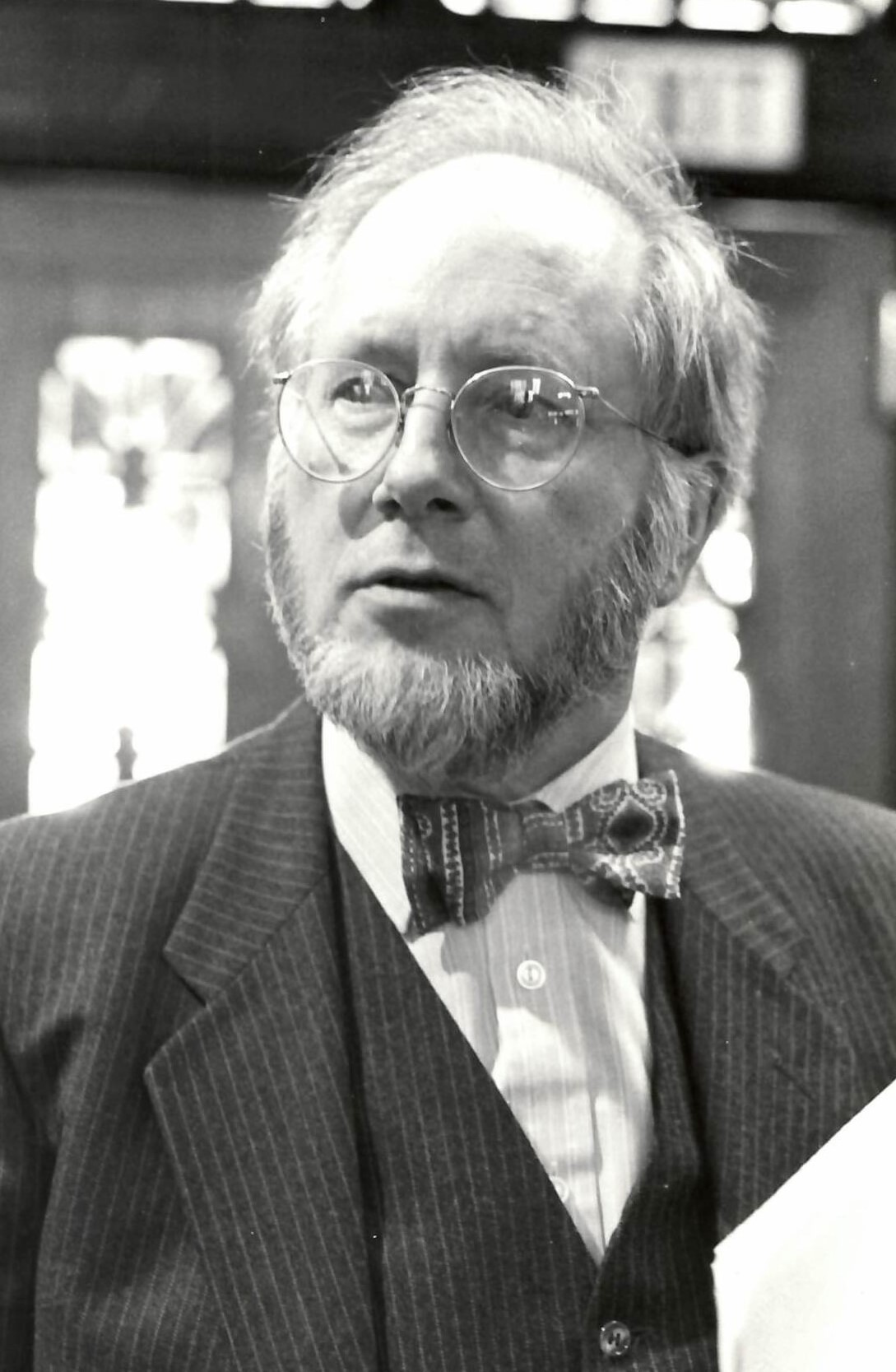
The photograph above shows Hart later in life, dressed for a public professional role. The paper came from a less ceremonial vantage point. In 1961, he moved to Glyncorrwg, a south Wales mining village, and built a research general practice around a defined community. Within four years, nearly the whole village and about 200 people from nearby communities were registered, giving the practice a population of roughly 1,900.[2] His 1971 argument is polemical, but it is not detached. A doctor's waiting room is one of its instruments.
“Law” means pressure, not fate
The most important word in Hart's first sentence may be tends. It leaves room for counterforces. The availability of care does not have to move away from need; it does so when the incentives, infrastructure, and professional culture make that movement easier. Public planning, taxation, workforce policy, and community-oriented practice can push the other way.[1]
The phrase good medical care is just as deliberate. Hart was not counting contact alone. A hurried consultation in an overfilled surgery is not equivalent to a longer encounter with adequate records, equipment, nursing support, referral access, and continuity. Two districts can report similar visit rates while offering very different chances to explain a problem, examine it properly, follow it over time, or reach a specialist.
Finally, the unit is the population served. That wording shifts attention from the unusually assertive patient who secures an appointment to everyone for whom a service is responsible—including people who do not arrive, cannot navigate the route, or are repeatedly treated without the underlying problem being resolved. Hart's law is therefore about distribution before it is about individual utilization.[1][4]
Those choices make the aphorism less tidy but more useful. “Need” belongs to a population. “Good” describes the content and conditions of care. “Availability” asks whether that care can actually be supplied. None can be inferred from a waiting-room headcount alone.
The paper begins with a measurement problem
Hart opens with evidence that health need was geographically and socially unequal. He reported that weighted all-cause mortality in the Glamorgan and Monmouthshire valleys rose from 128 percent of the England and Wales rate in 1934 to 131 percent in 1968. Relative infant mortality in the same valleys rose from 115 percent of the national rate in 1921 to 124 percent in 1968.[1] These are historical comparisons as Hart presented them, not estimates of the valleys today.
If care were allocated in proportion to need, heavier illness should attract at least equal—and plausibly greater—clinical capacity. Yet Hart immediately acknowledges that proving the mismatch is difficult. Administrative records show who used a service more easily than they show who needed it, what happened inside the consultation, or what care was never available. Higher use in a poorer area might mean generous provision; it might instead mean greater morbidity pressing against thinner services.[1]
This is the paper's strongest methodological caution. Utilization is not a synonym for access, quality, or need. Hart listed missing evidence he wanted: waiting lists by place and social class, staffing shortages by area, and measures connecting diagnosis and outcome. He then assembled an uneven body of mortality data, surveys, professional reports, historical accounts, and experience from industrial practice.[1]
That mixture is also the paper's limitation. The Inverse Care Law is not a controlled study that estimates one effect size for one mechanism. Some of Hart's interpretations run beyond what the cited surveys can prove. The paper is better read as a sourced structural diagnosis: it identifies a recurring pattern, shows why ordinary service statistics can conceal it, and proposes a mechanism that later research can test.
The NHS is the counterexample inside the argument
The essay would be easier to caricature if Hart had claimed that Britain's National Health Service failed. He says nearly the opposite. The NHS, founded in 1948, greatly expanded medical care for people and places that had previously been deprived. Hospitals improved, untreated disease reached surgery, and cash ceased to mediate most encounters between general practitioners and patients.[1]
But improvement for everyone is not the same as redistribution according to need. Hart's sharp formulation is that universal, free-on-demand care reduced class inequalities without abolishing them. That distinction lets two facts coexist: working-class patients could use far more care after 1948, while affluent patients and affluent districts could still obtain more of the time, explanation, facilities, and specialist support that made care effective.[1]
Hart used Ann Cartwright's 1961 survey to illustrate the ambiguity. Among people younger than 45, middle-class patients had a consultation rate 53 percent lower than working-class patients; among those older than 75, their rate was 62 percent higher. Hart inferred that younger working-class visits contained more administrative demand and that middle-class encounters carried more clinical content. The survey did not directly measure “clinical content,” so that inference should remain labeled as his. What the age reversal does establish is that one total consultation rate cannot settle whether care matches need.[1]
The NHS therefore functions in the essay as both achievement and experiment. Removing charges at the point of use weakened one route by which money rationed care. It did not automatically rebuild every surgery, reduce every patient list, distribute specialists, or reverse the career advantages of working in well-resourced places. Coverage opened the door; allocation still determined what stood behind it.
The mismatch is produced in working conditions
Hart's most durable move is to relocate quality from the character of an individual doctor to the conditions under which medicine is practiced. In industrial areas, he described larger lists, heavier workloads, weaker hospital support, older premises, fewer ancillary staff, and a professional inheritance of rapid, low-content consultations. Under those conditions, even a committed clinician had less room to examine, explain, review, and improve.[1]
The workforce figures make the feedback loop visible. Hart reported that the share of people in England and Wales living in officially under-doctored areas doubled from 17 percent in 1961 to 34 percent in 1967. Of 169 general practitioners entering under-doctored areas between October 1968 and October 1969, 164 had come from abroad.[1] His point was not that migrant doctors caused lower quality. It was that domestic recruitment repeatedly failed the places with least power to offer attractive conditions, leaving internationally trained clinicians to hold up a system that had not corrected the distribution problem.
This is more precise than saying “poor areas get bad doctors.” Hart's mechanism is cumulative. High need produces more work. Heavy work shortens the time available for good care. Weak premises and support narrow what clinicians can do. Those conditions make recruitment and retention harder. The resulting shortage increases the work again. The inverse care law is a loop, not a moral ranking of practitioners or patients.
Hart's own practice supplied a counter-image. The later profile of Glyncorrwg describes longer mean consultations over time, population registers, case-finding, and a team that treated omissions—not only completed visits—as data.[2] One unusual practice cannot disprove a population pattern. It can show that different organization changes what care is possible.
The second sentence is a claim to test
Hart ultimately names market distribution as the force that creates and maintains the law. Direct payment can ration entry, but his claim is broader than the fee at the door. Labour markets pull clinicians toward better conditions; affluent patients can demand more time and explanation; profitable services attract capital; and professional status concentrates around institutions that already possess staff and equipment. In a 2007 interview, Hart was still frustrated that people quoted the inverse pattern while dropping his argument about market exposure.[3]
Later scholarship both supports and narrows him. A 2021 global re-examination found a “complete” inverse care law across most low- and middle-income countries: disadvantaged groups often received less and lower-quality care despite greater need. In most high-income countries with integrated universal coverage, disadvantaged groups received more care in absolute terms, but still too little—and often lower-quality care—relative to their additional need. The authors call this a disproportionate care law.[5]
That review also declines to build market forces into the empirical definition. Financial barriers and fragmented insurance matter, but so do the ability to take time off work, navigate complex services, avoid discrimination, follow treatment, and receive care where workforce shortages raise the cost of delivery. Government systems can misallocate resources without a bedside payment; regulated universal systems can reduce inequity without eliminating it.[5]
This is not a clean rejection of Hart. It separates his observation from his preferred explanation so that several mechanisms can be compared. The evidence that would strengthen his causal emphasis is distributional: when otherwise comparable systems reduce financial exposure and deliberately allocate workforce, time, and infrastructure by need, does the gradient shrink? When those protections retreat, does it widen? A “law” that changes with policy is a hypothesis about institutions, not a surrender to inevitability.
From a memorable pattern to an allocation test
The contemporary evidence keeps returning to the practical terms Hart chose. A 2025 systematic scoping review of Scottish general practice screened 13,089 records and included 67 papers covering 20 interventions aimed at the inverse care law. Only two interventions had reached national rollout, and both faced uncertainty about long-term funding. The authors found an implementation gap and argued for overall investment in general practice plus additional resources graded to deprivation and need.[6]
That review does not prove that every intervention works, or that market exposure explains every failure. It shows why recognition is insufficient. Short pilots, narrow programs, and temporary staff can acknowledge unequal need without changing the durable supply of generalist time. The allocation test is harder: do the places carrying more illness receive enough stable capacity to do more work well?
Read this way, Hart's 1971 essay has not survived because it predicted a permanent paradox. It survives because it makes a service compare two maps that institutions often keep separate: where need accumulates and where good care accumulates.
The first sentence supplies the memorable overlay. The second refuses to call the mismatch natural. Between them sits the paper's real demand: count visits, but also examine time, premises, staffing, referral power, and the conditions that let clinicians stay. Universal access can weaken the inverse care law. Only allocation according to need can turn it around.
Sources
- Julian Tudor Hart, “The Inverse Care Law,” The Lancet 297(7696), February 27, 1971 — PubMed record for the original essay, whose historical data, service-distribution argument, NHS counterexample, workforce mechanism, and market-exposure claim are examined here.
- Robert Moorhead, “Hart of Glyncorrwg,” Journal of the Royal Society of Medicine 97(3), 2004 — profile of Hart's 1961 move, defined practice population, community setting, record system, consultation time, and preventive-care model.
- David Brindle, “Seeing red,” BMJ 334, 2007 — interview in which Hart distinguishes the familiar inverse pattern from his less-quoted argument about market forces and continuity.
- Graham Watt, “The inverse care law revisited: a continuing blot on the record of the National Health Service,” British Journal of General Practice 68(677), 2018 — retrospective on the law's persistence, the importance of its second clause, and the role of effective generalist care.
- Richard Cookson, Tim Doran, Miqdad Asaria, Indrani Gupta, and Fiorella Parra Mujica, “The inverse care law re-examined: a global perspective,” The Lancet 397(10276), 2021 — global reformulation distinguishing complete inverse care from disproportionate care and reviewing multiple causal pathways.
- James Bogie and colleagues, “Addressing the inverse care law in Scottish general practice: systematic scoping review,” British Journal of General Practice 75(757), 2025 — search scale, intervention categories, rollout and sustainability findings, and the case for resources proportionate to need.
- Royal College of Physicians Museum, “Julian Tudor Hart” — institutional biography and source page for the undated archival portrait used as the article image.