
As of 2026-04-15 UTC, the most useful way to watch the American Heart Association's 1:45 video "Spot a Stroke F.A.S.T," published on March 11, 2020, is not as a miniature neurology lesson but as a public dispatch script.[1] The clip is trying to solve one narrow problem: a witness sees a face change, an arm drift, or speech collapse, and has only a few seconds to decide whether this is something to watch, to drive, or to hand over to emergency care. The video's answer is to compress that decision. Treat asymmetry plus sudden language trouble as a 911 event.[1][2]
That compression matters because stroke treatment is tied to time in a way public messaging often fails to make concrete. CDC's stroke symptoms page says the warning signs can include sudden numbness or weakness, sudden confusion or trouble speaking, sudden trouble seeing, sudden trouble walking or loss of balance, and sudden severe headache with no known cause, then states plainly: call 9-1-1 right away and do not drive to the hospital yourself.[2] NHLBI's treatment page explains why that urgency exists. Ischemic stroke care may involve tPA within 3 hours, and in selected cases up to 4.5 hours after symptoms begin, while thrombectomy can reopen a blocked vessel through catheter-based intervention.[3] The public does not need to know every branch of the in-hospital algorithm. It does need to know that delay changes which options are still open.
That is also why the video's simplicity deserves a closer reading.[1] In January 2025, an American Heart Association news release about preliminary research compared F.A.S.T. with BE-FAST and found that both acronyms improved willingness to call 911 right away, yet F.A.S.T. produced better recall of the common face-arm-speech elements.[4] The same release also notes the reason some systems prefer BE-FAST: posterior-circulation strokes, which often bring balance or vision symptoms, account for about 20% of ischemic strokes.[4] Read beside that evidence, the short video stops looking like a complete symptom catalog and starts looking like a deliberate tradeoff between diagnostic breadth and public memory.
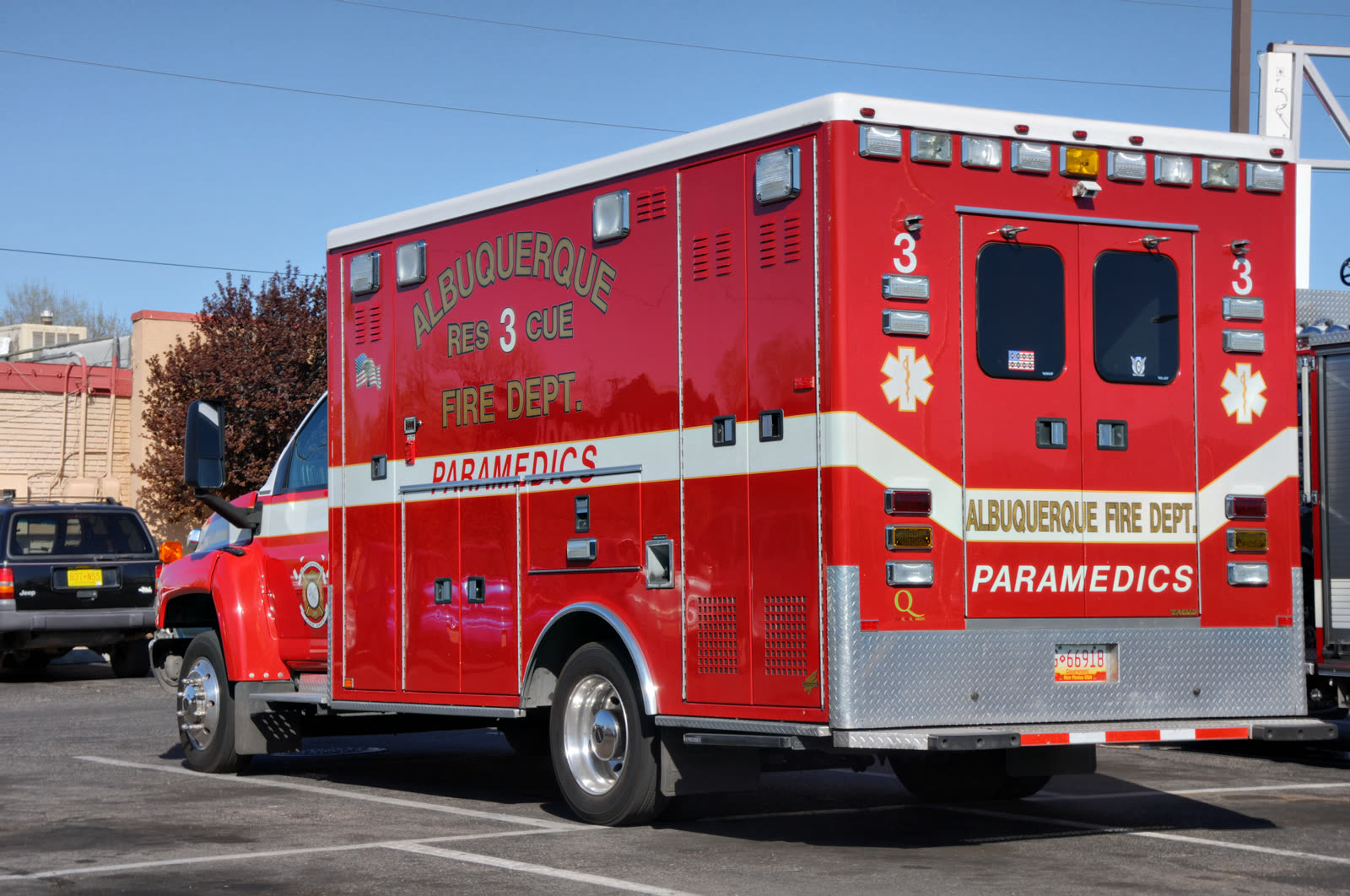
Image context: the lead photograph shows paramedics in an ambulance, which is the right visual frame for this essay because F.A.S.T. is ultimately about movement through a system. The witness identifies the event, but the next decisive layer is EMS transport, pre-arrival warning, and getting the patient to stroke-capable care while the treatment window is still alive.[5]
At the opening, face, arm, and speech are doing triage for ordinary witnesses
The strongest thing about the video is that it begins with visible asymmetry rather than with anatomy.[1] A witness is not asked to sort ischemic from hemorrhagic stroke on the sidewalk, or to decide whether a deficit is cortical, brainstem, or functional. The clip begins where ordinary perception actually begins: one side of the face slips, one arm behaves differently, speech stops sounding right.[1] That is not diagnostic completeness. It is usable triage.
CDC's written page fits that design. The agency still lists a wider symptom field, including trouble seeing, trouble walking, dizziness, loss of balance, and sudden severe headache.[2] But when it turns to public action, it also highlights the F.A.S.T. sequence because witnesses do better with a small number of memorable cues than with a textbook paragraph. The point is not that face, arm, and speech capture every stroke. The point is that they capture enough high-yield signals to move a bystander out of indecision.
That is what makes the video strong health communication. It gives the public a pattern, not a theory. In a real kitchen, bus stop, office, or gym, pattern recognition arrives before medical explanation. If the public waits for explanation, the treatment clock keeps running anyway.[1][2][3]
Around the "T," time means 911 and last-known-well, not just vague urgency
The most important letter in the acronym is the one people often flatten into a slogan. In the video, T stands for time to call 911.[1] In practical terms, it also stands for preserving the onset history or the last-known-well moment as cleanly as possible. When did the face droop first appear? When was the person last speaking normally? Did symptoms begin at 8:10 a.m., or was the patient last seen normal at 7:40 a.m. and discovered later? Those details are not clerical trivia. They shape treatment eligibility downstream.[3]
NHLBI's treatment page makes the time logic explicit. tPA is tied to a narrow early window, with some patients still eligible up to 4.5 hours after symptoms began or after waking with symptoms if the timeline can be established.[3] Mechanical thrombectomy belongs to a different layer, but it still depends on rapid recognition, imaging, and transfer.[3] In that sense, the public witness does not merely "call for help." The witness helps keep the record of time intact long enough for emergency clinicians to work from it.
CDC adds the systems point many people still get wrong: do not drive to the hospital or let someone else drive; call 9-1-1 so medical personnel can begin treatment on the way to the emergency room.[2] That instruction matters because stroke is not just a destination problem. It is a routing problem. The ambulance is part of the therapy chain.
What the video leaves outside the frame is a real boundary, not a flaw to hide
The responsible way to use this video is to notice what it does not cover.[1] It does not foreground sudden imbalance, double vision, isolated visual loss, or explosive headache. CDC still lists those symptoms because they matter.[2] The AHA's 2025 research release explains why some hospitals moved toward BE-FAST in the first place: adding balance and eye symptoms aims to catch more posterior-circulation strokes.[4]
Yet the same release found that F.A.S.T. outperformed BE-FAST on recall of the shared face-arm-speech elements while both versions improved the intention to call 911.[4] That suggests a real communication tradeoff rather than a simple right-versus-wrong dispute. A longer mnemonic may be clinically broader. A shorter mnemonic may survive better in public memory. The current AHA video chooses memory.[1][4]
That choice makes sense if the clip is judged by the right standard. It is not a board-exam question. It is a first-contact tool for the general public. The viewer is being trained to err toward activation when a common high-yield pattern appears, not to rule out every atypical presentation before acting.[1][2][4]
Why the dispatch reading is the most faithful one
Once the video is read as a dispatch script, its economy becomes more impressive.[1] It does not promise that laypeople can diagnose stroke with precision. It promises that laypeople can recognize enough danger to trigger the right system response. That is a narrower claim and a more believable one.
The deeper value of F.A.S.T. is therefore institutional. It links the living room, the sidewalk, or the office floor to the stroke unit. The witness sees asymmetry. The call brings EMS. The timeline travels with the patient. Imaging and reperfusion decisions become possible because someone nearby did not wait for certainty.[2][3] That is why the short video still works. It turns a frightening neurological event into one public obligation: notice the pattern, call 911, and protect the clock.[1]
Sources
- American Heart Association, "Spot a Stroke F.A.S.T," YouTube video, published March 11, 2020.
- Centers for Disease Control and Prevention, "Signs and Symptoms of Stroke" - warning signs, F.A.S.T. test, 911 instruction, and the warning not to drive to the hospital.
- National Heart, Lung, and Blood Institute, "Stroke - Treatment" - emergency-care framing, tPA timing, and thrombectomy overview.
- American Heart Association Newsroom, "Stroke warning sign acronyms drive 911 calls, F.A.S.T. leads in symptom recall for public" (January 30, 2025) - preliminary recall study and the posterior-stroke boundary behind BE-FAST.
- Wikimedia Commons, "File: Paramedics in an ambulance.jpg" - documentary ambulance photograph used for the article image.