Statin intolerance is one of the most durable modern cardiology arguments because it sits at the border between physiology and expectation. Patients often feel real pain, stiffness, or heaviness after starting a statin. Clinicians know the drug class prevents heart attacks, strokes, and revascularization events at large scale. The hard part is attribution. If symptoms appear after a pill starts, the human mind treats sequence as proof. Placebo-controlled statin trials, especially the last decade's crossover studies, tell a narrower and more useful story: most reported muscle symptoms are not pharmacologic effects of the statin itself, but a smaller minority are real, and that minority becomes easier to see when dose, intensity, and rechallenge are handled carefully.[1][2][3][4][5]
That is why the best modern frame is not "statins are harmless" or "statins ruin muscles." It is that statin intolerance is a sorting problem. The evidence asks clinicians to separate background musculoskeletal noise, expectation-driven symptom amplification, and true drug-related intolerance instead of flattening all three into one category.[1][2][3]
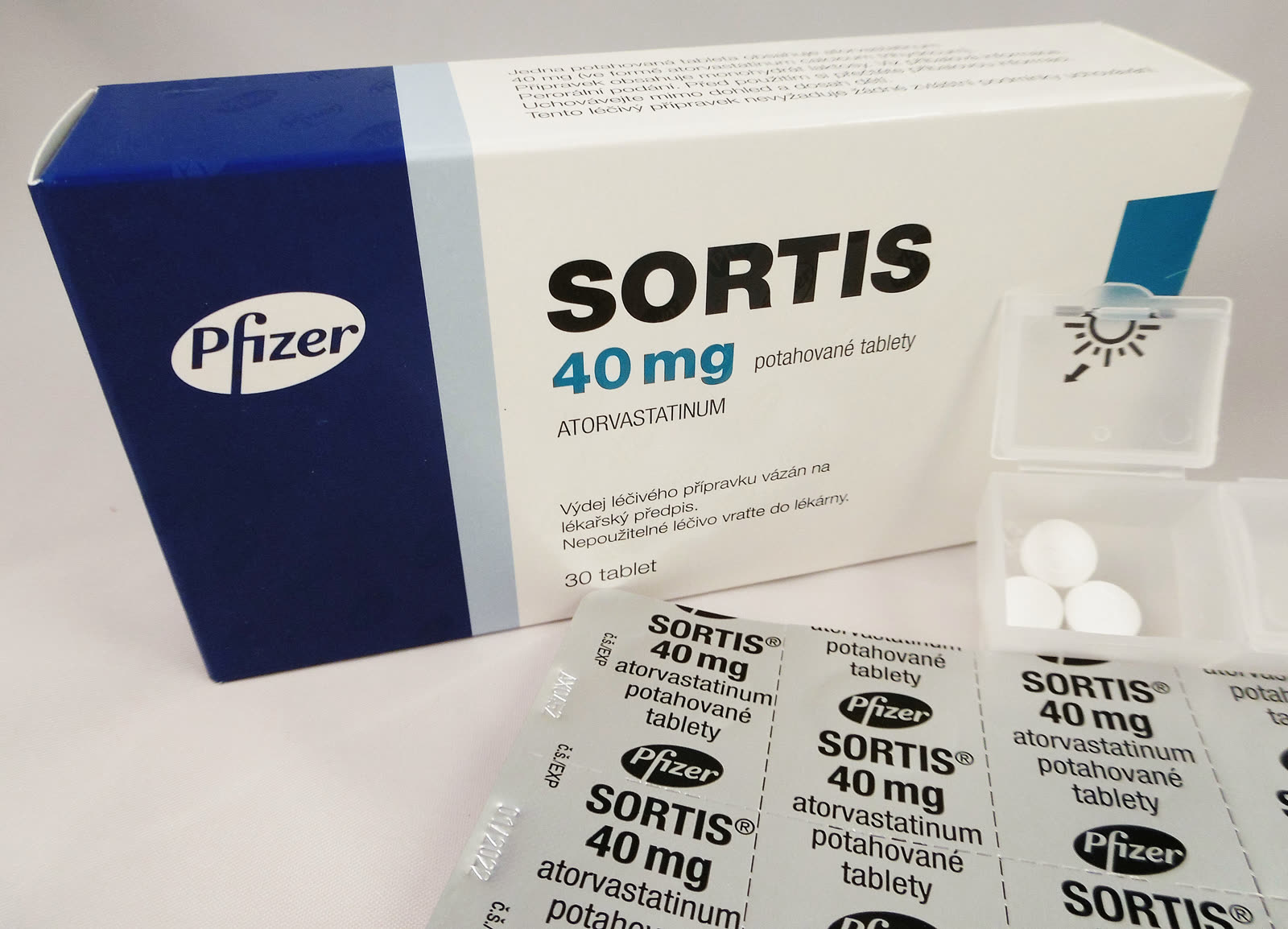
Image context: the lead image shows a real statin tablet and packaging. It belongs here because this debate is often discussed at the level of belief or identity, while the actual task is to evaluate a concrete medication exposure with concrete tradeoffs.[7]
Time anchors: how the argument tightened
- 2016: GAUSS-3 used a blinded atorvastatin-versus-placebo crossover phase in people with self-reported statin intolerance and showed that only a subset had symptoms reproducibly on statin and not placebo.[5]
- 2020: SAMSON tested statin, placebo, and no-tablet periods in prior statin quitters and found that the symptom burden during statin months was almost the same as during placebo months.[2]
- 2021: StatinWISE, another placebo-controlled series of N-of-1 trials, likewise found no meaningful average difference in muscle-symptom intensity between statin and placebo periods.[3]
- 2022: The Cholesterol Treatment Trialists' individual-participant-data meta-analysis quantified the population-level excess as small, and the National Lipid Association formalized a narrower definition of true intolerance that requires rechallenge, not one failed first exposure.[1][4]
Those markers matter because they move the field away from anecdote without pretending anecdotes are empty. Symptoms are real. The dispute is over mechanism.
Myth 1: "If muscle pain starts after a statin, the statin is probably the cause"
This is the most common overreach, and blinded trial data do not support it.
The 2022 CTT Collaboration analysis found reports of muscle pain or weakness in 27.1% of participants assigned statins and 26.6% of those assigned placebo.[4] That is not zero excess. It is a very small average difference spread across a very common background symptom. In plain language: muscle aches are frequent in midlife and later life whether or not a statin is present, so timing alone is a poor detector of causality.
The same point became more vivid in crossover trials that enrolled people who had already stopped statins because of side effects. In SAMSON, symptom scores averaged 16.3 during statin months, 15.4 during placebo months, and 8.0 during no-tablet months, producing a nocebo ratio of 0.90.[2] That does not mean patients invented symptoms. It means most of the symptom burden triggered by taking a tablet also appeared when the tablet contained no statin. The pill-taking context itself carried most of the effect. By the end of the trial, about half the participants had successfully restarted statin therapy.[2]
StatinWISE reached the same boundary from another angle. The trial found an adjusted mean difference in muscle-symptom score of only 0.11 between statin and placebo periods, with a 95% confidence interval from -0.61 to 0.82.[3] That is what a weak or absent average pharmacologic signal looks like in a population selected precisely because they believed a statin had harmed them.
The inference is not that clinicians should dismiss symptoms. It is that first-pass attribution is unreliable.
Myth 2: "If nocebo explains a lot, then true statin intolerance is basically fake"
That is the opposite overcorrection, and the evidence does not support it either.
GAUSS-3 is useful precisely because it was built to find the residual real signal after expectation effects were controlled. In its blinded crossover phase, 42.6% of participants developed symptoms on atorvastatin but not placebo, while 26.5% had the reverse pattern on placebo but not atorvastatin.[5] The lesson is not that everyone is nocebo-sensitive or that everyone is pharmacologically intolerant. The lesson is that a mixed population gets mislabeled when clinicians skip blinded logic and stop at chronology.
Dose intensity also matters. A 2021 network meta-analysis of intensive versus moderate or placebo-based statin regimens found a small but real increase in muscle outcomes with high-intensity therapy. For myalgia, the relative risk versus placebo was 1.13, with a number needed to harm of about 182.[6] That is not a catastrophic toxicity signal, but it is large enough to explain why some patients do feel better after dose reduction, switching agents, or moving away from the highest-intensity regimen.
The modern evidence base therefore lands in a deliberately uncomfortable middle position: most routine muscle complaints attributed to statins are not caused by the statin alone, but genuine statin-related muscle problems do exist and become more plausible when symptoms are reproducible, dose-linked, and responsive to dechallenge/rechallenge structure.[1][5][6]
Myth 3: "One bad statin experience means the whole class is over"
This is where evidence most directly changes care behavior.
The 2022 National Lipid Association statement defines statin intolerance in a restrictive way: a patient should have tried at least two statins, with one of them tested at the lowest approved daily dose, and the statement separates complete from partial intolerance.[1] That definition exists for a reason. A large share of apparent intolerance disappears once clinicians change the molecule, lower the dose, change dosing frequency, or correct competing contributors before concluding that every statin is unusable.[1]
This is also the point where the stakes become larger than symptom semantics. Statins are often stopped in people who are precisely the ones most likely to benefit from LDL lowering. If an early symptom story becomes a permanent identity story, patients can lose years of preventive benefit because the class was abandoned before the evidence question was properly tested.[1][4]
Evidence therefore favors a sequence rather than a verdict:
- pause long enough to test whether symptoms settle,
- review whether the pattern actually fits statin myalgia rather than background pain,
- rechallenge with a lower dose or different statin,
- preserve some LDL-lowering exposure whenever possible instead of moving immediately to zero.
That is not a slogan. It is the operational consequence of placebo-controlled trial evidence.
What the evidence-boundary really is
The cleanest synthesis is this:
- Overclaim: "Statins usually cause the muscle pain people report."
- Underclaim: "Any patient who reports pain is just experiencing nocebo."
- Evidence-backed middle: most reported symptoms are not caused by statins in blinded comparisons, but a smaller and clinically important group does have real, often dose-sensitive intolerance.[1][2][3][4][5][6]
That middle matters because it changes tone. Patients do not need to be told the pain is unreal. They need a better causal test. Clinicians do not need to pretend every complaint proves toxicity. They need a workflow that keeps preventive benefit alive while checking whether the signal survives rechallenge.
In that sense, the statin-intolerance debate has matured. The strongest contemporary evidence does not erase suffering and it does not ratify every first impression. It asks for discipline. Treat symptoms seriously, test causality with more structure than chronology, and reserve the label of true intolerance for the smaller group that still declares itself after placebo effects, dose effects, and switching options have been sorted.
Sources
- Cheeley MK, Saseen JJ, Agarwala A, et al., National Lipid Association scientific statement (2022) — definition of statin intolerance, complete vs partial intolerance, and the requirement to trial at least two statins.
- Wood FA, Howard JP, Finegold JA, et al., "Side Effect Patterns in a Crossover Trial of Statin, Placebo, and No Treatment" (New England Journal of Medicine, 2020) — the SAMSON trial on symptom scores and the nocebo ratio among prior statin quitters.
- Herrett E, Williamson E, Brack K, et al., "Statin treatment and muscle symptoms: series of randomised, placebo controlled n-of-1 trials" (BMJ, 2021) — the StatinWISE trial on symptom intensity during statin vs placebo periods.
- Cholesterol Treatment Trialists' Collaboration, "Effect of statin therapy on muscle symptoms: an individual participant data meta-analysis of large-scale, randomised, double-blind trials" (The Lancet, 2022) — population-level estimates of excess muscle symptoms on statin vs placebo.
- Nissen SE, Stroes E, Dent-Acosta RE, et al., "Efficacy and Tolerability of Evolocumab vs Ezetimibe in Patients With Muscle-Related Statin Intolerance" (JAMA, 2016) — GAUSS-3's blinded atorvastatin/placebo crossover phase identifying the subset with reproducible statin-only symptoms.
- Cai T, Abel L, Langford O, et al., "Intensity of statin therapy and muscle symptoms: a network meta-analysis of 153,000 patients" (European Journal of Preventive Cardiology, 2021) — isolates the dose-intensity question and finds a small increase in myalgia with high-intensity therapy.
- Wikimedia Commons, "Sortis 40 mg tbl.jpg" — source page for the photographed statin tablet and packaging used as the article image.