
As of 2026-04-05 UTC, the most useful way to watch SAMHSA's 4 Steps to Reverse Opioid Overdose is to treat it as a public sequence drill rather than as a short pharmacology lesson.[1][2] The video was published on August 30, 2024, after the public-health environment had already shifted: SAMHSA's own overdose-reversal page notes that in March 2023 the FDA approved naloxone nasal spray as the first over-the-counter opioid overdose reversal medication, and FDA's press announcement says the OTC switch was meant to move naloxone into drug stores, convenience stores, grocery stores, gas stations, and online retail channels.[2][4] Once that access shift happens, the next bottleneck is no longer clinician awareness alone. It is whether an ordinary witness can turn a frightening scene into a usable order of operations.
That is why the clip is stronger than it looks. It does not begin with the product box or with a reassuring promise that naloxone solves everything. It begins with response, breathing, and immediate scene reading.[1] SAMHSA's overdose-reversal page and the CDC naloxone toolkit point in the same direction. Both frame naloxone as lifesaving, but both also place it inside training, recognition, and follow-through rather than as a standalone fix.[2][3] The video's real achievement is that it makes a bystander practice a chain: check, give, call and support breathing, wait and repeat if needed. In overdose response, that chain matters more than any one sentence about opioid receptors.
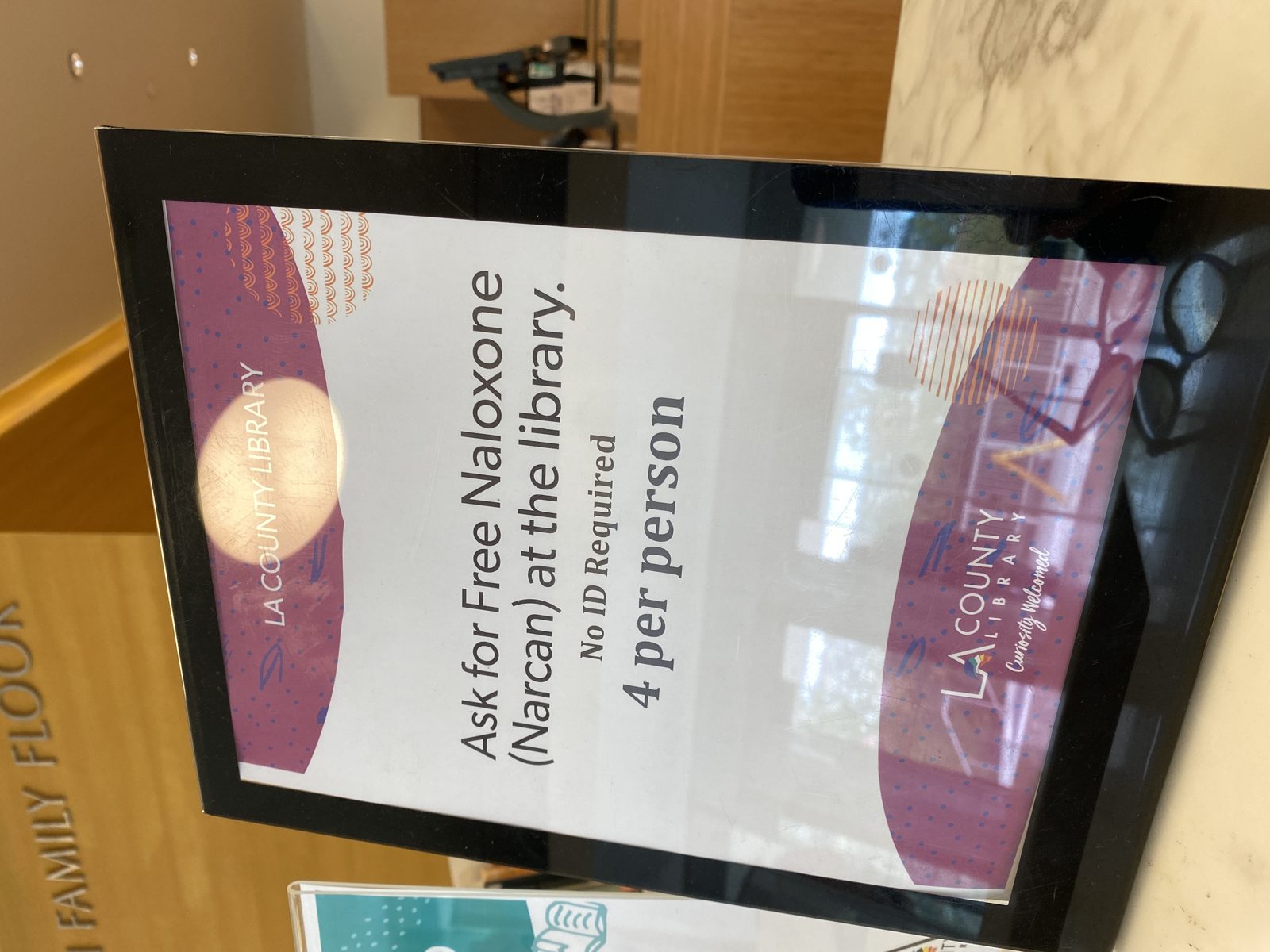
Image context: the cover uses a real photograph of free Narcan at a Los Angeles County library branch. That image fits this article because the video's deeper premise is social rather than purely clinical. By 2024, naloxone had become something a person could encounter in a public display, not only behind a hospital cart or pharmacy counter, and the real public-health question became whether access could be converted into competent action under stress.[5]
In the opening half minute, the video puts uncertainty in the right place
The first section matters because it refuses the fantasy of perfect diagnosis.[1] The clip says to check for a response, be safe, try to wake the person by calling their name, and assess breathing before anything else. That structure is easy to miss because it sounds basic. In practice, it is the whole threshold problem. A bystander at a bus stop, in a library restroom, or in an apartment hallway is rarely facing a neat teaching scenario. The person on the ground may be breathing shallowly, may not answer, may have used more than one substance, and may be frighteningly still. The video therefore does something disciplined: it lowers the first task from "understand everything" to "check response and breathing, then act."[1]
That opening is also consistent with SAMHSA's written overdose-reversal guidance. The agency says opioid overdose reversal medications are effective against opioid overdose and that medical intervention must still be obtained as soon as possible after administration.[2] The practical consequence is that a bystander does not need full interpretive confidence before moving into the sequence. The public script is built to survive ambiguity. You assess responsiveness, you read breathing, and you move forward because delay is itself part of the risk.
Around 0:30 to 1:00, the nasal-spray demo treats usability as part of treatment
The middle stretch narrows the action to what a frightened layperson can actually remember.[1] Remove the medication from its package. Remove the tip cover. If possible, lay the person on their back with the head tilted slightly back to open the airway. Follow the instructions and administer into one nostril. That is not elegant prose, but it is good emergency communication. The clip strips the event down to one deliverable task, and that turns out to match the logic behind the OTC transition itself.
FDA's March 29, 2023 approval notice is useful here because it explains what had to be proven before OTC Narcan could be sold without a prescription.[4] The manufacturer had to show that consumers could understand how to use the drug safely and effectively without supervision from a health professional. Read beside the video, that regulatory history clarifies why the demo looks so procedural. Public naloxone only changes outcomes if the product is legible under pressure. The clip is therefore not filler around the drug. It is the continuation of the same usability problem the OTC switch was meant to solve.
Around 1:00 to 1:20, the clip insists that naloxone is a bridge, not an ending
The third step is where the video's public-health seriousness becomes clear.[1] Call 911 immediately, even if the person starts breathing. If trained, give rescue breaths. Then place the person on their side in the recovery position. Many short explainers would end emotionally at the spray itself, because the spray is the dramatic act. SAMHSA does the opposite. It uses the spray to move the viewer into a longer obligation.
That boundary matters because SAMHSA's written page is explicit that naloxone is a temporary treatment and that its effects do not last long.[2] The page also says medical assistance must be obtained as soon as possible after an opioid overdose reversal medication is given.[2] The CDC naloxone toolkit reinforces the same educational frame by treating public training materials as part of overdose prevention rather than as optional extras.[3] In other words, the video does not imagine a miracle spray and a relieved exit. It imagines a window. Breathing support, recovery positioning, and the EMS call are what fill that window with actual continuity of care.
Around 1:20 to the end, repeat dosing becomes the video's hardest truth
The final section is the strongest because it teaches duration.[1] Naloxone can take a few minutes to work. Watch breathing. Be ready to administer additional doses if necessary. If the person does not start breathing after 2 to 3 minutes, give a second dose and repeat every 2 to 3 minutes until breathing resumes.[1] That is the moment the clip stops being a rescue fantasy and becomes a temporal discipline.
SAMHSA's written overdose-reversal page again supports the video's stance. Naloxone is temporary; it does not finish the event on its own.[2] FDA's OTC announcement, meanwhile, frames naloxone access as a way to reduce overdose deaths by getting the medication into more hands and more places.[4] Put together, the message is clear. Wider access is necessary, but access alone is inert. The life-saving action comes from staying in the sequence long enough to bridge the person to professional care. The video's closing instruction to wait for EMS and watch breathing is therefore its moral center. It teaches that overdose response is measured not by one dramatic gesture but by whether a bystander can hold the chain together for the next few minutes.[1][2][4]
Why this video is worth embedding now
This clip belongs in Annotated Viewing form because its written meaning is larger than its runtime.[1] The video itself lasts just over two minutes, but it compresses a major policy and design shift. After the 2023 OTC approval, naloxone became more available in ordinary consumer and community settings.[2][4] The open question then became whether the public script around that medication was clear enough to survive panic. SAMHSA's answer is to reduce overdose response to a sequence that can be carried in memory: scene safety and response check, nasal naloxone, 911 and breathing support, repeat dosing while waiting for EMS.[1]
That sequence is the article's real subject. The clip does not ask the viewer to become an expert in toxicology, and it does not pretend naloxone closes the whole emergency. It teaches something harder and more durable: the right order of actions when certainty is incomplete and time is short.[1][2][3]
Sources
- SAMHSA, "4 Steps to Reverse Opioid Overdose," YouTube video, published August 30, 2024.
- SAMHSA, "Opioid Overdose Reversal" - overview of opioid overdose reversal medications, temporary naloxone effect, emergency-care requirement, and March 2023 OTC naloxone note.
- CDC, "Naloxone Toolkit" - family, caregiver, and clinician training resources on naloxone use and overdose response.
- U.S. Food and Drug Administration, "FDA Approves First Over-the-Counter Naloxone Nasal Spray" (March 29, 2023).
- Wikimedia Commons, "File:Four free Naloxone (Narcan) by request at public library.jpg" - source page for the article image.