
As of 2026-04-29 UTC, the most useful way to watch NICHDVideos' 9:56 video "Safe Sleep for Your Baby," published on October 3, 2012, is not as a nostalgic public-service announcement about one old slogan.[1] The clip certainly repeats the back-sleeping rule, but it is doing something broader and harder. It is trying to retrain the ordinary adult instinct to make infant sleep softer, warmer, closer, and more crowded than the evidence allows. The video's deepest message is subtractive: take out the blankets, take out the toys, take out the extra pillows, take the baby out of the adult bed, and strip the sleep surface back to the firm, flat, nearly empty arrangement that current U.S. guidance still defends.[1][2][3][4][5]
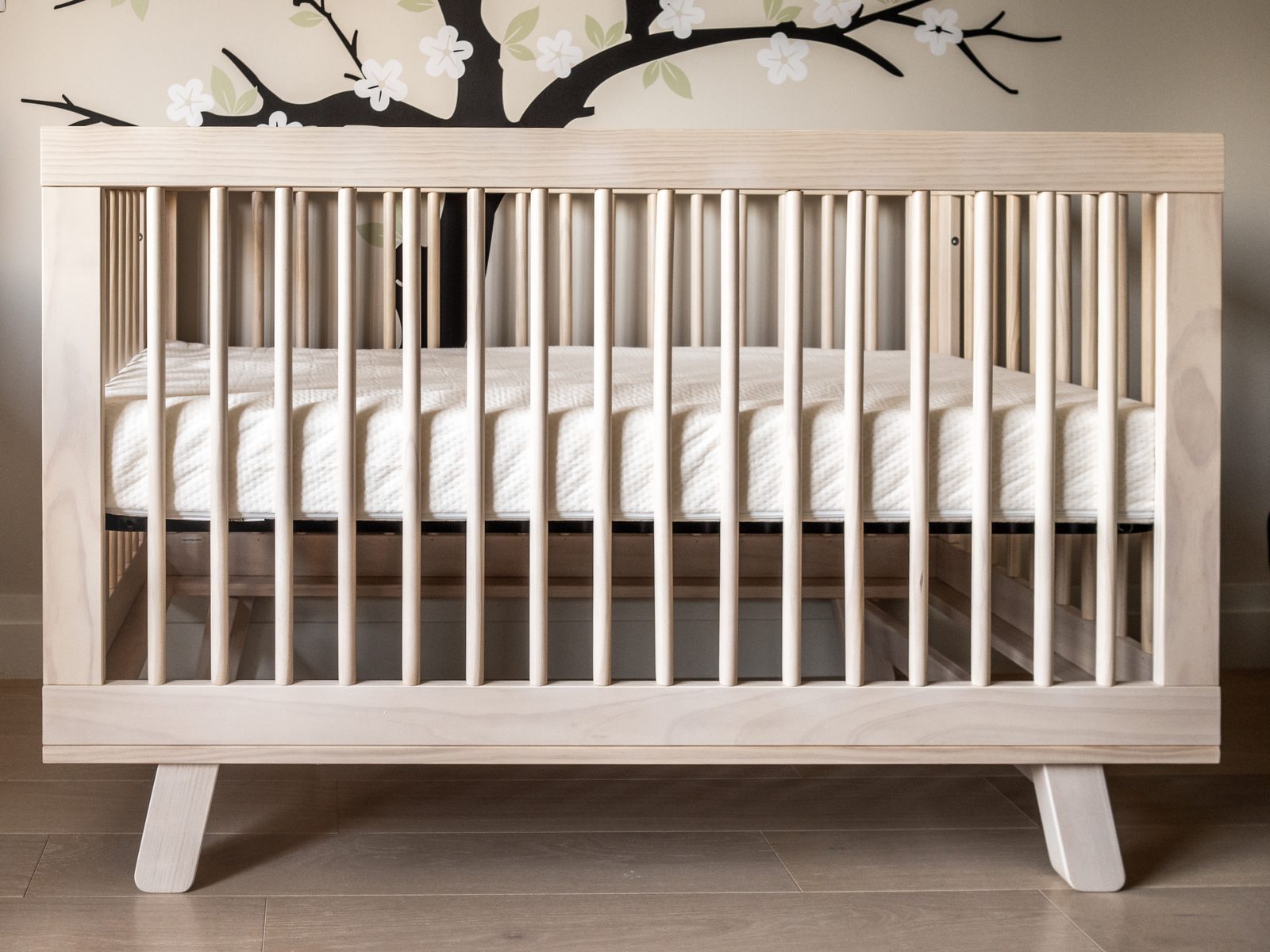
That is why the article's image matters.[6] A crib with only a fitted mattress can look austere, even emotionally wrong, to people raised on pictures of bumpers, quilts, stuffed animals, and babies sleeping against adults. The current safe-sleep consensus keeps insisting on that bareness because bareness is not neglect here. It is risk control.[2][4][5]
The public-health stakes remain high. HealthyChildren, the American Academy of Pediatrics' parent-facing site, says roughly 3,500 babies in the United States die suddenly and unexpectedly during sleep each year, largely from SIDS or accidental suffocation and strangulation.[4] That number helps explain why the NICHD video is structured less like a gentle lifestyle tip and more like a scripted correction of common habits.[1][4]
Early in the video, the real conflict is not information but household memory
One reason the video still works is that it does not pretend safe-sleep advice enters a blank room.[1] The conversation is built around parents, grandparents, friends, and a nurse because infant sleep is usually governed by inherited habits before it is governed by guidelines. Someone remembers babies sleeping on their stomachs. Someone assumes quick naps do not count. Someone thinks a blanket makes the crib feel cared for. Someone else treats bed-sharing as family closeness rather than as an exposure category. The clip stages those habits out loud so they can be contradicted in public.[1]
That structure matches the written guidance. CDC says a baby should be placed on the back for every sleep, at night and at nap time, on a firm flat sleep surface, with the sleep area in the same room where the caregiver sleeps but not in the same bed.[2] The AAP's public safe-sleep materials and HealthyChildren page keep the same core frame: back sleeping, a safety-approved crib or bassinet, no bed-sharing, and no soft objects or loose bedding in the sleep space.[3][4] In other words, the conflict the video dramatizes is still the conflict the current guidance is trying to solve. The rules are memorable partly because they are pushing against older, emotionally intuitive practices that still feel normal to many families.
The video's most important distinction is not back versus stomach by itself, but sleep versus awake time
A second reason the clip deserves annotation is that it carefully separates two states that many casual summaries blur together.[1] Babies need supervised tummy time when awake for motor development, but the only safe sleeping position in the video is on the back.[1] That distinction matters because household error often enters through exceptions. A person thinks a short nap counts less, or a half-watched doze on the stomach counts as different from night sleep. The video pushes against that loophole.
HealthyChildren explains the same boundary in written form: babies should always be placed on their backs to sleep, while awake tummy time should happen every day under supervision.[4] CDC makes the sleep rule equally plain by saying "for all sleep times," not only nighttime sleep.[2] The public-health value of the NICHD clip lies in how forcefully it keeps those two contexts apart. It does not say that stomach time is always dangerous. It says stomach time belongs to awake, watched development, while sleep belongs to the back-sleep lane.[1][2][4]
That may sound basic, but safe infant sleep often fails at exactly this level of category control. A good public video is not only teaching facts. It is training the household to sort situations correctly.
In the middle stretch, the crib becomes a test of what adults can resist adding
The most durable sequence in the video arrives when blankets, toys, and other soft items are removed and the crib is reduced to mattress plus fitted sheet.[1] This is the moment when the subtraction logic becomes visible. The safest sleep environment does not look luxurious. It looks unfinished by the standards of nursery decoration. NICHD's safe-sleep environment page says that even if a crib with nothing in it except a fitted sheet seems bare, that is still the safest option.[5] The page also explains why the surface has to be firm, flat, and level, and why soft items and weighted items increase risks of suffocation, strangulation, entrapment, or positional asphyxia.[5]
HealthyChildren uses nearly the same logic, warning against pillows, quilts, comforters, mattress toppers, non-fitted sheets, blankets, toys, bumper pads, and other soft or loose objects.[4] The AAP materials emphasize that the sleep surface should be a crib, bassinet, portable crib, or play yard that meets federal safety standards, not a couch, pillow-like lounger, inclined product, or adult mattress.[3][4] Read next to those pages, the video's imagery stops looking conservative for its own sake. It is a visual discipline against clutter. The crib is safe precisely because adults have stopped trying to optimize it for coziness on adult terms.[1][4][5]
This is where the image source helps again.[6] A bare crib can feel cold in a way that a plush nursery cannot. But the evidentiary point of the photograph is that good infant-sleep design often looks emotionally counterintuitive. Safety comes from what is absent.
Near the end, the clip's hardest rule is "close, but separate"
The article's strongest phrase for the video's final argument is: close, but separate. The baby should sleep near the caregiver, but in a separate infant sleep space.[1][2][4][5] That is the part of safe-sleep guidance that many families resist most because it appears to reject intimacy itself. The video handles that tension by refusing a false choice. It does not tell exhausted parents to exile the infant to a distant room. It tells them to keep the crib or bassinet near the adult bed while preserving a separate surface.[1]
CDC says the sleep area should ideally stay in the same room where the caregiver sleeps until the baby is at least 6 months old.[2] HealthyChildren says room sharing for at least the first 6 months can reduce SIDS risk by as much as 50%, while also making feeding, comforting, and monitoring easier.[4] That is why "room-sharing without bed-sharing" is a better summary of the rule than simply "don't sleep with the baby."[2][4] The policy is trying to preserve proximity while removing a specific risk exposure.
That distinction also explains why the video has aged well. In 2012, it already treated safe sleep as an environmental design problem, not only a behavioral slogan.[1] The newer CDC, AAP, and NICHD pages still defend the same architecture: back sleeping, firm flat surface, empty crib, close room placement, and separation from the adult bed.[2][3][4][5] The video remains useful in 2026 because it understands that households usually fail by addition, not by omission. They add cushions, add blankets, add exceptions, add inherited custom, add confidence in a shared bed, and add one object after another until the sleep environment stops being simple enough to stay safe. The discipline this old NICHD clip still teaches is therefore sharper than "back to sleep" alone. It is: back, bare, and close but separate.[1][2][3][4][5]
Sources
- NICHDVideos, "Safe Sleep for Your Baby," YouTube video, published October 3, 2012.
- Centers for Disease Control and Prevention, "Providing Care for Babies to Sleep Safely" - back sleeping for all sleep, firm flat surface, same-room sleep, and current public-health guidance.
- American Academy of Pediatrics, "Safe Sleep" - AAP safe-sleep recommendations and campaign resources.
- HealthyChildren.org, "How to Keep Your Sleeping Baby Safe: AAP Policy Explained" - AAP parent guidance on firm flat sleep surfaces, room sharing, no bed sharing, no loose bedding, and supervised tummy time.
- Safe to Sleep®, "Safe Sleep Environment for Baby" - NICHD guidance on firm, flat, level sleep surfaces; bare cribs; and room sharing in a separate infant sleep space.
- Wikimedia Commons, "File:Baby Crib (49935766018).jpg" - source page for the documentary crib photograph used as the article image.