Public memory often compresses CPR into one miraculous maneuver. The older and more useful history runs differently. Peter Safar's lasting contribution was not simply that he stood near the origin of a lifesaving technique.[1][3][4] It was that he helped turn resuscitation into an order of operations that ordinary people could be taught. Airway first. Breathing next. Circulation once the chest-compression breakthrough arrived. That sounds familiar now because the sequence worked so thoroughly that it became cultural common sense.
A biography or microhistory suits Safar because the hinge in his career was procedural rather than theatrical. In the late 1950s he was working on a practical problem that older manual artificial-respiration methods handled badly: the airway of an unconscious patient collapses, the tongue falls back, and chest-pressure arm-lift routines can look active while moving too little air.[1][3][5] The point was not to discover that people need oxygen. The point was to show, in a form rescuers could repeat, how to reopen the airway and ventilate through it quickly enough to matter.
That first change still did not make modern CPR by itself. The circulatory piece was missing. Kouwenhoven, Jude, and Knickerbocker supplied that in 1960 with closed-chest cardiac massage, and their paper made the new promise explicit: cardiac resuscitation no longer required thoracotomy, and "anyone, anywhere" could begin with two hands.[2] Safar's role became clearest at the join. He helped bring the airway and breathing work into a larger rescue sequence, then spent the early 1960s pushing that sequence outward into training programs, community drills, and standardized teaching.[3][4][6]
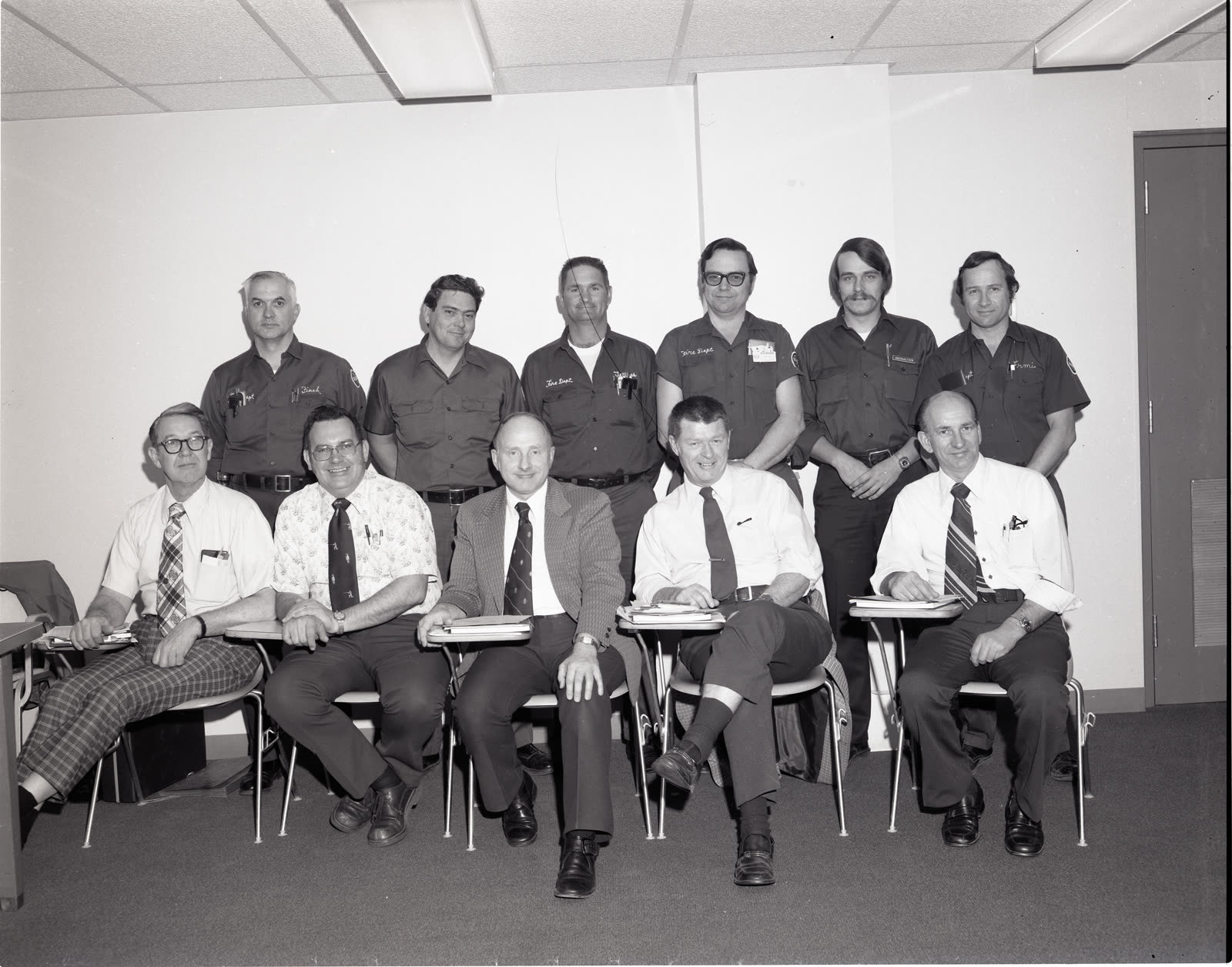
Image context: the cover uses a real 1976 NASA archival photograph of CPR training.[7] It belongs here because this article is less interested in one famous lab moment than in the later fact that resuscitation became teachable. The most durable part of Safar's legacy was not a private insight but a public training grammar.
Timeline anchors
- 1956: the American Heart Association's CPR history credits James Elam and Peter Safar with proving mouth-to-mouth resuscitation to be an effective lifesaving method.[3]
- 1957: the U.S. military adopted the mouth-to-mouth method, a sign that rescue breathing was already moving from experimental work into organized training.[3]
- May 17, 1958: JAMA published Safar's study on the ventilatory efficacy of mouth-to-mouth artificial respiration, alongside related work by Gordon and Elam in the same issue.[1]
- 1958: Safar and Baltimore fire officer Frank McMahon introduced the mouth-to-mouth airway device later remembered as the Resuscitube line.[5]
- July 9, 1960: Kouwenhoven, Jude, and Knickerbocker published "Closed-Chest Cardiac Massage" in JAMA.[2]
- 1960: AHA says Kouwenhoven, Safar, and Jude combined mouth-to-mouth breathing with chest compressions to create cardiopulmonary resuscitation, while the AHA also began a program to acquaint physicians with closed-chest resuscitation.[3]
- 1960: Resusci Anne, the early CPR training manikin associated with Safar, Elam, Gordon, and Åsmund Lærdal, entered the training story.[3]
- 1964: Safar published "Community-Wide Cardiopulmonary Resuscitation," showing that the center of gravity had already shifted from technique alone to population training.[6]
1. Safar's early problem was airway failure, not heroic improvisation
The strongest way to read Safar's late-1950s work is to begin with the airway. His 1958 JAMA paper announces its target in the title itself: "airway obstruction during manual and mouth-to-mouth artificial respiration."[1] That wording matters. Safar was arguing that many older emergency methods failed because they ignored what unconsciousness does above the larynx. If the airway is blocked, chest movements and rescue gestures can become ritual without ventilation.
The abstract makes the experimental posture clear. Safar compared mouth-to-mouth with manual methods and reported data from controlled experiments in which untrained rescuers as well as trained rescuers performed the techniques.[1] JAMA's issue listing for the same day shows that this was not a lone eccentric paper: Gordon and colleagues published "Mouth-to-Mouth Versus Manual Artificial Respiration for Children and Adults," while Elam and colleagues published work on gas exchange during expired-air resuscitation in the same issue.[1] Safar's contribution sits inside that cluster but remains distinctive because it makes airway patency the center of the practical argument.
That is why the famous head tilt and chin lift logic matters so much. The later AHA history page summarizes the breakthrough in broad public language by saying that, in 1956, Elam and Safar proved mouth-to-mouth resuscitation was effective.[3] Behind that public summary lay a narrower operational claim: rescue breathing only becomes dependable when the rescuer knows how to open the airway and treat the upper airway as the first bottleneck. Safar did not merely say "blow air in." He helped make airway control the opening move in a teachable sequence.[1][3][4]
2. The circulatory breakthrough in 1960 completed the circuit, but it did not erase Safar's earlier insight
Modern CPR needed circulation as well as ventilation. The 1960 JAMA paper by Kouwenhoven, Jude, and Knickerbocker explains how dramatic that shift was. Before external cardiac massage, resuscitation after cardiac arrest or ventricular fibrillation was constrained by the need for open thoracotomy and direct cardiac massage.[2] Their abstract says the new external transthoracic method had been developed through extensive animal work and that immediate measures could now provide both artificial respiration and adequate cardiac massage without opening the chest.[2]
The paper's most famous sentence remains forceful because it collapsed a surgical problem into public action: "Anyone, anywhere, can now initiate cardiac resuscitative procedures. All that is needed are two hands."[2] That sentence is easy to remember as the birth of CPR by chest compression alone. The better reading keeps Safar in frame. Closed-chest massage solved the circulation problem; it did not make the airway question disappear. Once chest compressions arrived, Safar's earlier airway and breathing work stopped being a separate resuscitation branch and became the front end of a unified rescue order.[2][3][4]
The AHA's historical summary makes the union explicit by naming 1960 as the moment when Kouwenhoven, Safar, and Jude combined mouth-to-mouth breathing with chest compressions to create cardiopulmonary resuscitation.[3] This is the point at which Safar's biography becomes more interesting than a simple inventor legend. He was not the solitary author of every component. His durable role was assembling and teaching a sequence whose parts had to work together under extreme time pressure.
3. Safar's deepest contribution was the training turn
If the rescue method had stayed inside journals and operating-room expertise, Safar would be a narrower medical figure. By the early 1960s he was already pushing toward something larger: community training. PubMed's record for his 1964 paper, "Community-Wide Cardiopulmonary Resuscitation," captures that shift at the level of title alone.[6] The subject is no longer just airway devices or bedside rescue. It is a whole community.
The AHA chronology fills in the institutional side. In 1960, the organization began a program to acquaint physicians with closed-chest cardiac resuscitation, which it describes as the forerunner of CPR training for the general public.[3] The same history places the birth of Resusci Anne in 1960 and links the manikin directly to Safar, Elam, Gordon, and Åsmund Lærdal.[3] The point of the manikin was not decorative. CPR had to become something people could rehearse with correction. A rescue sequence is only public if it can be practiced.
The Wood Library-Museum of Anesthesiology adds a useful material detail to that story. Its entry on the mouth-to-mouth airway says Safar and Frank McMahon introduced the device in 1958, and that the later plastic "Resuscitube" became standard equipment in ambulances.[5] That fact fits the larger pattern. Safar's work kept moving from physiology toward portable routine: open the airway, ventilate efficiently, standardize the equipment, teach the sequence, repeat it in the field.
This training turn is the clearest reason the biography still matters. Many doctors contribute a strong paper. Far fewer help convert a strong paper into a social technology. Safar's importance lies in that conversion. He kept pushing resuscitation away from improvised virtuosity and toward drilled public order.[3][4][5][6]
4. The microhistory works best when the collaborators stay visible
The word "father" follows Safar through much of the later literature, including the Safar Center's own summary, which says he pioneered the ABCs in the late 1950s and assembled them into what is now known as CPR.[4] The phrase is understandable, but the microhistory is stronger when the collaboration remains visible. Elam's work on expired-air ventilation, Gordon's comparative studies, Kouwenhoven's team on chest compressions, McMahon's link to field use, and Lærdal's role in training design all belong inside the same chain.[1][2][3][5]
Keeping those collaborators in view does not shrink Safar. It clarifies him. His talent was architectural. He kept seeing that resuscitation would fail unless its parts were joined in the right order and then taught in the right medium. Airway without circulation was incomplete. Compression without training was fragile. Publication without standardization would stay local. Safar's career across these years reads as a repeated attempt to close those gaps.[3][4][6]
That is also why the later image of trainees around a manikin matters more than a single laboratory still. The decisive legacy was procedural literacy. People had to learn what came first, what came second, and what to do when seconds were disappearing.
The bounded conclusion
Peter Safar's place in health history becomes clearest when modern CPR is treated as a sequence rather than a stunt.[1][2][3][4] In the late 1950s he helped show that the unconscious airway could be reopened and ventilated by mouth-to-mouth methods that lay rescuers could learn. In 1960 that airway-and-breathing work was joined to closed-chest compressions. By 1964, Safar was already writing in the language of community-wide CPR, which means the real invention had moved from laboratory proof to public training.[3][6]
That shift is what made the technique durable. Safar mattered because he helped build a rescue order simple enough to teach, strict enough to drill, and portable enough to leave the hospital.
Sources
- Peter Safar, "Ventilatory Efficacy of Mouth-to-Mouth Artificial Respiration: Airway Obstruction During Manual and Mouth-to-Mouth Artificial Respiration" (JAMA, 1958) - primary-source abstract describing airway obstruction, comparisons with manual methods, and tests involving trained and untrained rescuers.
- W. B. Kouwenhoven, James R. Jude, and G. Guy Knickerbocker, "Closed-Chest Cardiac Massage" (JAMA, 1960) - primary-source abstract on external transthoracic cardiac massage and the claim that resuscitation could be started by "anyone, anywhere."
- American Heart Association, "History of CPR" - official chronology covering the 1956 proof of mouth-to-mouth, the 1957 military adoption, the 1960 combination of breathing and chest compressions, and the birth of Resusci Anne.
- Safar Center for Resuscitation Research, University of Pittsburgh - institutional history stating that Safar pioneered the ABCs of resuscitation in the late 1950s and assembled them into CPR.
- Wood Library-Museum of Anesthesiology, "Mouth-to-Mouth Airway" - museum entry on the 1958 Safar-McMahon airway device and the later Resuscitube used in ambulances.
- Peter Safar, "Community-Wide Cardiopulmonary Resuscitation" (Journal of the Iowa Medical Society, 1964) - PubMed record marking the shift from technical rescue method to population-level training.
- Wikimedia Commons / National Archives and Records Administration, "File:CARDIO PULMONARY RESUSCITATION CPR TRAINING - NARA - 17446003.jpg" - source page for the 1976 NASA CPR training photograph used as the article image.