The nurse had four treatment codes to work through: Q, R, S and T. A worker with a cold would receive the next allocation in the rotation, take a bottle away, and return to a doctor who did not know its contents. Recalling the investigation in 1999, its organizer, Philip D'Arcy Hart, described the practical precautions: a separate room, a record counterfoil kept there, a code label detached before the patient returned to the doctor.[4]
The machinery was modest. The question was large enough to reach Parliament: did patulin, a substance obtained from a mould, actually shorten a cold? The Medical Research Council's report, published in The Lancet on 16 September 1944, offers an unusually tangible lesson in how to investigate a promising treatment. The bottles made the comparison possible; the report made it inspectable.[1][3]
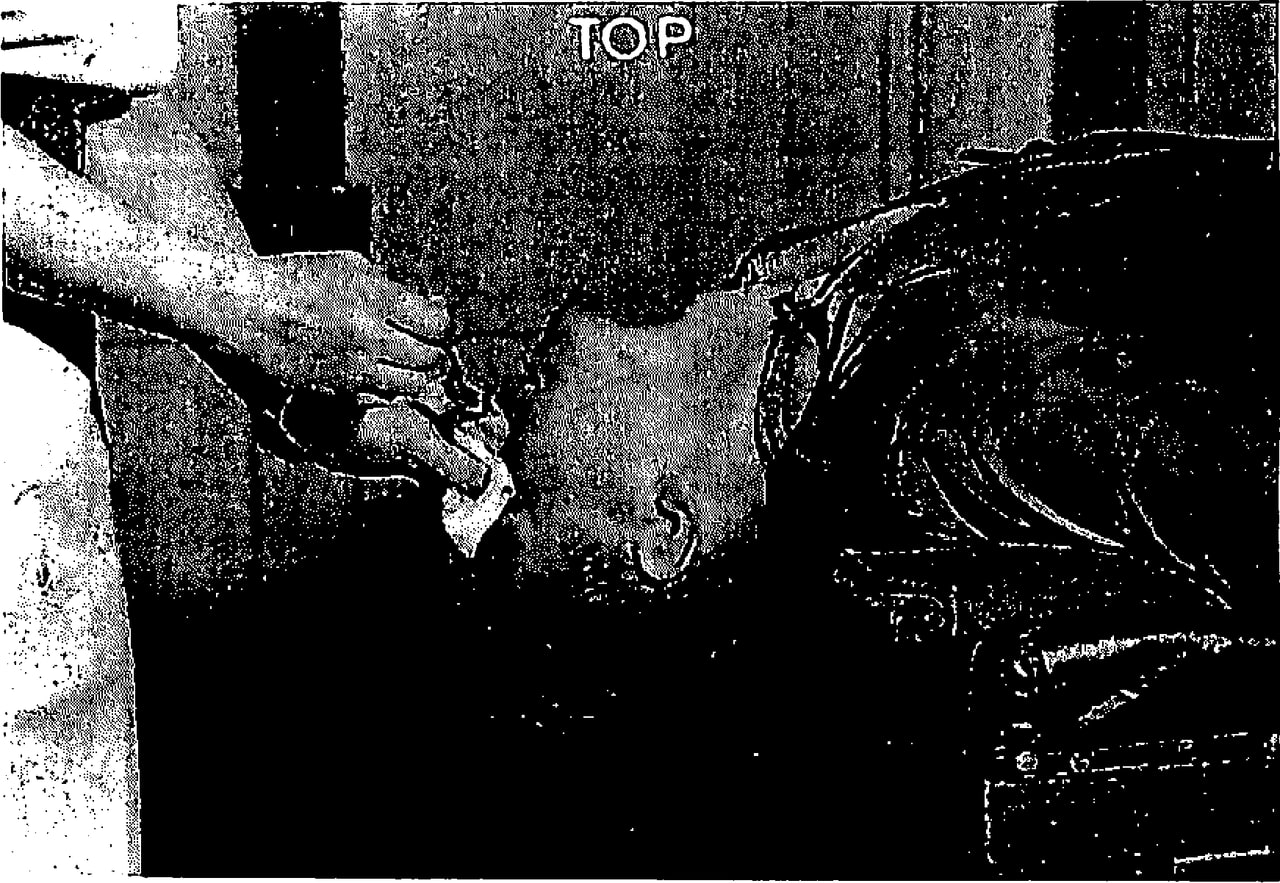
The promise had evidence behind it, although the evidence disagreed. Mike Clarke's historical account describes an early 1943 naval trial in which 55 of 95 patulin recipients recovered, compared with eight of 85 controls. An army investigation failed to reproduce the benefit. Meanwhile, the Sunday Express announced a new cold cure on 31 October 1943. The MRC denied supplying the newspaper's story.[3]
That disagreement matters. The larger investigation was an attempt to resolve conflicting observations, not merely a ceremonial confirmation of a discovery. A treatment can look compelling in one setting and disappoint in another. Enlarging the audience for the first result does nothing to explain the discrepancy.
The original report begins by making the illness itself a measurement problem. Colds vary in duration, and much of what matters to a sufferer must be reported in words. Its response was to combine several centres, a substantial sample and a common recording procedure. The main investigation ran from 18 January to 11 April 1944, following preliminary work that winter.[1]
The argument remains easy to recognize. Someone who feels better after taking a remedy has observed a sequence: treatment, then improvement. A comparison asks the missing question—how much improvement occurred among people who received the same attention without the ingredient being tested? The patulin study gave that question a place in the workplace sick bay.
Clarke records recruitment across Post Office units, ordnance factories and other factories. Doctors checked that volunteers had colds; nurses or sick-bay attendants supplied the allocated solution. Follow-up visits were scheduled after one, two and seven days. Of 1,449 people treated, 101 records were excluded for reasons including uncertain diagnosis, non-adherence and absence from work, leaving 668 patulin recipients and 680 controls.[3]
Those exclusions deserve to remain visible. The analyzed group was smaller than the treated group; the headline sample was not the whole experience of running the experiment. A careful reader should ask both how participants were allocated and whose outcomes remained in the comparison.
Hart's later account helps explain the four letters. Neither doctor nor patient was meant to know the treatment identity. But allocation followed a rotation; it was not generated by random numbers. In his recollection, contemporary statisticians accepted the arrangement as effectively random. His description still identifies it as alternation, and distinguishes it from the random allocation used in the later streptomycin trial.[4]
Iain Chalmers's history of MRC trials places the design in a longer effort to prevent advance knowledge of assignments. In an interview conducted in 2003, Hart remembered the extra groups as a way to confuse anyone trying to recognize the pattern. Chalmers explains why random allocation subsequently helped: a predictable sequence could let recruiters anticipate the next treatment.[6]
Concealing the contents and concealing the next assignment therefore address different opportunities for bias. The first limits how expectations might shape treatment and assessment; the second limits how expectations might shape entry into a group. Four labels were an ingenious practical precaution, but calling them randomization would erase the distinction the history helps us see.[4][6]
The results supply the decisive comparison. At 48 hours, 13% in each arm reported themselves cured. Combining cure with improvement yielded 73% with patulin and 77% with the control solution. The report did find two statistically significant differences at one week favouring controls, which its authors judged unpersuasive in light of the earlier results and the results for recent colds. It did not report a benefit for patulin.[1]
Recovery was happening. That was precisely why counting recovered patients in the treated group alone could mislead. The high proportion feeling better could make the remedy seem successful to someone watching only its recipients. The control group supplied the context that the apparent success lacked.
On 4 May 1944, while the results were still being analyzed, Clement Attlee answered a parliamentary question about encouraging manufacture. He said that large-scale production could not be justified without definite evidence of value.[5] This was a concrete decision waiting on the comparison: whether to commit scarce wartime resources to producing the substance.
The eventual report concluded: “No evidence was found that patulin is effective in the treatment of the common cold.”[1] That sentence addresses the treatment tested. It neither establishes that every conceivable use of the substance must fail nor turns a few promising observations into a reason to manufacture it.
Read alongside Attlee's answer, the negative finding acquires a practical purpose. A useful experiment need not end with a new medicine. It can give officials a reason to withhold a commitment, clinicians a reason to abandon a promise, and later investigators a clearer account of how the answer was obtained. The patient could recover while the treatment claim failed. The four bottle labels helped make both facts visible.
Sources
- Medical Research Council, “Clinical trial of patulin in the common cold,” The Lancet 2:373–375 (1944) — original report, methods, exclusions and outcome tables; full scan preserved by the James Lind Library.
- The National Archives, FD 1/3155, “Photograph illustrating the administration of patulin” — archival photograph reproduced by the James Lind Library.
- Mike Clarke, “The 1944 patulin trial of the British Medical Research Council” (2004), James Lind Library — earlier studies, workplace recruitment, participant accounting and publication chronology.
- P. D'Arcy Hart, “A change in scientific approach: from alternation to randomised allocation in clinical trials in the 1940s,” BMJ 319:572–573 (1999) — the organizer's retrospective account of treatment codes, blinding and allocation.
- UK Parliament, “Patulin,” House of Commons debate, 4 May 1944, volume 399, columns 1470–1471 — Clement Attlee's answer on trial results and large-scale manufacture.
- Iain Chalmers, “UK Medical Research Council and multicentre clinical trials: from a damning report to international recognition” (2013), James Lind Library — allocation concealment and Hart's 2003 interview.