Before PARAMEDIC2 produced a result, its public research summary contained two ambitions: help people survive cardiac arrest and help their brains recover. The Health Research Authority record, carrying an ethics opinion dated May 6, 2014, made clear that years of using adrenaline had not settled either question. Survivors would be invited to describe their health and quality of life afterward.[1]
Those ambitions sound almost interchangeable until a treatment moves them differently. Reading PARAMEDIC2 means keeping both in view, then noticing when the paper changes whom it is counting.
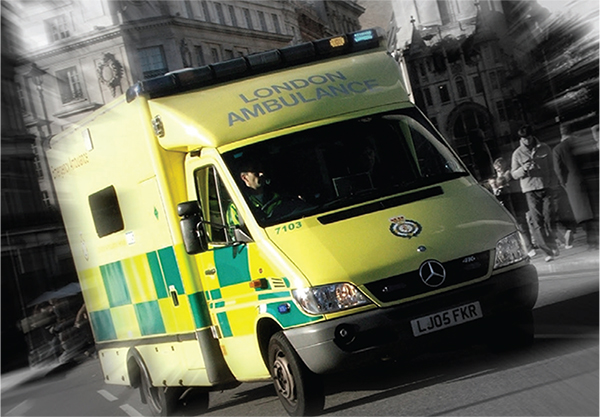
The experiment was inside the treatment pack
The 2016 protocol describes a practical solution to an emergency research problem. Paramedics opened a numbered pack containing syringes of either adrenaline, also called epinephrine, or saline placebo. The packs and syringes looked alike. Staff could deliver the assigned treatment without knowing which group a patient had entered.[2]
This was a test of the drug within resuscitation care. Both groups continued to receive the other elements of that care, including chest compressions and defibrillation when indicated. The protocol excluded, among others, people known or appearing to be under sixteen or pregnant, and arrests caused by anaphylaxis or life-threatening asthma.[2]
That boundary matters when carrying a finding elsewhere. Evidence about adrenaline during this kind of cardiac arrest does not automatically answer a question about its use for an allergic emergency.
The protocol also made a choice about what success would mean. Its primary outcome was survival at thirty days; neurological function and later health were additional outcomes.[2] A primary outcome gives the experiment a declared main question. It does not make every other consequence secondary in a patient's life.
Read the survival result beside the recovery result
Published online on July 18, 2018, the main report included 8,014 patients treated by five UK ambulance services. At thirty days, 130 of 4,012 patients with available survival data in the adrenaline group were alive, compared with 94 of 3,995 in the placebo group: 3.2% versus 2.4%. The unadjusted odds ratio was 1.39, with a 95% confidence interval of 1.06–1.82.[4]
Survival with a favorable neurological outcome at hospital discharge was 2.2% versus 1.9%. Its odds ratio, 1.18, had a 95% confidence interval of 0.86–1.61.[4] That interval spans no difference, possible benefit and possible harm. The trial established a survival benefit; it did not establish an improvement in this recovery outcome. Nor did it prove that the neurological effects were identical.
“Favorable” also had a specified meaning: a modified Rankin score of three or less.[2] It was a functional category, not a promise that every survivor had returned to their previous life. Reading the endpoint's definition is part of reading the result.
Watch the denominator shrink
The next comparison is especially easy to misread. Among survivors assessed at discharge, severe neurological impairment occurred in 39 of 126 people given adrenaline and 16 of 90 given placebo: 31.0% versus 17.8%.[4]
Here the denominator has changed. We are no longer comparing the thousands assigned to each treatment; we are comparing the much smaller groups who survived and were assessed. Survival itself was affected by treatment. Selecting survivors therefore does not preserve the original randomized comparison in a simple way.
For example, a treatment could keep alive some people who already had devastating brain injury and who would otherwise have died. Their inclusion would increase the proportion of survivors with disability, even without the drug directly causing their injury. This is an explanation of the statistical problem, not a claim that we know what happened to each additional survivor.
The investigators' April 2021 full report considered two biological explanations: the heart may remain recoverable after the brain has suffered irreversible injury, and adrenaline may impair blood flow through the brain's smallest vessels despite increasing perfusion pressure.[5] These possibilities make the result intelligible; the outcome comparison does not determine their individual contributions.
The disability finding deserves attention. So does the limit on what it can explain. Reporting more survivors with severe impairment is different from identifying how much injury the drug itself caused.
Discharge was a measurement point
The full report also followed patients beyond the hospital. The number recorded with severe neurological impairment fell by six months, but the investigators cautioned that function can improve, patients can die, and follow-up can be lost. A smaller count later cannot be read entirely as recovery.[5]
That observation changes how the paper should be carried into conversation. A discharge category records a condition at a particular time. It cannot, on its own, describe the subsequent work of rehabilitation or the experience of living with dependence.
The early public summary had promised to ask survivors about health and quality of life.[1] Keeping that promise requires more than extending the survival clock. It requires returning to the people counted as alive and asking what happened next.
PARAMEDIC2 offers a useful reading habit for any treatment trial: keep the outcome, the time point and the denominator attached to every percentage. The reassuring result and the troubling result can both be real. Understanding their relationship takes more care than choosing one to stand for the whole experiment.
Sources
- Health Research Authority, “PARAMEDIC 2: The Adrenaline Trial” — public research summary and ethics opinion dated May 6, 2014.
- Gavin D. Perkins et al., “Pre-hospital Assessment of the Role of Adrenaline: Measuring the Effectiveness of Drug administration In Cardiac arrest (PARAMEDIC-2): Trial protocol,” Resuscitation 108:75–81 (2016) — treatment packs, eligibility and outcome definitions; University of Warwick repository.
- University of Warwick Clinical Trials Unit, PARAMEDIC2 trial website — source of the ambulance photograph; photographer and photograph date are not specified on the page.
- Gavin D. Perkins et al., “A Randomized Trial of Epinephrine in Out-of-Hospital Cardiac Arrest,” New England Journal of Medicine 379:711–721 (2018) — original report, especially Table 3 and the discharge neurological outcomes; University of Warwick repository.
- Gavin D. Perkins et al., “Adrenaline to improve survival in out-of-hospital cardiac arrest: the PARAMEDIC2 RCT,” Health Technology Assessment 25(25) (April 2021) — full report, discussion on printed pages 87–89, including possible mechanisms and follow-up limitations.