NEWS2 looks modest because it is built from measurements that hospital staff already know: respiratory rate, oxygen saturation, whether the patient is on air or supplemental oxygen, systolic blood pressure, pulse, level of consciousness, and temperature.[1] That plainness is the point. The Royal College of Physicians did not design NEWS2 as a diagnostic oracle. It designed a common bedside language for acute illness, so a changing set of observations could be recorded, scored, communicated, and acted on before deterioration becomes a crisis.[1][2]
Read closely, the December 2017 report is a standardization document as much as a clinical tool. The original NEWS appeared in 2012, after years of local early-warning charts that used different thresholds and escalation rules. NEWS2 updated that system in 2017, especially around oxygen saturation scoring and confusion, while preserving the core idea: routine physiology should not remain a private note on a chart.[1][2]
The source's most important word is not "score." It is "response." A number matters only because it changes attention, observation frequency, clinical review, and escalation.[1][3] NEWS2 therefore belongs in the history of patient safety: it turns vital signs from scattered bedside facts into a shared grammar for urgency.
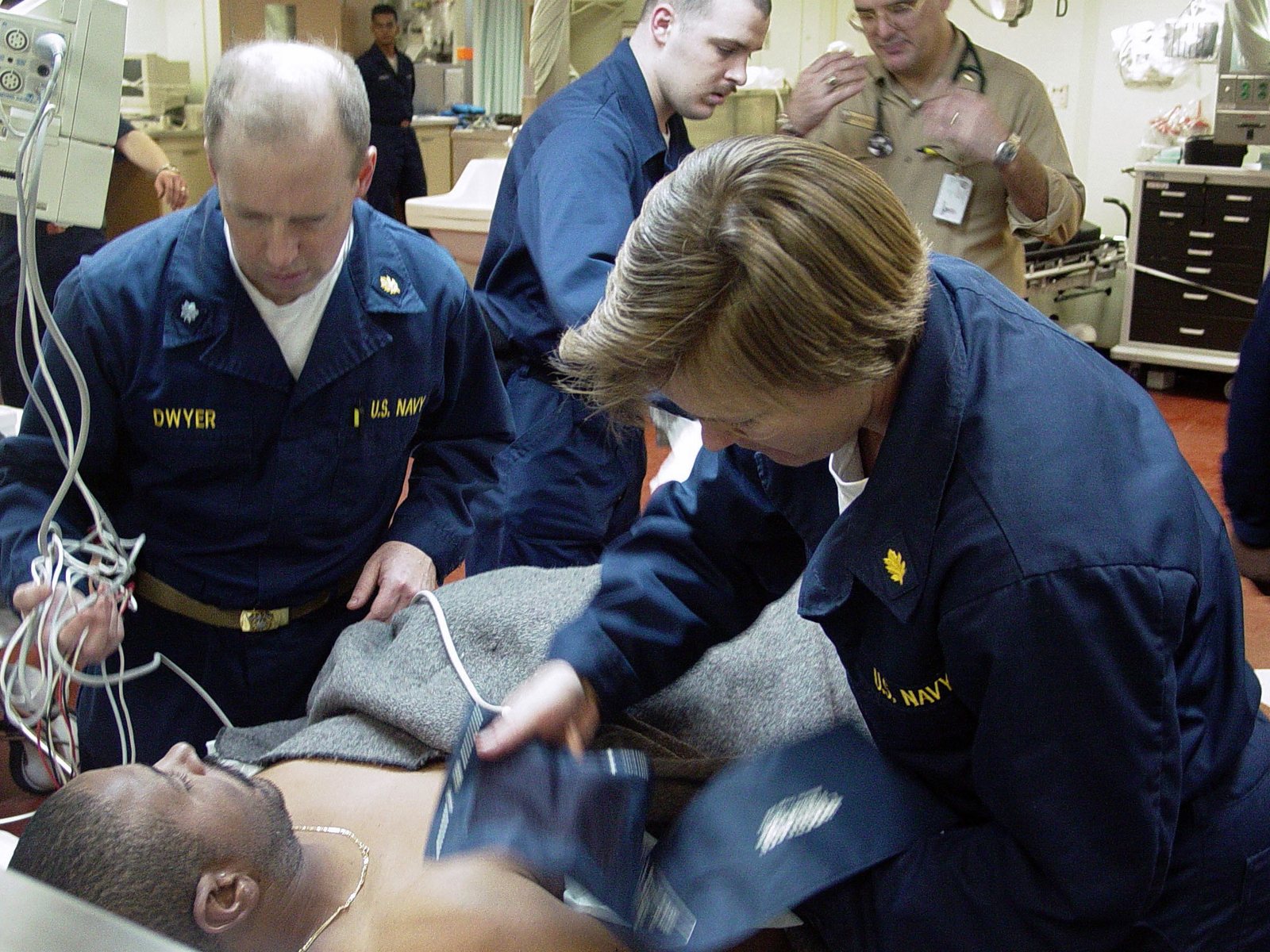
Image context: the cover shows a doctor and nurse monitoring vital signs after a rescue. It is not a NEWS2 chart, and that is why it works here. NEWS2 begins in the physical act of observation; the scoring system is the second layer that makes those observations portable across people, shifts, wards, and escalation calls.[1][6]
The score begins with ordinary physiology
The NEWS2 chart is deliberately narrow. It scores six physiological parameters plus an oxygen-use question.[1] That restraint is easy to miss. It does not ask the nurse or clinician at the bedside to solve the whole diagnosis. It asks them to make respiratory rate, oxygen saturation, oxygen support, blood pressure, pulse, consciousness, and temperature visible in a consistent way.
That design follows the wider track-and-trigger logic in NICE guidance. Since 2007, NICE has recommended physiological track-and-trigger systems for all adult patients in acute hospital settings, with observations at least every 12 hours unless a senior decision changes the frequency for an individual patient.[3] NICE also separates detection from action: abnormal physiology should increase monitoring and trigger a graded response strategy.[3]
NEWS2 makes that principle operational. A respiratory rate of 12 and a respiratory rate of 26 are not just different numbers; they sit in different urgency bands.[1] A falling systolic pressure, a high pulse, or new non-alert consciousness is not merely "noted"; it is converted into a score that other staff can understand without reconstructing the whole bedside story from scratch.[1][2]
This is why NEWS2 is not best read as automation. It is translation. The body speaks through physiology, but hospitals are noisy places with shift changes, handoffs, competing tasks, and professional boundaries. NEWS2 gives those signals a shared format before they are lost inside routine.
One dangerous measurement can matter by itself
The most revealing part of the chart is that NEWS2 can escalate from either an aggregate score or a single severely abnormal parameter.[1] That matters because patients do not always deteriorate politely across every line at once. One vital sign can move first.
The RCP report treats a score of 3 in any individual parameter as clinically important, even if the total score is not yet high.[1] That prevents a common failure mode of aggregate scoring: averaging danger into calm. A patient with one extreme abnormality should not be reassured into low concern simply because other observations still look ordinary.
NICE's recommendation is similar in spirit. It says response should be triggered by either a physiological track-and-trigger score or clinical concern.[3] That second phrase is essential. A scoring system should structure attention without replacing judgment. If a patient looks wrong, a low or borderline score is not a command to wait.
This is the primary-source boundary that keeps NEWS2 honest. The chart creates consistency; it does not erase medicine. It is strongest when teams use it as a common starting point and weakest when they treat the number as a substitute for looking at the patient.
Oxygen saturation needed a second scale
NEWS2's most distinctive update is the addition of an alternate oxygen saturation scale for patients at risk of hypercapnic respiratory failure.[1][4] In ordinary scoring, low oxygen saturation raises concern. But patients with chronic hypercapnic respiratory failure, including some people with COPD, may have clinically appropriate target saturations lower than the usual range.[1][4]
The 2020 RCP implementation guidance clarifies that oxygen saturation scale 2 should be used only after a competent clinical decision, with the target saturation range documented.[4] That caveat is more than paperwork. It shows the difference between standardization and flattening. NEWS2 standardizes the language, but it still needs the right clinical context.
The oxygen scale also exposes a broader lesson about safety tools. A universal score can reduce variation, but it must not pretend every patient has the same physiology. NEWS2 handles that problem not by abandoning the score, but by building a visible exception into the chart and requiring teams to document why they are using it.[1][4]
This is good design because it makes the exception communicable. The next nurse, doctor, or outreach clinician does not have to infer from memory why a saturation target looks different. The chart itself carries the decision.
Evidence supports the signal, not a miracle
The strongest empirical case for NEWS came before NEWS2. A 2013 Resuscitation study tested NEWS against 33 other early warning scores using a large database of 198,755 observation sets from 35,585 completed acute medical admissions. It found NEWS had greater ability to discriminate patients at risk of cardiac arrest, unanticipated ICU admission, or death within 24 hours of a NEWS value.[5]
Those numbers explain why standardization had force. A score that organizes routine observations can identify risk early enough that a response may still matter.[5] But the evidence should not be overstated. Discrimination is not rescue. A warning score can identify risk; it cannot guarantee staff availability, clinical review, treatment, critical-care capacity, or handoff quality.
That limitation is visible in the official sources. NHS England frames NEWS as a way to standardize recording, scoring, and responding to changes in routine physiological parameters.[2] NICE requires a graded response strategy, not just a chart.[3] The RCP report links scoring to urgency and competency of response.[1] All three sources point to the same conclusion: the score is a front door into action.
The practical failure mode is therefore predictable. NEWS2 can be recorded perfectly and still fail if escalation is slow, if staffing is thin, if the response threshold is unclear, or if clinical concern is dismissed because the total score has not crossed a local line. The tool notices; the system has to move.
The real intervention is shared urgency
NEWS2's lasting value is that it gives hospitals a repeatable way to say, "This patient is changing." That phrase has to survive different wards, accents, seniority levels, electronic records, paper charts, night shifts, and handoffs. A common score helps because it compresses many observations into a signal that can travel.
But a close reading of the primary source keeps the signal grounded. The score begins with vital signs, not abstract risk modeling.[1] It recognizes single-parameter danger, not only totals.[1] It includes oxygen-scale context for patients whose safe saturation targets differ.[1][4] It expects response, not passive documentation.[1][3]
That makes NEWS2 a useful safety artifact precisely because it is not glamorous. It does not discover a new disease or replace bedside assessment. It disciplines the old work of observation. The nurse counting respirations, the assistant recording temperature, the clinician reviewing a trend, and the team deciding whether to call for urgent help all need the same language.
In that sense, NEWS2 is best understood as escalation infrastructure. It takes routine measurements and makes them harder to ignore. The chart is not the care. The care begins when the number changes what people do next.[1][2][3]
Sources
- Royal College of Physicians, National Early Warning Score (NEWS) 2: Standardising the assessment of acute-illness severity in the NHS (December 2017) - primary report for parameters, scoring, single-parameter risk, oxygen scales, and response framing.
- NHS England, "National Early Warning Score (NEWS)" - official NHS summary of NEWS development, standardised recording/scoring/responding, and acute-deterioration use.
- NICE, "Acutely ill adults in hospital: recognising and responding to deterioration" recommendations - track-and-trigger monitoring, observation frequency, clinical concern, and graded response strategy.
- Royal College of Physicians, NEWS2 Additional implementation guidance (March 2020) - implementation clarification for oxygen saturation scale 2, clinical decision-making, and documentation.
- Gary B. Smith et al., "The ability of the National Early Warning Score (NEWS) to discriminate patients at risk of early cardiac arrest, unanticipated intensive care unit admission, and death," Resuscitation, 2013 - validation study using 198,755 observation sets from 35,585 admissions.
- Wikimedia Commons, "US Navy 030108-N-2338M-007..." - source page for the 2003 U.S. Navy photograph of a doctor and nurse monitoring a rescued fisherman's vital signs.