If naloxone is so effective, why is opioid overdose still an emergency after the first spray?
The answer is mechanism, not contradiction. Naloxone works fast because it blocks opioid effects at the receptor level and can restore breathing within minutes.[2][3] But it does not erase everything else that makes an overdose dangerous: delayed recognition, fentanyl-heavy exposure, mixed-drug intoxication, airway compromise, and the fact that naloxone itself does not stay active forever.[2][3][4]
That is why the most accurate way to think about naloxone in 2026 is as a time-buying intervention. It can reopen the breathing window. It does not replace the rest of the rescue architecture.
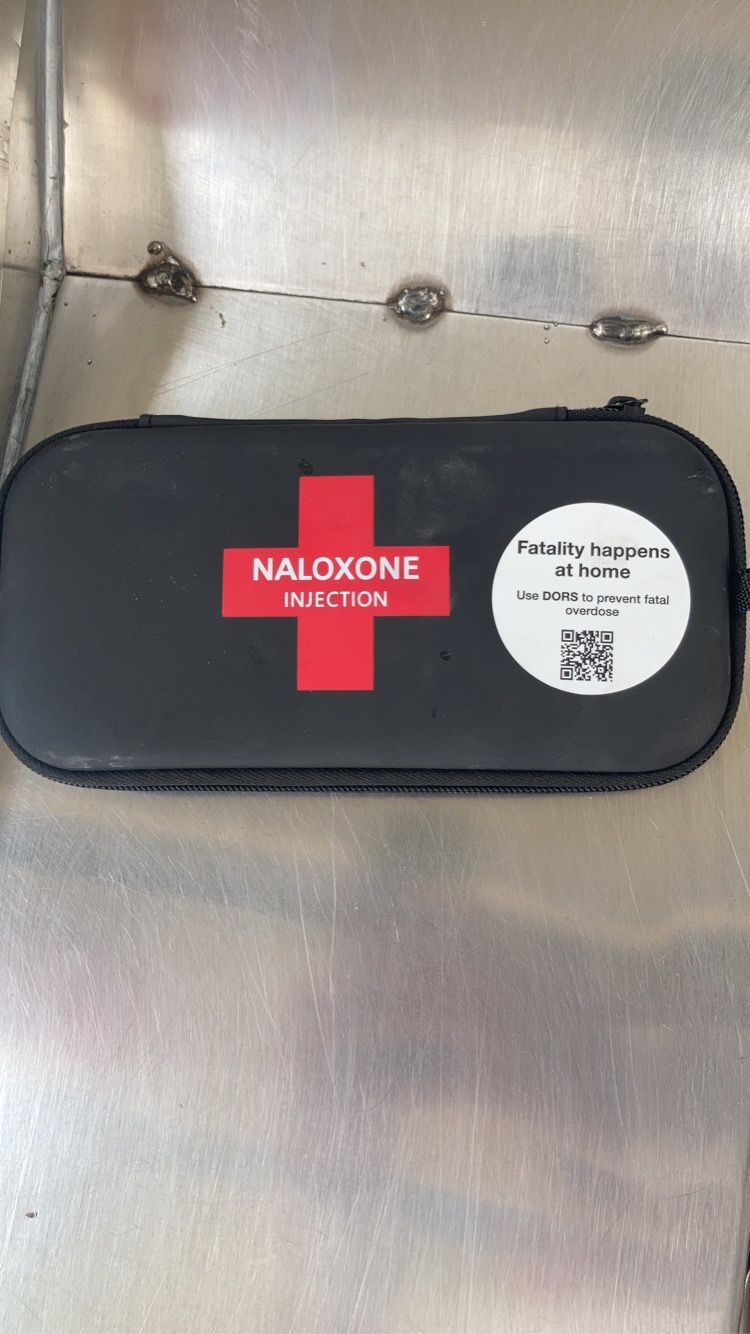
Image context: the cover image shows a real naloxone kit. That matters here because overdose response is highly practical. The life-saving difference often begins with whether naloxone is actually nearby when breathing slows or stops.[5]
Timeline anchors: when access and framing changed
- 2015: FDA first approved Narcan nasal spray as a prescription product, making prepackaged intranasal naloxone part of the U.S. response toolkit.[1]
- March 29, 2023: FDA approved Narcan 4 mg naloxone hydrochloride nasal spray for over-the-counter use, the first naloxone product available without a prescription in the United States.[1]
- May 2024: CDC published its current public guidance emphasizing that naloxone can restore breathing within 2 to 3 minutes, while still requiring 911 activation and follow-through.[2]
- March 2026: NIDA’s updated DrugFacts page continued to frame naloxone as rapid overdose reversal that may require multiple doses, especially with potent opioids such as fentanyl.[3]
Those dates matter because they show the shift from professional tool to wider public tool. The policy move was access expansion. The biological mechanism did not change.
Step 1: what the overdose is actually doing
Opioid overdose becomes lethal primarily through breathing failure. WHO states the core pathway plainly: opioids act on the part of the brain that regulates breathing, and overdose can therefore lead to death through respiratory depression.[4]
That is the first useful simplification. In many fatal overdoses, the central emergency is not abstract “toxicity” in general. It is a narrowing respiratory window: breaths become slower, shallower, less effective, and then absent. Cyanosis, unresponsiveness, and limpness are downstream signs of the same problem.[2][3][4]
This is also why overdose response is so time-sensitive. A person does not need to reach cardiac arrest before the crisis is already severe. Once oxygen delivery falls, minutes matter.
Step 2: why naloxone works so quickly
NIDA describes naloxone as an opioid antagonist: it attaches to opioid receptors and reverses and blocks the effects of other opioids.[3] CDC translates the same mechanism into bedside timing: naloxone quickly reverses overdose by blocking opioid effects and can restore normal breathing within 2 to 3 minutes in a person whose breathing has slowed or stopped because of opioids.[2]
That speed explains why naloxone is so different from longer-form addiction treatment. It is not trying to stabilize a life over weeks or months. It is interrupting one acute receptor-level event quickly enough to keep the brain and body oxygenated.
A second boundary is just as important: naloxone has no overdose-reversal effect in a person who does not have opioids in their system.[3] In other words, it is pharmacologically targeted. It is not a general antidote for every collapse, and it does not reverse stimulant toxicity, alcohol intoxication, or non-opioid sedative poisoning by itself.[3]
Step 3: why the overdose can return after apparent reversal
This is the part many people misunderstand. Naloxone can work fast and still not finish the job.
NIDA states that naloxone only works in the body for about 30 to 90 minutes.[3] The same page adds two practical consequences: a person can still experience overdose effects after naloxone wears off, and some opioids are strong enough that multiple doses may be needed.[3] CDC’s public guidance therefore instructs responders to start with one dose, wait 2 to 3 minutes, and give another dose if normal breathing does not return.[2]
Mechanistically, this means naloxone is often racing two clocks:
- the opioid already depressing respiration,
- and naloxone’s own limited duration of action.
If the opioid effect persists longer than the reversal window, respiratory depression can recur. That is why “the person woke up” is not the same thing as “the emergency is over.”
Step 4: why fentanyl-era overdoses changed perception without changing the core mechanism
The fentanyl era made naloxone feel less decisive to many bystanders because overdoses could look faster, deeper, and more likely to need repeat dosing. That perception is real. The stronger conclusion some people draw from it is weaker.
Interpretation A: fentanyl means naloxone no longer really works
This interpretation usually comes from scenes where one dose was not enough, or where the person remained critically ill despite reversal attempts.
Interpretation B: naloxone still works, but the rescue window has become more demanding
This interpretation fits the official sources better. CDC still states that naloxone can reverse opioid overdose and restore breathing within minutes.[2] NIDA explicitly says potent opioids like fentanyl may require multiple doses.[3] WHO keeps naloxone in the center of recommended overdose management, together with airway support and assisted ventilation.[4]
Current assessment: Interpretation B is stronger. The receptor-level mechanism remains intact; what changed is the field condition around it. Potent synthetic opioids, delayed discovery, and mixed-drug exposures make a one-dose, one-step rescue less reliable than people hoped.
What would revise this assessment: evidence showing prompt, repeated naloxone plus adequate ventilation failing systematically in confirmed opioid overdoses because of a new pharmacologic escape from antagonism. The official guidance reviewed here does not support that conclusion.[2][3][4]
Step 5: why 911, airway support, and observation are not optional extras
Once naloxone is understood as a bridge, the rest of the response stops looking redundant.
CDC instructs responders to administer naloxone and then call 911, while trying to keep the person awake and breathing.[2] WHO’s guidance is even more explicit about sequence: in suspected opioid overdose, first responders should focus on airway management, assisting ventilation, and administering naloxone, followed by close observation until recovery is secure.[4]
NIDA adds one more operational boundary: people who receive naloxone should be observed continuously until emergency care arrives and then monitored for another 2 hours after the last dose to make sure breathing does not slow or stop again.[3]
That recommendation captures the full argument of this article. Naloxone is powerful because it can quickly reopen a failing respiratory pathway. It is incomplete because reopening is not the same thing as finishing.
What the 2026 policy lesson actually is
The most useful public-health lesson is narrower than “naloxone saves lives,” though that is true. The sharper lesson is that overdose survival depends on distribution plus recognition plus response sequence.
- Distribution: naloxone has to be physically available where likely witnesses are.
- Recognition: bystanders have to identify overdose signs fast enough to act.[2][3]
- Sequence: naloxone needs to be followed by 911 activation, breathing support, and observation rather than treated as a standalone cure.[2][3][4]
That is why wider OTC access mattered in 2023.[1] It did not invent a new antidote. It lowered the logistical barrier between the person at risk and the person likely to witness the overdose.
Bottom line
Naloxone remains one of the clearest examples of a medicine whose real value lies in timing. It can reverse opioid-driven respiratory depression within minutes by blocking opioid effects at the receptor level.[2][3] But its effect is temporary, some overdoses require repeated dosing, and the person still needs emergency follow-through because the overdose can outlast the reversal.[2][3][4]
The cleanest way to remember it is this: naloxone buys breathing time. The rest of the rescue has to use that time well.
Sources
- U.S. Food and Drug Administration, "FDA Approves First Over-the-Counter Naloxone Nasal Spray" (March 29, 2023).
- Centers for Disease Control and Prevention, "5 Things to Know About Naloxone" - public guidance on overdose signs, 2-3 minute breathing restoration, repeat dosing, and 911 activation.
- National Institute on Drug Abuse, "Naloxone DrugFacts" - receptor mechanism, 30-90 minute duration, multiple-dose boundary, and post-reversal observation guidance.
- World Health Organization, "Opioid overdose" - respiratory-depression pathway, naloxone availability to likely witnesses, and airway/ventilation guidance.
- Wikimedia Commons, "File:Naloxone kit.jpg" - photographic source for the cover image.