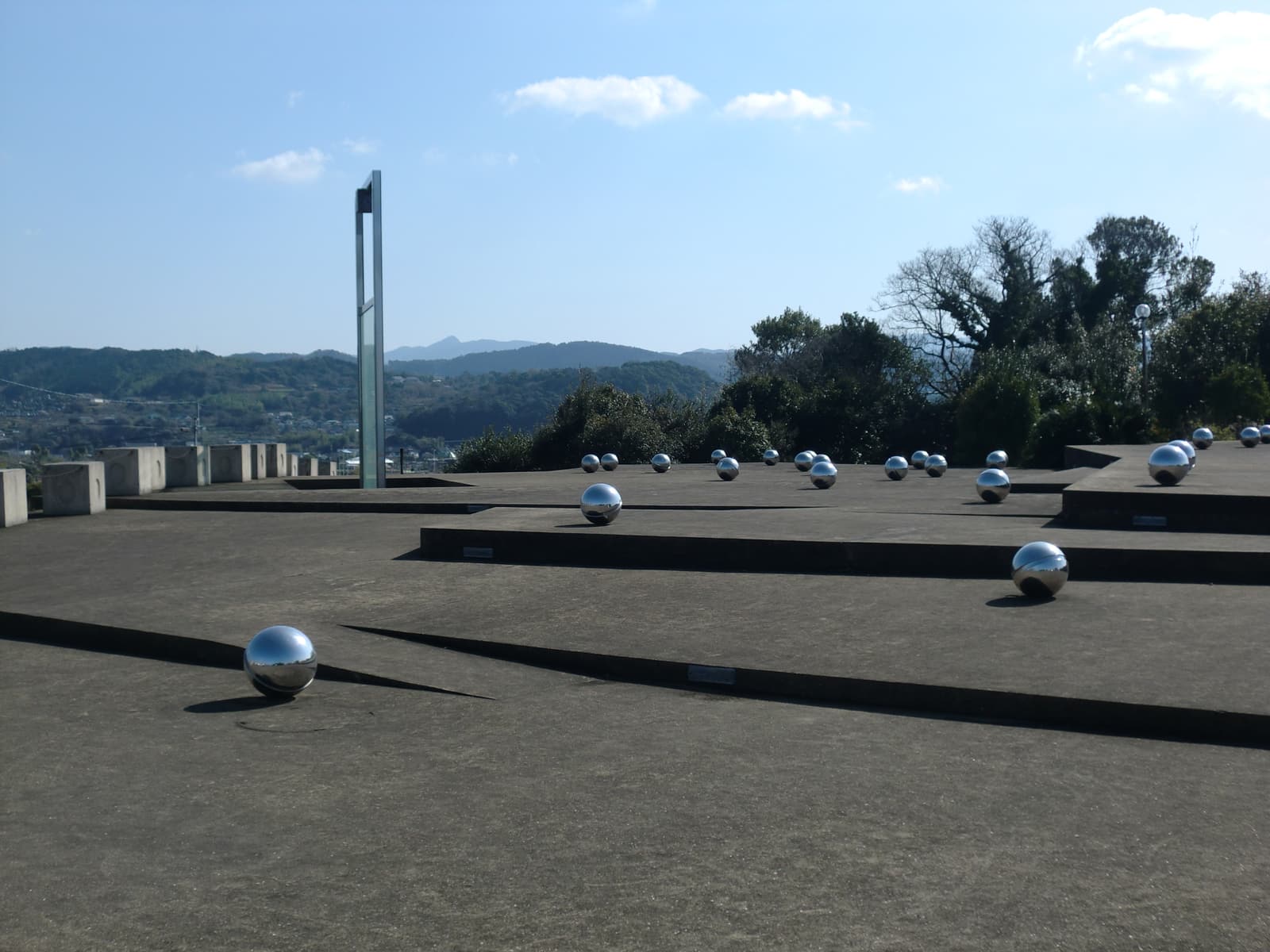
Most environmental health disasters fade in policy memory long before they fade in human bodies. Minamata is one of the rare cases where commemoration became part of the response architecture.
The practical question is not whether memorial culture is morally important (it is). The practical question is whether memory practices changed what governments and institutions kept doing after the headline phase ended: compensation, surveillance, and prevention.
1) The long clock: from first recognition to delayed state acknowledgment
The first officially reported Minamata disease cases were identified in 1956 in Minamata City, with later evidence pointing to earlier symptom onset in 1953 and possible earlier occurrence.[2] By then, local communities were already living inside a toxic food-chain loop driven by methylmercury-contaminated seafood.
A second outbreak in Niigata followed in 1965.[2] The Japanese government formally acknowledged the causal relationship between factory wastewater and Minamata disease in 1968.[1][5] That 12-year lag between official recognition and formal causal acknowledgment is not just a historical detail; it is a governance warning about proof thresholds that arrive too late.
The health burden never fit a short emergency frame. According to the National Institute for Minamata Disease (NIMD), as of December 2024 there were 3,000 recognized Minamata disease patients across Kumamoto, Kagoshima, and Niigata, with 304 still alive, plus 38,320 recipients in the broader medical-aid program for people not formally recognized as patients but meeting exposure/symptom criteria.[2][3]
2) What commemoration changed in practice
In Minamata, memory is not only a ceremony date. It is physically embedded in institutions and land use.
NIMD documents that the Minamata Disease Municipal Museum was founded to preserve records and keep the historical chain legible for future generations.[4] Eco Park Minamata itself sits on reclaimed land where contaminated sludge had once accumulated; the park spans 41.4 hectares and includes a waterfront monument for victims.[4] That monument was erected in 2006 (the 50th anniversary year of official recognition), and has hosted the annual memorial ceremony each May 1 since then.[4]
This matters for health governance because repeated ritual plus archival infrastructure does three operational things:
- It stabilizes attribution over time. The cause pathway (industrial discharge → contaminated seafood → neurologic damage) is continuously re-articulated in public-facing institutions, reducing “historical amnesia drift.”
- It protects policy continuity. Annual ceremony and preserved records make it harder to quietly downgrade compensation and monitoring obligations when media attention moves on.
- It links local memory to global prevention. The Minamata Convention on Mercury—adopted in 2013 and in force since 16 August 2017—explicitly ties global mercury governance to lessons drawn from Minamata’s history.[6]
3) The system response beyond symbolism
Commemoration did not treat methylmercury toxicity. Institutions did. But institutions were also shaped by political memory.
Japan’s policy path includes compensation frameworks, court-driven accountability, and layered aid programs. NIMD notes the 2004 Supreme Court ruling that recognized state and prefectural liability in the Kansai Minamata case, and the 2009 Special Measures Act followed by 2010 aid-policy implementation.[3] These are not one-off gestures; they are durable fiscal and legal commitments.
On the prevention side, Japan’s Ministry of the Environment describes long-run mercury management actions: closure of primary mercury mines by 1974, major reductions in domestic mercury demand (from a historical peak of about 2,500 tons to around 9 tons in 2010), and reported atmospheric emission reductions to around 20 tons in 2010.[8] WHO’s mercury guidance continues to classify mercury as a major public-health chemical concern and emphasizes methylmercury risk through fish/shellfish pathways, especially for fetal and early-life development.[7]
The key point: commemoration and policy did not operate as substitutes. They operated as coupled systems—one preserving public legitimacy and attention, the other delivering legal, medical, and regulatory action.
4) The contested interpretation
There are two serious readings of Minamata’s long afterlife.
Interpretation A: memory institutions were a causal policy input
This view argues that annual memorialization, local archives, and public monuments kept social pressure and historical clarity alive, making it harder for compensation and aid systems to decay into administrative minimization.
Interpretation B: commemoration was mainly representational
This view argues that legal rulings, statutes, and administrative programs did the substantive work; commemoration mattered culturally, but had limited independent effect on health outcomes or policy durability.
Both interpretations capture part of reality. Epidemiologic and legal action are measurable. Commemoration’s policy effect is harder to isolate causally, but easier to observe institutionally: when memory infrastructure persists, policy retreat becomes politically expensive.
5) What evidence would change the balance?
To strengthen a causal claim about commemoration, we would need comparative evidence beyond narrative plausibility—for example, whether jurisdictions with stronger memorial/archival intensity show better long-run continuity in aid coverage, claimant processing, and environmental monitoring after controlling for court and statute differences.
Until that evidence base is stronger, the most defensible conclusion is mixed:
- biomedical and legal systems carry the direct burden of treatment, certification, and compensation;
- memory systems help keep those obligations publicly legible across decades.
That mixed conclusion is still high-value for present-day health policy. When harm unfolds over decades, governance failure often begins as forgetting.
Sources
- Ministry of the Environment, Japan — Minamata Disease: The History and Measures (Summary)
- National Institute for Minamata Disease (NIMD) — Occurrence and cause of Minamata disease (includes Dec 2024 recognition and aid counts)
- National Institute for Minamata Disease (NIMD) — Measures to address Minamata disease (liability, 2004 ruling, 2009 act)
- Minamata Disease Archives / NIMD — Information on adjacent facilities (museum purpose, Eco Park 41.4 ha, 2006 monument, annual May 1 ceremony)
- Yorifuji T. (2019), Lessons From an Early-stage Epidemiological Study of Minamata Disease (J Epidemiol)
- Minamata Convention on Mercury — Homepage (adopted in 2013; entered into force 16 Aug 2017)
- World Health Organization — Mercury and health fact sheet
- Ministry of the Environment, Japan — Japan's Lessons of the Minamata Disease and Measures for Mercury Management
- Wikimedia Commons file metadata — Minamata memorial 01.JPG