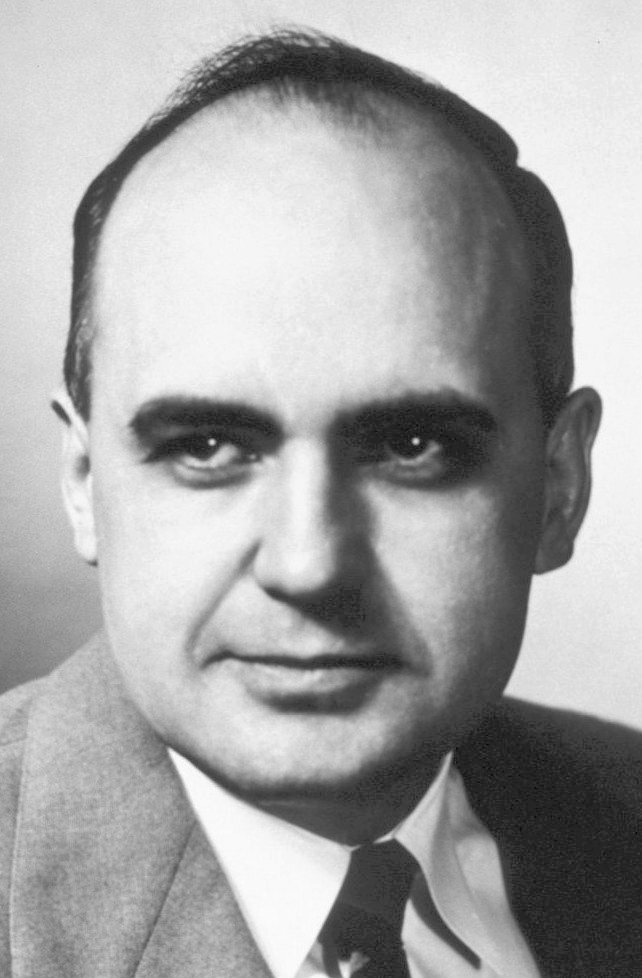
The sentimental version of Maurice Hilleman's mumps story is almost too neat. His daughter Jeryl Lynn wakes up ill in March 1963, he swabs her throat at home, carries the sample back to Merck, and four years later the United States has a licensed mumps vaccine. The outline is true. It is also incomplete in exactly the place that matters.[2][3][4]
What turned that family anecdote into routine childhood prevention was not a lone flash of genius. It was a prepared vaccine system already in motion: a virologist who had spent the 1950s building pandemic-flu response habits, an industrial lab that knew how to attenuate and screen live viruses, and a field-trial apparatus that could move from bench work to pediatric use without treating manufacturing as an afterthought.[3][4] Hilleman's importance sits there. He did not simply find a virus. He knew how to convert an isolate into a product that clinics, schedules, and public-health programs could actually use.
Timeline anchors
- December 31, 1957: Hilleman leaves Walter Reed for Merck and takes over virus and cell-biology research.[3][4]
- March 23, 1963: he isolates the mumps virus from his daughter Jeryl Lynn after she develops parotitis symptoms.[3][4]
- June 28, 1965: Merck begins formal testing of the attenuated mumps vaccine candidate.[3]
- 1967: the U.S. licenses the live attenuated Jeryl Lynn strain vaccine, marketed as Mumpsvax.[1][2][3]
- 1971: Merck's combined measles-mumps-rubella vaccine is licensed, moving mumps prevention into the logic of routine childhood combination immunization.[1][3]
The timeline is short, but it is not a fairy tale. Each date marks a different kind of work: institution-building, isolation, attenuation, clinical evaluation, then program integration.
Before the throat swab: why mumps still demanded a vaccine
It is easy to misread mumps because the most familiar image is swollen cheeks and a week at home. The public-health record was harsher. CDC's Pink Book describes mumps as a common childhood infection in the prevaccine United States and lists complications that pushed it well beyond inconvenience: orchitis after puberty, aseptic meningitis, encephalitis, pancreatitis, and permanent hearing loss in a small but real minority of cases.[1] A disease does not need a massive fatality rate to justify a vaccine if it is common enough, disruptive enough, and prone to neurologic or reproductive complications.
By the early 1960s, vaccine development had already moved beyond the era in which every pathogen required an entirely new philosophy. Hilleman had spent years working across influenza, adenoviruses, and other viral problems, learning the disciplines that matter in translational vaccinology: how to characterize strains, how to think about antigenic change, and how to move fast without confusing speed for improvisation.[3][4] That background is why the famous Jeryl Lynn sample matters less as a romantic origin myth than as raw material arriving in capable hands.
March 1963: the household moment was real, but it was only the start
The household scene remains worth keeping because it captures Hilleman's habits. According to the Hilleman timeline and later biographical accounts, when Jeryl Lynn fell ill, he recognized mumps quickly, took a throat swab, and brought it back to the lab.[3][4] The eventual vaccine strain kept her name. But a clinical product did not spring directly from a cotton swab.
The hard middle was attenuation and evaluation. The virus had to be adapted into a form that would provoke immunity without behaving like wild mumps infection. That required passage work, safety testing, and evidence that the candidate could induce durable protection in children while staying within an acceptable reactogenicity boundary.[2][3] In other words, the part of the story that sounds most cinematic was also the least sufficient on its own.
This is the useful way to read Hilleman's biography. He was not just an inventor collecting good anecdotes. He was an organizer of technical sequence. The steps after isolation had to happen in the right order, and none of them could be left to vague optimism.
Why Merck could move in four years
The four-year interval from 1963 isolation to 1967 licensure still reads as fast by twentieth-century vaccine standards, but the speed becomes less mysterious once the industrial context is restored. Hilleman arrived at Merck in 1957 after identifying the pandemic potential of Asian influenza at Walter Reed and helping drive vaccine production on an urgent schedule.[3][4] That episode mattered because it taught him and his teams something larger than virology: preparedness lives in manufacturing relationships, strain-selection discipline, and organizational memory.
The Jeryl Lynn vaccine benefited from that accumulated capability. Merck was not starting from zero in cell culture, animal safety work, pediatric testing, or regulatory negotiation. Hilleman's contribution was to operate across those boundaries rather than treat them as separate worlds. Tulchinsky's review of Hilleman's career makes the point directly: his genius lay in making vaccines useful and reproducible all the way from research to the marketplace.[4] That is a colder description than "hero scientist," but it is also the more accurate one.
The 1967 JAMA report on Mumpsvax shows what this translation stage looked like in practice: not mythology, but an evaluation of a live attenuated vaccine candidate in children, with attention to serologic response and clinical tolerance.[2] The published paper is less dramatic than the dinner-table swab story, yet it is the part that turns family legend into public evidence.
1967 to 1971: the more important move was combination
Licensure in 1967 was not the end of the historical arc. The more durable shift came in 1971, when measles, mumps, and rubella were combined into one routine product.[1][3] Combination changed the delivery logic. A monovalent vaccine can succeed scientifically and still remain operationally fragile. Once mumps prevention entered MMR, it attached itself to the ordinary choreography of childhood visits, clinic inventory, school-entry expectations, and public-health messaging.
That combination step is easy to underrate because it looks administrative. In practice it is where many medical successes become population successes. The History of Vaccines timeline notes the plain advantages: fewer injections, simpler stocking and shipping, and a schedule easier for families and clinicians to complete.[3] Hilleman's lasting influence came not only from isolating one useful strain, but from seeing that modern immunization depends on packaging, sequence, and uptake friction as much as on lab insight.
The vaccine worked, but not in a fairy-tale way
The most honest way to honor Hilleman is to avoid making the Jeryl Lynn strain sound magical. CDC's current mumps vaccination guidance still treats MMR as the core prevention tool and estimates that two doses are about 86% effective against mumps, while also noting that outbreaks can still occur, especially in close-contact settings.[5] That is not a failure story. It is what real vaccines look like: strong enough to transform baseline risk, imperfect enough that epidemiology and exposure patterns still matter.
This current guidance also sharpens the historical point. When outbreak conditions justify it, public-health teams may recommend a third MMR dose for groups at increased risk.[5] The policy is not a retreat from Hilleman's work. It is evidence that durable vaccine systems keep adapting after licensure. The original achievement was never "solve mumps once and forever." It was to create a strain, a product, and then a schedule durable enough to remain the backbone while later epidemiology refined the playbook.
Why Hilleman still matters in 2026
Biography can flatten vaccinologists into numbers saved or prizes won. Hilleman easily supports that treatment; the scale of his work was enormous.[4] But the Jeryl Lynn episode is more instructive when kept at microhistory scale. It shows how public-health speed is usually built before the crisis moment that later gets remembered.
One child wakes up sick. A scientist-father recognizes the opening. Yet the part that changes the world arrives afterward: strain handling, attenuation, safety work, pediatric evidence, licensure, combination, schedule design. The story remains unusually clear because every step is visible. The swab was intimate. The vaccine was industrial. The prevention system was collective.
That sequence is why the mumps story still deserves retelling. Hilleman did not prove that good science can emerge from family life. He proved something harder: a prepared institution can convert a private observation into ordinary prevention quickly enough that later generations forget how much disease used to circulate before the routine shot existed.[1][3][5]
Sources
- Centers for Disease Control and Prevention, Pink Book: Chapter 15, Mumps (epidemiology, complications, vaccine history, schedule).
- Hilleman MR, Buynak EB, Weibel RE, Stokes J Jr., "Evaluation of a New Mumps Vaccine: Mumps Virus Vaccine, Live, Attenuated (Mumpsvax)," JAMA (1967), PubMed record.
- History of Vaccines, Maurice Hilleman, PhD timeline (Merck, Jeryl Lynn isolation, testing, and MMR licensure).
- Tulchinsky TH, "Maurice Hilleman: Creator of Vaccines That Changed the World," Case Studies in Public Health / PubMed Central (2018).
- Centers for Disease Control and Prevention, Mumps Vaccination (current effectiveness and outbreak guidance).
- Wikimedia Commons, File:Hilleman-Walter-Reed.jpeg (archival hero image source; original via U.S. National Library of Medicine).