In August 1952, Copenhagen hit a point where ordinary ward medicine could no longer keep pace with polio. Patients with bulbar or respiratory paralysis were arriving faster than the city's available ventilators, and the usual negative-pressure machines were not solving the problem that mattered most. Children and adults were drowning in secretions, retaining carbon dioxide, and dying inside a hospital system that still understood respiratory failure too mechanically.[2][4]
What changed the outcome was not a miraculous device arriving at the last minute. It was a change in sequence. Bjorn Ibsen, a Danish anesthetist with recent Boston training, argued that many of the sickest patients were dying from inadequate ventilation and carbon-dioxide retention, not from an inevitable terminal phase of poliomyelitis itself.[3][4] Once that claim was taken seriously, treatment shifted: tracheostomy, positive-pressure bag ventilation, aggressive suctioning, blood-gas reasoning, and then the concentration of these patients in dedicated wards staffed around the clock. That chain is why the Copenhagen epidemic matters. It was an outbreak story that became a hospital-design story.
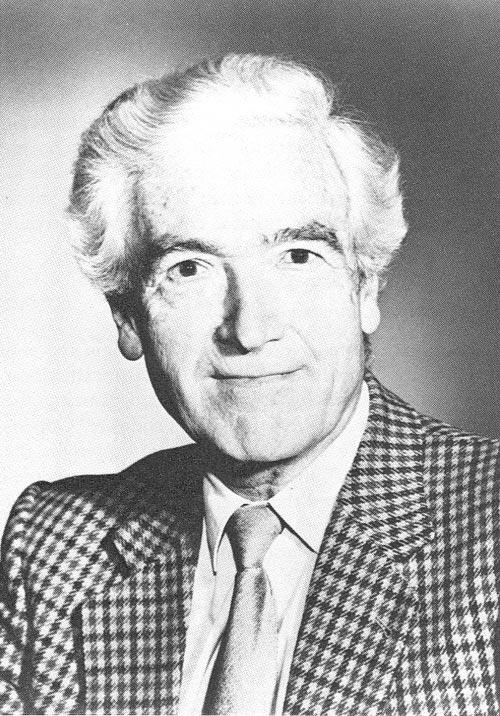
Lead image: Bjorn Ibsen in later life. The portrait comes from the respiratory-physiology review that also preserves the epidemic's technical memory.[2]
Timeline anchors
- July-December 1952: Copenhagen admits more than 2,700 polio patients during the epidemic; hundreds develop paralysis and respiratory compromise.[4]
- August 26, 1952: 12-year-old Vivi Ebert arrives at Blegdam Hospital with respiratory failure and bulbar palsy, giving Ibsen the opening to demonstrate positive-pressure ventilation.[4]
- Late August 1952: Blegdam begins moving ventilated patients into dedicated wards and training students to provide continuous manual ventilation in shifts.[3][4]
- Autumn 1952: manual ventilation peaks at roughly 70 simultaneous patients, with 1,500 students ultimately contributing 165,000 hours.[3]
- August 1, 1953: under Ibsen's supervision, Copenhagen opens the first intensive therapy unit at Kommunehospital, formalizing what the epidemic had forced into existence.[3]
1. Before the breakthrough, the bottleneck was already visible
The Copenhagen epidemic was extreme even by the standards of the polio era. A 2024 historical review summarizes the scale plainly: more than 2,700 patients were admitted between July and December 1952, 866 developed paralysis, and 316 suffered respiratory or pharyngeal paralysis.[4] West's physiological review gives a similar picture using slightly different counting windows, noting about 3,000 admissions from August to December, around 1,250 with some paralysis, and roughly 345 with bulbar involvement severe enough to threaten breathing and swallowing.[2] The exact totals vary by source and case definition, but the direction is not in doubt: the city was seeing a concentration of respiratory failure large enough to overwhelm existing equipment.
Equipment was the immediate weakness. The same 2024 review says Blegdam Hospital had only one tank respirator, or iron lung, and six cuirass respirators available for patients arriving daily with respiratory failure.[4] That shortfall mattered because negative-pressure ventilation looked, from a distance, like the appropriate machine for polio. It had already become the iconic technology of the disease. But for bulbar patients with heavy secretions and unstable airways, the iron lung could become a theatrical answer to the wrong question. It enclosed the body; it did not reliably secure the airway or clear the lungs.
This is where the event reconstruction has to slow down. A hospital can own the famous machine for a disease and still misunderstand the physiology that kills the patient in front of it. Copenhagen in 1952 was not only a case of too few ventilators. It was also a case of an old treatment frame losing its grip under pressure.
2. August 26-27: Ibsen's wager on what was really killing patients
The hinge of the story is well preserved in later historical accounts. According to the 2024 review, on August 26, 1952, Vivi Ebert, a 12-year-old girl with four-limb paralysis, respiratory failure, and bulbar palsy, was admitted to Blegdam Hospital.[4] Ibsen had already been arguing that the crisis signs physicians were reading as terminal polio or renal failure were better understood as carbon-dioxide retention caused by inadequate ventilation.[3][4] He persuaded H.C.A. Lassen to let him try the next step: tracheostomy plus manual positive-pressure ventilation.
The following day, the new method was tried. The key innovation was not merely squeezing a bag instead of using an iron lung. It was a bundled airway strategy: place a cuffed tracheostomy tube, keep saliva out of the lungs, suction secretions, and push air in directly with positive pressure.[2][3] Ibsen also brought a different intellectual frame to the bedside. The BMJ profile of his career puts the point sharply: he recognized that patients were dying from carbon-dioxide retention rather than the renal failure many clinicians thought they were seeing.[3]
That interpretive shift is what turns the case from anecdote into mechanism. If the problem is framed as "polio patients stop breathing and machines are scarce," the hospital remains trapped in equipment triage. If the problem is reframed as "airway control and alveolar ventilation are failing in a treatable sequence," then clinicians gain several levers at once. Tracheostomy matters. Suction matters. Manual pressure matters. Blood chemistry matters. The epidemic becomes a systems problem instead of a purely fatal one.
3. Bag squeezing became labor infrastructure
The immediate triumph created a worse logistical problem. Saving one patient by hand is a demonstration. Saving dozens means building a labor system inside a crisis. West's review says the hospital called in 200 medical students to provide round-the-clock manual ventilation with a rubber bag attached to tracheostomy tubing, sometimes for weeks at a time.[2] The BMJ account describes the operation at fuller human scale: surgeons, anesthetists, WHO trainees, and medical and dental students were trained to aspirate secretions and ventilate patients in six-hour shifts.[3]
At the height of the epidemic, about 70 patients were being manually ventilated simultaneously.[3] In total, about 1,500 students contributed 165,000 hours of labor.[3] Those numbers matter because they show that the first ICU logic was not "buy a machine." It was "concentrate skill, standardize sequence, and create uninterrupted coverage." The bag was only the visible tool. The real innovation was a continuously staffed care environment built around the needs of one fragile physiological state.
This is also where Copenhagen stopped looking like an isolated bedside rescue and started looking like a prototype. Once patients needing ventilation were moved into dedicated wards, observation improved, suctioning became routine, and the hospital could organize scarce expertise instead of scattering it across ordinary rooms.[3] Intensive care began here as choreography: one kind of patient, one tightly defined workflow, one team structure built to hold the line hour after hour.
4. Why the death rate moved
The sources differ slightly on the baseline and post-intervention mortality rates, but they agree on the magnitude of change. West describes mortality in the relevant patient group falling from around 90% to around 25% after the manual positive-pressure approach was adopted.[2] The BMJ profile uses a nearby estimate, saying mortality fell from 80% to 25%.[3] The discrepancy is a reminder to keep the evidentiary boundary visible: later retellings are not numerically identical. But the change was not marginal in either version. It was a collapse in expected death, large enough that contemporaries in other countries immediately paid attention.[2][3]
Why did mortality drop so sharply? The strongest explanation across the sources is not that positive pressure was magically superior in the abstract. It is that the new regimen matched the actual failure mode of bulbar polio better than the old one. Patients needed a secure airway, removal of secretions, dependable ventilation, and close physiologic monitoring. West's review emphasizes the simultaneous rebirth of clinical respiratory physiology during the epidemic: once clinicians began following acid-base status and carbon-dioxide burden more intelligently, they could tell whether ventilation was actually adequate rather than merely dramatic.[2]
That point is easy to miss because the public memory prefers the more cinematic image of students squeezing bags beside beds. The deeper lesson sits one layer below. The ICU was born when clinicians stopped confusing visible effort with effective gas exchange. Copenhagen's crisis forced hospitals to bring physiology, procedure, and staffing into one place.
5. The epidemic ended, but the hospital had been redesigned
If the story stopped in December 1952, Copenhagen would still matter as a heroic outbreak episode. It became world-historical because the emergency arrangement was made durable. The BMJ profile notes that after the epidemic, Ibsen concluded it made little sense to keep intensive treatment facilities scattered by disease type; under his supervision, the first intensive therapy unit opened at Kommunehospital on August 1, 1953.[3] That date matters because it marks the turn from improvisation to institution.
This is the best way to understand the birth of the ICU. It was not born as a machine room. It was born as a decision about concentration. Put the sickest patients together. Give them a common monitoring logic. Build uninterrupted staffing. Tie airway care, ventilation, suction, and measurement into one reproducible sequence. The epidemic supplied the pressure. Ibsen supplied the interpretive move. The hospital then supplied the structure that let the move survive after the outbreak was over.[3][4]
The reconstruction also clarifies what the ICU was not. It was not simply an inevitable next step in technological progress. Blegdam already had some respiratory equipment; that did not solve the crisis.[4] Nor was the ICU born from theory alone. Ibsen's claim about carbon-dioxide retention only mattered because an overwhelmed hospital tested it under disaster conditions and then reorganized itself around the result.[2][3]
Why this still matters
Copenhagen in 1952 remains a useful health history because it shows how a clinical revolution can begin with a correction in what doctors think they are seeing. One epidemic forced a hospital to admit that the emblematic machine of the age was not enough, that bedside physiology had been read too crudely, and that survival would depend on organized continuous care rather than intermittent heroic rescue. The ICU came out of that correction. Its origin story is less about invention in the narrow sense than about building a new care environment fast enough to keep people alive.
Sources
- H.C.A. Lassen, "A preliminary report on the 1952 epidemic of poliomyelitis in Copenhagen with special reference to the treatment of acute respiratory insufficiency." Lancet (January 3, 1953), PubMed record.
- John B. West, "The physiological challenges of the 1952 Copenhagen poliomyelitis epidemic and a renaissance in clinical respiratory physiology." Journal of Applied Physiology / PubMed Central (2005).
- Jane Smith, "Bjorn Ibsen." BMJ / PubMed Central (2007).
- Mikkel H. B. Petersen, "Bjorn Ibsen: What Made Intensive Care So Critical?" Cureus / PubMed Central (2024).