In April 1974, Canada's Minister of National Health and Welfare put a working paper before Parliament with a deceptively plain title: A New Perspective on the Health of Canadians.[1][2] It became known as the Lalonde Report, after Marc Lalonde, but the important thing about the text is not the minister's name. It is the way the report rearranged the room. Medical care remained inside the picture, but it lost its monopoly over the meaning of health policy.
The document's key device was the "health field" concept. Instead of treating health as the near-automatic output of doctors, hospitals, and medical technology, the report divided the field into four elements: human biology, environment, lifestyle, and health care organization.[1][3] That move now sounds familiar because later public health has absorbed so much of its vocabulary. Read in its own 1974 setting, it was a sharp act of policy grammar. It gave governments a way to say that health was being produced, damaged, delayed, or protected before the patient ever reached the clinic.
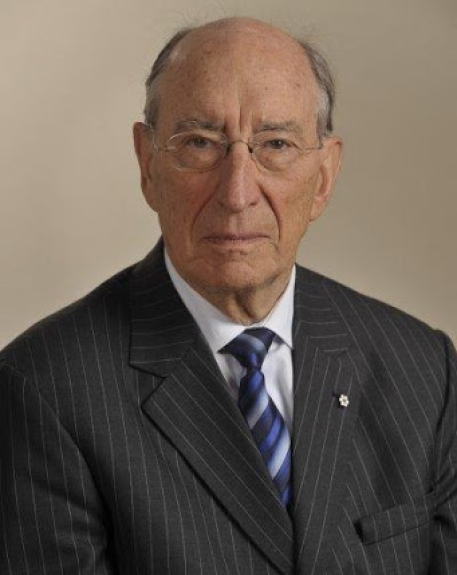
Image context: the cover uses a real photographic portrait of Marc Lalonde from the Canadian Medical Hall of Fame. It is not a generic wellness image; it ties the essay to the ministerial document and to the policy moment in which the health-field language entered public circulation.[5]
Timeline anchors before the close reading
- June 1973: the Minister of National Health and Welfare asked the department to develop a new direction for future health-care policy.[2]
- April 1, 1974: A New Perspective on the Health of Canadians was presented in the House of Commons.[2]
- 1974: the report described two broad objectives: maintaining the health care system and preventing health problems while promoting good health.[2]
- 2001: the Institute of Medicine's Health and Behavior still treated the Lalonde framework as a turning point, while noting that later thinking had to move beyond individual behavior alone.[4]
- 2004: Lalonde was inducted into the Canadian Medical Hall of Fame, whose biography credits the report with challenging traditional health-policy assumptions.[5]
These dates matter because they keep the report out of myth. It was not a timeless slogan about healthy living. It was a federal working document, written in a particular policy system, at a moment when medical spending, chronic disease, prevention, and jurisdiction were all pressing against one another.
1. The report's first move is to shrink medicine without discarding it
The report does not attack medical care. It keeps health care organization as one of the four elements in the field.[1] That is part of its durability. A more polemical document could have been dismissed as anti-medicine. Lalonde's text instead makes a subtler claim: medical care matters, but it is only one producer of health among several.
The wording is important. Human biology names inherited constitution, aging, and physiological vulnerability. Environment names physical and social surroundings. Lifestyle names decisions and habits that influence risk. Health care organization names the system of prevention, diagnosis, treatment, and rehabilitation.[1][3] By arranging these four elements side by side, the report changes what counts as a policy object. A minister can no longer talk only about beds, doctors, and insurance coverage while pretending to have covered "health."
That is why the text still feels modern. Many health debates remain trapped between two incomplete languages: one language treats illness as a technical problem for the delivery system, while another treats health as personal discipline. The Lalonde Report made room for a broader map. The map was imperfect, but it had one lasting virtue: it made the clinic downstream from a wider field.
2. The strongest sentence is hidden in the report's architecture
The report's famous claim is not a single line so much as a structure. Once the four-part field is accepted, policy has to ask which element is doing the most work in a given problem. Is premature death being driven by exposure, work, housing, diet, tobacco, alcohol, traffic injury, biological susceptibility, access to care, or some interaction among them?[1][4] The answer can vary by condition, population, and period. That variability is exactly the point.
This is why the report should be read as a sorting tool before it is read as a prevention manifesto. It does not simply say "prevent more disease." It says that health problems can be decomposed into different causal domains, and that policy has to choose interventions with that decomposition in view.[1] A campaign may fit one problem. Regulation may fit another. Environmental engineering, occupational standards, income support, clinical access, or research may fit others.
The Canadian government's current historical page summarizes the report as identifying the health care system and prevention/promotion as two main health-related objectives, with five strategies and 74 proposals.[2] Those numbers are less interesting than the document's underlying frame. The frame says health policy cannot be equated with medical-service policy, even when medical services are politically central and morally indispensable.
3. Lifestyle was both the opening and the trap
The difficult part of the Lalonde Report is that one of its most productive categories also became its easiest narrowing. "Lifestyle" gave public health a practical way to talk about smoking, exercise, diet, alcohol, and injury risk.[1][3] In the 1970s, that mattered. Chronic disease prevention needed a language that could connect everyday patterns to population outcomes.
But lifestyle was also administratively convenient. Governments can fund education campaigns, posters, school programs, and exhortation more readily than they can remake housing, labor markets, food systems, or environmental exposure. The Institute of Medicine later described the report as initially leading to a focus on lifestyle or individual behavior as both the locus of responsibility and the target of intervention, while newer ecological models emphasized that behavior is shaped by social and physical environments, family, workplaces, communities, and institutions.[4]
That is the report's central tension. The four-part model opened the door to environment and system organization, yet the behavior category was often the easiest to operationalize. A close reading should therefore resist two flat judgments. The report was not merely "victim blaming"; it explicitly named environment and health care organization as part of the field.[1][3] At the same time, it gave later administrators a category that could be detached from the rest of the model and turned into individual responsibility.
4. Environment is the category that keeps the report from becoming a moral lecture
The report's inclusion of environment is what saves the health-field concept from collapsing into personal advice. Once environment is inside the field, health policy has to face the conditions in which choices are made. Air, water, workplace hazards, transport, housing, income patterns, school settings, and neighborhood design can all become part of the health conversation, even when no clinic visit is involved.
The current Public Health Agency of Canada page still describes the report as a founding document in health promotion and lists the four elements as human biology, environment, lifestyle, and health care organization.[3] The order matters less than the coexistence. Lifestyle and environment should not be rivals. They are often joined. A person may "choose" food, exercise, sleep, smoking, or commuting patterns, but those choices are made inside price, time, safety, stress, advertising, family labor, and built-environment constraints.
That is where the report can be read generously in 2026. Its vocabulary was not yet the full language of social determinants, equity, or structural racism. Yet it helped open the policy door through which those later frameworks would walk. It made it easier to say that health is not only what medicine repairs. Health is also what institutions arrange.
5. The unfinished lesson is institutional, not motivational
The Canadian Medical Hall of Fame biography says Lalonde and Maurice LeClair challenged the view that medical advancements and technological innovation alone could improve wellness, and that their approach influenced countries around the world.[5] That is the celebratory version, and it is substantially fair. The report's afterlife in health promotion is real.
The harder version is that recognition did not automatically create implementation capacity. A federal government can name environment, lifestyle, biology, and health care organization, but the levers sit across departments, provinces, municipalities, professions, private markets, and households. The report's conceptual map was broader than the administrative machinery available to act on it.
That gap remains the useful lesson. A public-health framework becomes powerful only when it changes budgets, jurisdictions, accountability, and daily operations. Otherwise it becomes a vocabulary upgrade. The Lalonde Report's achievement was to make health policy look beyond medical care. Its warning is that concepts can travel faster than institutions. Prevention sounds easy when it is a slogan; it becomes difficult when the object is housing, work, food prices, transport, pollution, schools, and the design of care itself.[1][4]
The best way to read the report now is neither as a finished blueprint nor as an obsolete lifestyle document. It is a hinge text. On one side sits the older assumption that better medicine would carry population health. On the other side sits the harder recognition that biology, environment, behavior, and care systems interact. The report's lasting value is that it made the second side visible inside government language. The task it left behind is to make that visibility operational.[1][2][3][4]
Sources
- Government of Canada, A New Perspective on the Health of Canadians: A Working Document (PDF), 1974 - primary text of the Lalonde Report and the four-part health-field concept.
- Health Canada, "A New Perspective on the Health of Canadians (Lalonde Report) (1973-1974)" - official historical page on the report's development, April 1, 1974 presentation, objectives, strategies, and proposals.
- Public Health Agency of Canada, "A New Perspective on the Health of Canadians" - current summary identifying the report as a founding health-promotion document and listing the four health-field elements.
- Institute of Medicine, Health and Behavior: The Interplay of Biological, Behavioral, and Societal Influences, Chapter 1, 2001 - later assessment of the Lalonde framework, lifestyle focus, and ecological models of behavior and health.
- Canadian Medical Hall of Fame, "The Honourable Marc Lalonde" - biography and photographic portrait source used for the article image.