Kuru forced medicine to accept an uncomfortable idea: a fatal brain disease could behave like an infection even when the suspected agent did not look like a bacterium, virus, fungus, or parasite. The mechanism became legible only when several kinds of evidence were held together: a sharply localized epidemic among the Fore people and neighboring groups in Papua New Guinea's Eastern Highlands, a social route of exposure through mortuary transumption, long silent incubation, and eventual laboratory transmission.[1][2][3]
That chain matters because kuru was not solved by one dramatic observation. The first medical descriptions in the 1950s saw a degenerative neurological syndrome. Later anthropology and village-based epidemiology explained why risk was patterned by kinship, age, and gender. Experimental transmission in the 1960s showed that the disease could pass to laboratory primates. Prion science then gave the mechanism a name: misfolded protein acting as infectious template.[2][3][4]
The timeline is the discipline. In 1957, D. Carleton Gajdusek and Vincent Zigas published the early New England Journal of Medicine description of endemic kuru in New Guinea.[1] In 1966, Gajdusek, Clarence Gibbs, and Michael Alpers reported transmission to a laboratory primate after an incubation period of about 2 years, a finding UCL's prion group treats as a turning point in human transmissible dementia research.[2] In 1982, Stanley Prusiner introduced the prion concept, giving a protein-based explanation for diseases that had previously been grouped under slow or unconventional infections.[3][4] In the long surveillance tail, UCL records the last three kuru cases in 2003, 2005, and 2009, with incubation periods exceeding 50 years.[2]
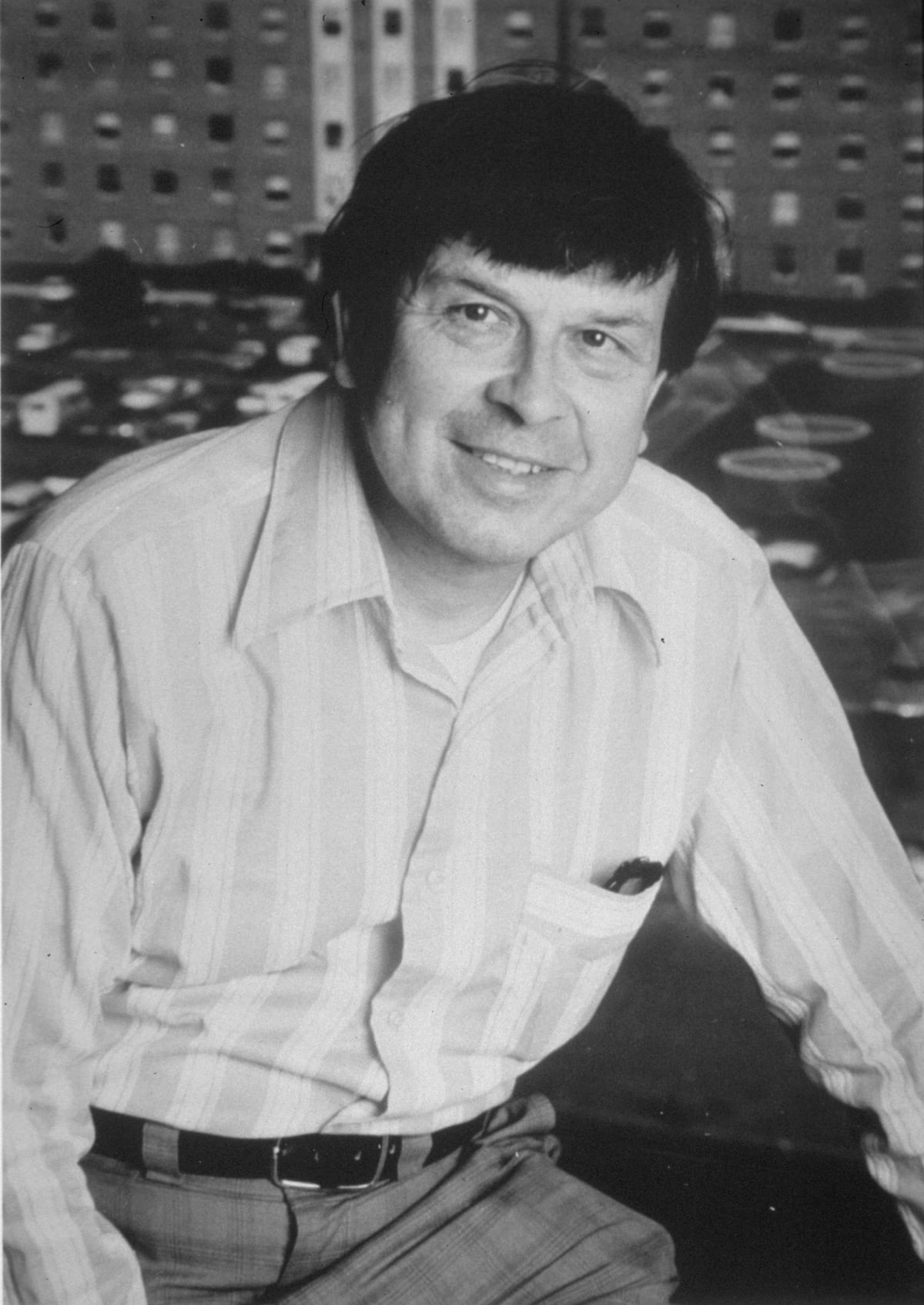
Image context: the cover is a real archival photograph of Gajdusek from the National Library of Medicine/Wikimedia Commons. It fits this piece because the article is about the medical-history threshold at which field observation, community surveillance, and laboratory transmission made a new infectious mechanism visible.[7]
The first clue was geography, not a molecule
The causal story begins with an epidemiological shape. Kuru was not distributed randomly across the world, or even across Papua New Guinea. It clustered among the Fore people and nearby communities in the Okapa region of the Eastern Highlands.[2][3] That localization made a purely universal neurological process less convincing. Something about place, social practice, or shared exposure had to be part of the explanation.
The first NEJM paper mattered because it put the syndrome into a form clinicians could recognize and argue with: a progressive central nervous system disease, seen in a defined population, affecting children and adults, with a striking burden among females.[1] Later work made the pattern clearer. Women and children were at higher risk because they were more likely to participate in the mortuary consumption of dead kin and to handle or consume the most infectious tissues. UCL deliberately uses the term "transumption" to separate this mortuary practice from the sensational Western image of cannibalism; that distinction is not politeness alone, because the public-health mechanism depended on kinship obligation, grief, and ritual incorporation, not on caricature.[2]
That boundary is essential. The mechanism was not "culture caused disease" in some loose or stigmatizing sense. The mechanism was exposure to infectious nervous-system tissue in a particular mortuary setting. Once outside contact in the 1950s contributed to the rapid cessation of transumption, new exposures fell. The epidemic did not end immediately, because kuru had a long incubation period, but the fuel source was being removed.[2][3]
Long incubation turned absence into evidence
Kuru's timing is the feature that makes it medically strange. Many infections declare themselves on a scale of days or weeks. Kuru could remain silent for years or decades. StatPearls summarizes presumed incubation as roughly 4 to 40 years, with rare cases reaching 50 years; UCL's surveillance history records final cases after more than 50 years of incubation.[2][5]
That long delay changes how cause has to be inferred. If the exposure stops in the late 1950s and cases continue into the 2000s, that is not evidence against the exposure route. It is exactly what a long-incubation disease should produce: a falling epidemic with a very long tail. The surveillance problem becomes historical as well as clinical. Investigators have to reconstruct who could have been exposed before the mortuary practice changed, then follow an epidemic whose final cases occur long after the social route has disappeared.[2][3]
The delay also explains why kuru helped make the idea of "slow infection" credible before prion biology was settled. NobelPrize.org summarizes Gajdusek's conclusion as one in which the long period between exposure and illness pointed toward an unknown type of infectious agent.[6] The phrase "unknown" is doing real work. Kuru was not merely a rare dementia; it forced medicine to keep the infectious hypothesis alive when standard microbial categories were failing.
Laboratory transmission moved the claim from pattern to mechanism
Epidemiology can show a persuasive pattern, but laboratory transmission changed the category of proof. The 1966 primate transmission result showed that material from kuru cases could initiate disease after a long incubation period.[2][6] That finding did not yet reveal the agent's structure, but it separated kuru from a purely hereditary, psychological, or nonspecific nutritional explanation.
The experimental result also reshaped other diseases. CDC's current prion overview describes prion diseases as conditions in which normally present proteins misfold and cause brain damage; they are rare, fatal, and include kuru along with Creutzfeldt-Jakob disease and inherited forms.[4] Read backward, that definition makes kuru look obvious. Read in historical order, it was not obvious at all. Medicine had to learn that infectivity could travel with a misfolded protein conformation rather than with an organism carrying nucleic acid.
That mechanism is austere. A normal host protein, PrP, can adopt an abnormal shape. The abnormal form can encourage more normal protein to misfold. Over time, the process damages the brain, producing spongiform change and progressive neurological decline.[4][5] In kuru, the exposure route was exceptional; the downstream protein-folding catastrophe linked it to a broader family of human and animal prion diseases.
The clinical course made care supportive, not curative
The mechanism also explains why the clinical story is so grim. Once symptoms begin, prion diseases progress rather than reset. CDC states the general rule plainly: prion diseases lead to death within months to years after symptoms begin, with no treatment or vaccine.[4] StatPearls describes kuru as universally fatal and notes that death usually occurs within 24 months of symptom onset, often after severe neurological decline and complications such as pneumonia or infected wounds.[5]
That is not a therapeutic nihilism lesson; it is a prevention lesson. If the active disease cannot be reversed, then the public-health victory lies upstream: stop exposure, maintain surveillance, respect local knowledge, and learn from a completed epidemic before another prion route appears elsewhere. This is why kuru regained global relevance during the bovine spongiform encephalopathy and variant CJD era of the 1990s. A disease once confined to a remote highland region became a warning about how animal feeding practices, tissue infectivity, incubation time, and public trust could interact at much larger scale.[2][4]
The comparison should be bounded. Kuru was transmitted through a specific human mortuary practice; variant CJD was tied to BSE exposure through contaminated beef products. The shared lesson is not that every prion disease spreads the same way. It is that protein-misfolding diseases can have public-health routes when infectious tissue enters a human exposure pathway.[2][4]
What the kuru mechanism still teaches
Kuru's durable lesson is methodological. A disease mechanism can become visible before its molecule is understood if the evidence layers are strong enough. Geography narrowed the question. Mortuary practice supplied a plausible exposure route. Cessation of that practice predicted an epidemic tail rather than an immediate stop. Laboratory transmission proved infectivity. Prion theory later explained how infection could occur without a conventional pathogen.[1][2][3][4]
The story also warns against discovery narratives that center only outside investigators. Gajdusek's portrait belongs in the archive, but the evidence depended on Fore families, local assistants, clinicians, anthropologists, pathologists, and long-running community surveillance. UCL's account emphasizes cooperation with local people and the later expansion of community participation in medical clinics and field studies.[2] Without that social infrastructure, long incubation would have looked like noise instead of a traceable epidemic tail.
The cleanest way to remember kuru is therefore not as an exotic disease or a lurid cultural anecdote. It is a causal mechanism that became legible slowly: exposure in mourning, silence for years, neurological collapse, field surveillance, primate transmission, and finally protein misfolding. Kuru made medicine widen the meaning of infection before medicine had the word prion ready.
Sources
- D. C. Gajdusek and V. Zigas, "Degenerative disease of the central nervous system in New Guinea; the endemic occurrence of kuru in the native population," New England Journal of Medicine, 1957, PubMed record.
- UCL Faculty of Brain Sciences, MRC Prion Unit and Institute of Prion Diseases, "Kuru" - research-history and surveillance overview.
- Jerome T. Whitfield et al., "The epidemiology of kuru: monitoring the epidemic from its peak to its end," Philosophical Transactions of the Royal Society B, 2008, PubMed record.
- Centers for Disease Control and Prevention, "About Prion Diseases," updated February 20, 2026.
- Areeba Qaisar Raza et al., "Kuru," StatPearls, NCBI Bookshelf - clinical course, incubation, evaluation, and management overview.
- NobelPrize.org, "D. Carleton Gajdusek - Facts" - 1976 Nobel Prize summary and work note on kuru transmission.
- Wikimedia Commons, "File:Daniel Carleton Gajdusek 2bw.jpg" - National Library of Medicine/NIH archival portrait used for the article image.