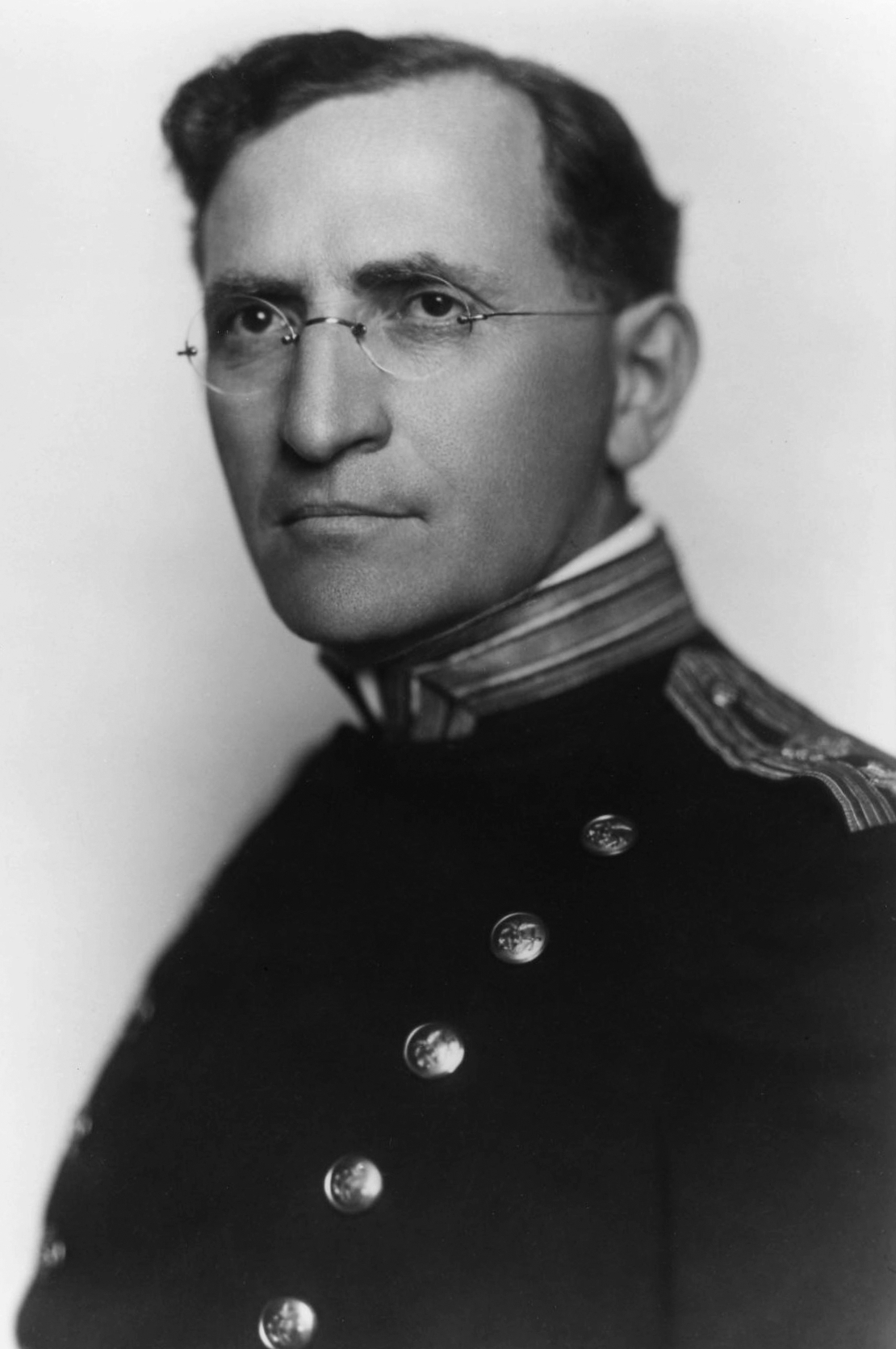
In public health history, one question keeps returning because it exposes the limits of evidence itself: what happens when a disease explanation is scientifically strong but politically humiliating?
Joseph Goldberger’s work on pellagra matters because the answer was not “truth wins.” His achievement was to make a disease long treated as infection, poison, or regional curse look instead like a patterned consequence of poor diet and structured deprivation. The harder part came after that. Once the evidence pointed toward poverty, food systems, and institutional neglect, the argument stopped being only medical. It became an accusation.
Timeline anchors: when the argument changed
- 1907: epidemic pellagra was recognized in Alabama and South Carolina institutions, pushing the disease from scattered case talk into an American public-health problem.
- 1912: Claude Lavinder reported that at least 30,000 cases had already been recorded in the United States, with case-fatality approaching 40% in the available statistics summarized later by Charles Bryan and colleagues.
- February 1914: Surgeon General Rupert Blue assigned Goldberger to lead the federal pellagra investigation.
- June 1914: after visiting orphanages, asylums, and mill communities, Goldberger concluded that inadequate diet, not contagion, best explained the pattern.
- 1914–1915: institutional diet supplementation and controlled dietary experiments sharply strengthened the deficiency argument.
- 1922: Goldberger and W. F. Tanner published work arguing that amino-acid deficiency was probably central to pellagra causation.
- 1929: Goldberger died before niacin itself was chemically identified.
- 1937–1940s: niacin was identified as the pellagra-preventive factor, and enrichment/fortification finally pushed endemic pellagra out of the United States.
The setting Goldberger entered: a disease loaded with bad explanations
By the time Goldberger arrived in the South in 1914, pellagra was already surrounded by theory but not by settlement. Earlier physicians had linked the disease to monotonous corn-based diets and poverty, yet those observations had not defeated rival explanations. Some researchers pursued spoiled-corn toxin theories. Others, influenced by tropical-medicine reasoning and germ-theory momentum, treated pellagra as an insect-borne or otherwise infectious disease.
That background matters because Goldberger did not walk into an empty field and invent the idea of diet from nothing. Charles Bryan’s 2015 historical synthesis shows that between 1907 and 1914 American physicians, asylum superintendents, and health officials had already narrowed the plausible field of explanations. Goldberger’s distinct contribution was to turn that partial suspicion into a disciplined epidemiologic case and then into intervention evidence that opponents could no longer dismiss as loose bedside impression.
This is the first boundary worth stating clearly. The article’s narrative sequence beyond the titles of Goldberger’s own papers relies on the best modern syntheses—especially Bryan et al. (2015), Douglas Lanska (2010), and John Frank (2022)—because many primary-era records survive today mainly as reprints, proceedings, or cited secondary reconstructions rather than convenient full-text archives.
Goldberger’s observational lever: inmates got sick, staff did not
Goldberger’s early field visits gave him a pattern that infectious theories struggled to explain. In orphanage after orphanage and asylum after asylum, the people living on institutional diets developed pellagra, while staff members working in the same buildings usually did not. If a transmissible germ circulating through the environment were doing the main causal work, that split should have been much harder to sustain.
The pattern did not prove diet all by itself, but it changed the logic of the investigation. Goldberger started looking less at proximity and more at provisioning. What did patients eat? What did guards, nurses, and administrators eat? Why did disease cluster among people with the least varied food and the least power over their meals?
That observational move was stronger than it sounds. It shifted the unit of explanation from the diseased body to the institutional menu. In modern terms, Goldberger was asking for the cause of incidence, not just the cause of individual cases. Frank’s 2022 review makes this point explicitly by reading the pellagra epidemic through Geoffrey Rose’s later distinction between sick individuals and sick populations. Goldberger’s real breakthrough was not merely that he saw a deficiency disease. It was that he saw a population pattern created by a social system.
From suspicion to proof: changing the menu changed the disease
Goldberger then did what many historical summaries flatten into a single heroic flourish: he moved from observation to intervention. According to Frank’s review, in 1914–1915 he supplemented the diets of two orphanages and part of an asylum where pellagra had been common. When the next expected seasonal wave came, no new cases appeared in those improved-diet settings, and prior cases cleared. When funding later lapsed at one orphanage, the disease returned, affecting 40% of the children there. That reversal mattered because it converted a descriptive association into something closer to experimental reversibility.
This is why Goldberger’s work still reads as modern. He did not simply announce that poor Southerners needed better food. He created a before-and-after structure in which an exposure changed and disease followed. Even without laboratory isolation of a specific vitamin, the causal direction became far harder to deny.
His later human dietary experiments, including the controversial Rankin State Prison Farm work in Mississippi, pushed the case further. The ethical status of those studies remains debated, and the evidence record is not clean enough to treat every later retelling as equally solid. What is firm is the overall direction: Goldberger used controlled dietary manipulation to argue that pellagra could be produced or prevented without invoking a contagion model. The 1990 reprint of Experimental pellagra in the human subject brought about by a restricted diet preserves that core claim in the historical literature.
By 1922, Goldberger and Tanner were arguing that amino-acid deficiency was probably the primary etiologic factor. He did not yet possess the later biochemical vocabulary of niacin and tryptophan metabolism, but the arrow of explanation had effectively flipped. Pellagra was no longer best explained as something attacking the poor from outside. It was something poor diets and poor institutions were building from within.
Why the proof did not end the argument
If this were just a story of better science defeating worse science, Goldberger would have won quickly. He did not. That delay is the point.
Bryan’s account is blunt about why resistance held. A dietary explanation did more than revise a textbook. It implied that mill towns, orphanages, prisons, and southern labor systems were feeding people so badly that mass disease followed. In other words, the disease explanation implicated class structure, wages, food access, procurement systems, and public neglect. Infection was easier to live with because infection did not shame the region’s economic order.
This is where Goldberger’s biography becomes a microhistory of state responsibility. Once the cause moved toward poverty, every “scientific” objection also carried a political convenience. To reject Goldberger was to preserve local legitimacy. To accept him was to concede that what looked like a mysterious southern plague was, in large part, organized malnutrition.
Lanska’s 2010 review sharpens the next stage of the story. Even after Goldberger and colleagues showed that brewer’s yeast could prevent and treat pellagra at low cost, prevention still did not become automatic population policy. The scientific case kept strengthening, but implementation ran through economics, administrative capacity, and the Depression-era transformation of southern agriculture. Later niacin identification in 1937 and wartime fortification programs mattered not because they created the original causal insight, but because they translated that insight into scalable infrastructure. That is the operational hinge in the story: proof changed the argument, but delivery capacity changed the population outcome.
That sequence is worth holding onto. Goldberger proved a great deal. He did not, by proof alone, build the delivery system that would make his conclusions unavoidable in daily life.
A grounded institutional scene makes the same hinge easier to read:

Two interpretations of Goldberger’s place in the story
Interpretation A: Goldberger was the singular hero who solved pellagra
This is the familiar version. Its strength is obvious. Goldberger entered a confused field, recognized the dietary pattern with unusual speed, ran interventions that changed case counts, and spent the rest of his life pushing the argument forward against entrenched opposition. If you want the hinge figure, he is the hinge figure.
Interpretation B: Goldberger was decisive, but he was also the finisher of groundwork others had partially laid
Bryan’s 2015 article makes the best case for this reading. Before Goldberger, American physicians had already noticed the association with monotonous diets, institutional clustering, and poverty. Goldberger’s achievement was to convert those scattered observations into a more rigorous causal program and then defend that program under political pressure.
Current assessment: Interpretation B is stronger if the question is how the knowledge was assembled; Interpretation A is stronger if the question is why the story stayed attached to one name. Goldberger neither emerged from nowhere nor deserves to be reduced to a mere synthesizer. He was the investigator who made a previously deniable pattern experimentally and politically harder to escape.
What would change this assessment: fuller archival recovery of local institutional records, diet logs, and state-level responses could reveal that some southern authorities moved toward dietary reform earlier than the standard narrative suggests, or that pre-Goldberger clinicians deserve more credit for causal narrowing than the later public memory allows.
Why Goldberger still matters now
Goldberger’s pellagra work remains contemporary because it shows a repeated structure in health governance.
First, a disease is often easiest to discuss when it can be externalized: a germ, a toxin, a bad actor, a freak event. Second, some of the most consequential explanations turn out to be infrastructural: food systems, housing, labor conditions, pricing, administrative design, institutional menus. Third, once explanation crosses that line, scientific controversy and political defensiveness begin to overlap.
Goldberger’s career sat exactly on that seam. He did not only identify a disease mechanism in rough form. He forced a public-health system to look at the people it was willing to feed badly and then call unfortunate. That is why the pellagra story belongs in present-tense health thinking. It is a reminder that evidence can be strongest precisely where adoption becomes slowest—because the finding is no longer just about biology. It is about blame.
Three reusable questions for public-health readers now
Goldberger’s case also leaves a practical reading kit for present-day controversies.
- What explanation becomes embarrassing once it is true? The closer a cause moves toward wages, food systems, housing, or institutional design, the more resistance may reflect threatened legitimacy rather than weak evidence.
- Where is the delivery-system gap? Strong causal proof matters less if no procurement, reimbursement, fortification, or public-administration channel can carry it into routine life.
- Who is being described as unfortunate when the real issue is organized exposure? That wording shift often tells you whether a system is externalizing blame instead of confronting structure.
Those questions travel well beyond pellagra. They are useful whenever the hardest part of public health is not discovering the pattern, but admitting what the pattern says about governance.
Sources
- Bryan CS, et al. Pellagra Pre-Goldberger: Rupert Blue, Fleming Sandwith, and The "Vitamine Hypothesis" (Trans Am Clin Climatol Assoc, 2015, PMID: 26330657, PMCID: PMC4530670)
- Lanska DJ. Chapter 30: historical aspects of the major neurological vitamin deficiency disorders: the water-soluble B vitamins (Handb Clin Neurol, 2010, PMID: 19892133)
- Goldberger J, et al. Experimental pellagra in the human subject brought about by a restricted diet. 1915 (Nutrition, 1990 reprint, PMID: 2134557)
- Nutrition classics. Public Health Reports, Vol. 37, March 3, 1922: Amino-acid deficiency probably the primary etiological factor in pellagra. By Joseph Goldberger, and W. F. Tanner (Nutr Rev, 1987, PMID: 3299162)
- The etiology of pellagra. 1914 (American Journal of Public Health, 2006 reprint, PMID: 16550768)
- Frank JW. Prevention and Control Strategies for Non-Communicable Disease: Goldberger, Pellagra and Rose Revisited (Epidemiologia, 2022, PMID: 36417251, PMCID: PMC9620930)
- Lampton L. "Goldberger's War" in Mississippi: the 1915 Pellagra Experiment at Rankin State Farm and a new book (J Miss State Med Assoc, 2005, PMID: 15816234)