The usual shorthand for ISIS-2 is that it was a clot-busting trial from the late thrombolysis era.[1][2] That description is only half right. The paper did confirm the life-saving effect of intravenous streptokinase in suspected acute myocardial infarction. But the more surprising result, and the one that changed everyday practice most durably, was that 162.5 mg of aspirin daily also cut early vascular mortality on its own, while adding further benefit when paired with streptokinase.[2][3] A cheap pain tablet became a coronary drug in public, numerical form.
That is why the paper deserves a primary-source read in 2026. It was not merely a positive treatment trial. It was a paper about trial architecture and therapeutic hierarchy. By randomizing 17,187 patients within 24 hours of symptom onset across a 2x2 factorial design, the investigators were able to ask two questions at once: whether fibrinolysis saved lives and whether antiplatelet treatment did too.[1][2] The answer to the second question changed the treatment grammar of acute myocardial infarction.
The historical afterlife makes the point sharper. The 1998 ten-year follow-up reported that the early survival advantage persisted over time rather than evaporating after discharge, even though the extra divergence after the first month was small.[3] By 2025, the American Heart Association's acute-coronary-syndromes guideline was still treating aspirin as part of the default antiplatelet backbone, now paired with a P2Y12 inhibitor in modern ACS care.[4] The paper's original rescue window sits inside a different technology stack now, but the aspirin move stayed.
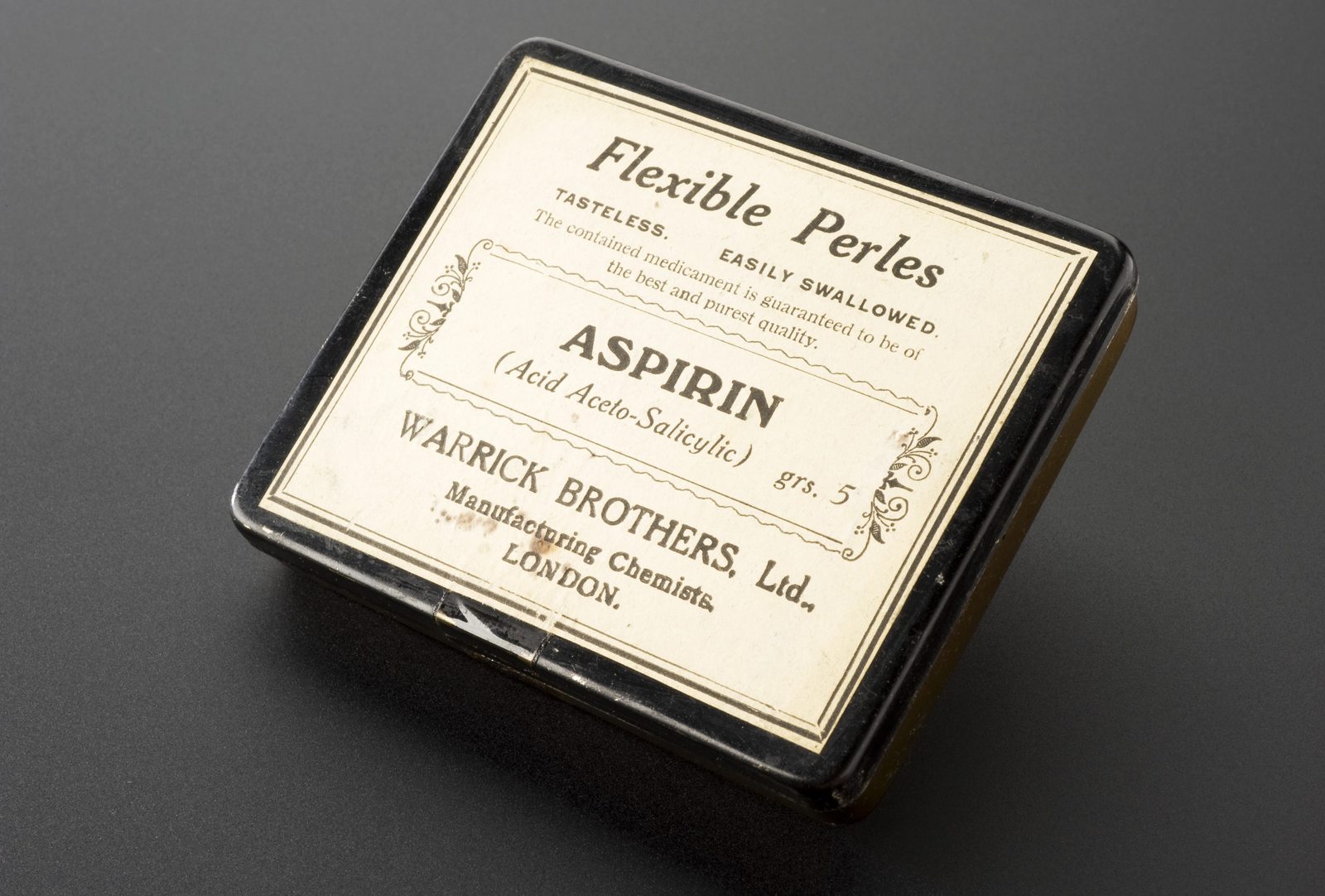
Image context: the lead image uses a real archival photograph of a mid-century box of aspirin tablets rather than a stylized heart image or a catheter-lab glamour shot. That choice fits the article because ISIS-2 turned something chemically ordinary and commercially familiar into an emergency cardiovascular therapy with measurable survival value.[5]
Time anchors for what changed
- August 13, 1988: The Lancet published the final ISIS-2 results for 17,187 patients with suspected acute myocardial infarction, comparing streptokinase, aspirin, both, or neither.[1][2]
- 1988: the trial's main clinical clock was 5-week vascular mortality, not long-run risk-factor management or chronic prevention.[1][2]
- 1998: the BMJ ten-year follow-up showed that the first-month survival gain was maintained over time, clarifying that the rescue effect was durable even if most of the separation happened early.[3]
- 2025: AHA's ACS guideline still kept aspirin inside the default dual-antiplatelet strategy, showing that the trial's aspirin logic survived the move from the thrombolysis era to the PCI era.[4]
1. What the paper actually randomized
The cleanest way into ISIS-2 is to notice that it did not ask only whether one dramatic hospital intervention worked. The ACC trial summary lays out the design plainly: patients with suspected myocardial infarction presenting within 24 hours were randomized to intravenous streptokinase, oral aspirin, both, or neither.[2] Exclusions included prior stroke, gastrointestinal hemorrhage or ulcer, recent severe trauma, severe persistent hypertension, and allergy to either treatment.[2]
That matters because the paper was built to separate effects instead of forcing one therapy to borrow prestige from the other. The investigators did not present aspirin as background care and then test streptokinase on top of it. They built aspirin into the randomization itself.[1][2] In methodological terms, that is the decisive move. A huge trial of acute infarction care treated antiplatelet therapy as a causal question worth answering directly.
The dosing detail reinforces the point. Streptokinase was given as 1.5 x 10^6 units intravenously over 1 hour, while aspirin was given as 162.5 mg daily orally.[2] One arm looked technologically dramatic, the other almost banal. ISIS-2 was structured precisely to see whether the banal therapy still carried life-saving weight.
2. The aspirin result was not a sidecar finding
It is easy, reading backward from later cardiology, to treat the aspirin result as obvious. In 1988 it was not obvious at this scale. According to the ACC summary of the trial results, 804 patients allocated aspirin died of vascular causes within five weeks versus 1,016 allocated placebo, a drop from 11.8% to 9.4% and a 23% odds reduction.[2]
That number is the hinge of the article. Aspirin was not merely smoothing the edges of care after the real treatment had already done its work. It was producing an independent mortality effect of roughly the same order as streptokinase alone, which cut five-week vascular mortality from 12.0% to 9.2%.[2] The drug that most readers associated with headaches, fever, and household medicine cabinets was now legible as a front-line infarct therapy.
The nonfatal event results sharpen the same conclusion. Aspirin reduced nonfatal reinfarction from 2.0% to 1.0% and nonfatal stroke from 0.6% to 0.3%.[2] That pattern matters because it shows the aspirin finding was not just statistical noise around the death count. The paper was detecting a coherent antithrombotic effect across vascular outcomes.
3. Why the combination mattered more than either treatment alone
ISIS-2 is often remembered as a triumph of combination therapy, and that memory is justified, but it needs precision. The striking number in the ACC summary is the comparison between the combination arm and placebo: 8.0% vascular mortality with streptokinase plus aspirin versus 13.2% with neither, a 42% odds reduction.[2] The investigators' own interpretation was that the separate effects on vascular death appeared additive.[2]
That wording matters. The paper did not say aspirin was a weak companion to fibrinolysis. It said each therapy had its own effect, and using both was better than using either alone.[1][2] In practical clinical language, streptokinase attacked the formed occlusive clot while aspirin helped prevent further platelet-driven propagation in the acute coronary setting. The important point for close reading is not the pharmacology in abstraction. It is the hierarchy the trial overturned. Aspirin was no longer ancillary.
The later BMJ follow-up helps keep the timing honest. The ten-year report made clear that the early survival advantage persisted for years, but it also suggested that the big treatment separation was established in the first month rather than continuing to widen indefinitely after day 35.[3] This was rescue medicine first. The long afterlife came from surviving the dangerous opening interval.
4. What ISIS-2 did not prove
A strong primary-source read has to hold the boundary as firmly as the headline. ISIS-2 was about suspected acute myocardial infarction within 24 hours, not about routine aspirin use in healthy adults, not about chronic primary prevention, and not about indefinite monotherapy in every later cardiovascular context.[1][2] That distinction matters even more now because the modern aspirin story is split: narrow in primary prevention, durable in acute and secondary settings.
The paper also belongs to a treatment era that no longer stands still. In 2025, AHA's ACS guidance described aspirin plus an oral P2Y12 inhibitor as the default dual-antiplatelet strategy for at least 12 months in ACS patients who are not at high bleeding risk.[4] PCI, radial access, high-intensity statins, and modern revascularization workflows now sit where streptokinase once dominated.[4] So the paper should not be misread as a complete map of current infarct care.
Its durable contribution is narrower and stronger. It demonstrated, at enormous scale, that antiplatelet treatment with aspirin belonged in the acute infarct package itself.[1][2][4] The modern stack grew around that core rather than replacing it.
5. Why the paper still reads as a turning point
The strongest health papers often change classification before they change fashion. ISIS-2 did that. It reclassified aspirin from a familiar analgesic with plausible vascular relevance into a quantitatively demonstrated acute myocardial-infarction treatment.[1][2] The paper's size, factorial design, and hard five-week end point made that reclassification difficult to ignore.
The 1998 follow-up then added a second lesson: early rescue can matter for a decade even when the intervention itself is brief.[3] The survival curve did not need continuous widening to justify the original treatment. It only needed the first month to remain consequential for the next ten years.
That is why the cleanest way to remember ISIS-2 is not as an old thrombolysis relic. It is as the paper that made aspirin legible in the coronary emergency itself. Streptokinase mattered. The shock was that aspirin mattered almost as plainly, and that the combination mattered most of all.[1][2][3][4]
Sources
- ISIS-2 (Second International Study of Infarct Survival) Collaborative Group, "Randomised trial of intravenous streptokinase, oral aspirin, both, or neither among 17,187 cases of suspected acute myocardial infarction" (The Lancet, August 13, 1988) - PubMed record for the original trial report.
- American College of Cardiology, "International Study of Infarct Survival-2 - ISIS-2" - trial summary with enrollment, dosing, five-week vascular-mortality results, reinfarction and stroke outcomes, and interpretation of additive benefit.
- Richard Doll Consortium publication record, "ISIS-2: 10 year survival among patients with suspected acute myocardial infarction in randomised comparison of intravenous streptokinase, oral aspirin, both, or neither" (1998) - stable publication page for the long-run follow-up showing persistence of the early survival advantage and clarifying the timing of benefit.
- American Heart Association, "2025 Guideline for Acute Coronary Syndromes - Top Things to Know" - current ACS guidance stating that dual antiplatelet therapy with aspirin plus an oral P2Y12 inhibitor remains the default strategy in patients without high bleeding risk.
- Wikimedia Commons, "File: Box of aspirin tablets, London, England, 1949-1966 Wellcome L0058543.jpg" - source page for the archival aspirin-box image used in this article.