At one year old, a child can take an eye test by looking toward a patch of stripes. By preschool, the same child can match a letter on a screen to one on a card. Researchers used both tests to follow 114 babies born with a cataract in one eye. All had the cloudy lens removed. The question was whether putting an artificial lens inside the eye during that operation would help the child see finer detail years later. [1][2]
An implant had an obvious appeal. It could provide focusing power every waking hour, including the hours a parent might otherwise spend looking for a lost contact lens. But a surgeon had to choose the strength of that implant while the baby's eye was growing rapidly. A contact lens could be exchanged as the eye grew. In the Infant Aphakia Treatment Study, which began in 2004, chance determined which approach each family would try first. [1][2]
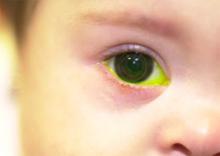
Two counts in the five-year report
In the 2014 report, the median score on the preschool letter test was the same in both groups. Then the investigators counted something a letter chart could never record. By age five, 41 of the 57 children assigned an implant had undergone at least one further operation inside the eye. Among the 57 assigned contact lenses, 12 had returned for further surgery. Each child counted once in that comparison, however many times the surgeon had to operate. [3]
Why go back in? Cells left behind when the cloudy lens was removed could grow across the opening through which light reached the retina. This happened in 23 eyes in the implant group and two in the contact lens group. A child who had that obstruction cleared could later do as well on a letter test as a child whose view had stayed clear. Reading only the median score would erase the extra operation from the account of how they got there. [1][3]
Contact lenses also took work, much of it at home. In a separate report on the first year, children fitted with silicone elastomer lenses needed an average of about eleven replacements. A family could avoid another trip to the operating room and still have a considerable job keeping the eye in focus. [4]
What the group names meant ten years later
The follow-up published in 2020 obtained a best-corrected vision measurement for 110 of the original 114 children at about age ten and a half. The examiners tested each eye separately. In the operated eye, 25 children in each original group saw 20/200 or worse, a level at which a letter visible to a typical eye from 200 feet requires a viewing distance of 20 feet or closer. At the other end, 12 children assigned implants and 15 assigned contacts reached 20/40 or better. The similar middle scores concealed a wide spread of outcomes for individual children. [5]
By then, 24 of the 55 children tested from the original contact lens group had received an implant. Why keep counting them in the contact lens column? At enrollment, random assignment gave each strategy a comparable starting group. Years later, the decision to continue with a contact lens depended in part on how well a family could manage one. Moving children between columns at that point would mix the effect of the lens with the circumstances that made a family switch. [1][5]
For a family facing the first operation, that distinction matters. What the trial tested was a choice they could actually make that day. Starting with a contact lens kept a later implant available. Implanting immediately brought more children back to surgery by age five, and the investigators could detect no lasting advantage on the eye chart. The long-term estimate was too imprecise to promise identical vision with either choice. The clearest difference was in what it took to get those children to the chart. [3][5]
Sources
- National Eye Institute, “Contacts better than permanent lenses for babies after cataract surgery” (2014), including Scott Lambert’s clinical photograph.
- Infant Aphakia Treatment Study Group, study design and clinical measures at enrollment (2010).
- Infant Aphakia Treatment Study Group, preschool visual acuity and surgical outcomes through age five (2014).
- Infant Aphakia Treatment Study investigators, first-year contact lens fitting and replacement (2012).
- Scott R. Lambert and colleagues, long-term visual acuity after cataract surgery during infancy (2020).