
British Red Cross's hypothermia video looks, at first glance, like a simple winter first-aid refresher. Its deeper lesson is narrower and more useful than that.[1] The clip is not really about heroic rewarming tricks. It is about stopping a body from losing still more heat while a confused, slowed, poorly perfused person is drifting toward deeper instability. That is why the sequence begins with shelter and insulation rather than with fire, vigorous rubbing, or dramatic hot drinks.[1][2][3][4][5]
The clinical threshold is not vague. Both Red Cross and MedlinePlus define hypothermia as a core body temperature below 95°F / 35°C.[2][4] But the public clue is usually not a thermometer. It is a pattern: shivering, pale cold skin, confusion, slower breathing, slurred speech, clumsiness, or the eerie point at which shivering starts to fade even though the person is still cold.[1][2][4] The body's problem at that stage is not simply that it "feels chilly." Circulation and thinking are beginning to fail in ways that make bad first-aid improvisation more dangerous, not less.[1][4][5]
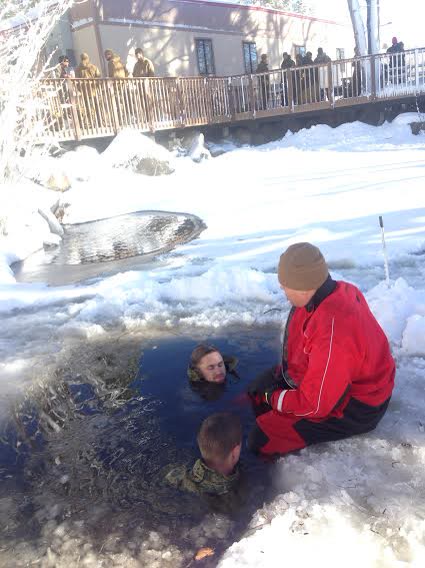
That is also why the cover image works for this article.[6] The photograph does not show a cozy blanket scene. It shows a training environment built around exposure, extraction, and rewarming discipline. Hypothermia first aid is not mostly about creating a sense of warmth. It is about controlling what happens next: how fast the person keeps losing heat, how much exertion they are forced to make, which parts of the body get warmed first, and which folk remedies are kept out of the scene.[1][2][4][5]
Early in the video, the most important move is not warming but interruption
The British Red Cross video starts where good hypothermia care has to start: take the person to a sheltered place as soon as possible and protect them from the ground.[1] That is more than scene-setting. It is the first interruption in the physics of heat loss. Wind, wet clothing, cold surfaces, and continued exposure keep draining heat faster than the body can replace it, so the first useful intervention is to break that exchange.[1][2][4]
This is one reason the video deserves annotation instead of a quick summary. People often imagine hypothermia first aid as a search for the best warming device. The sources point in a stricter direction. British Red Cross says to move the person to shelter, insulate them from the ground, and cover them with whatever is available, even blankets or newspapers.[1] American Red Cross uses similar logic: move the person to a warmer place, dry them, and begin careful warming, while warning that rapid rewarming can trigger dangerous heart rhythms.[2] Before warmth is added, exposure has to be cut off.
That same priority appears in MedlinePlus. If going indoors is not possible, the person should at least be brought out of the wind and insulated from the cold ground, with the head and neck covered to retain heat.[4] The article's core claim starts there: hypothermia first aid works best when read as an insulation drill. The rescuer is not yet trying to "fix" the person's temperature in one dramatic move. The rescuer is trying to stop the conditions that are still making the situation worse.[1][2][4]
The video's middle step matters because wet clothes are an active heat sink
The clip then moves to a deceptively simple instruction: remove and replace wet clothing if possible, and keep the head covered.[1] That looks ordinary enough to skip past. It should not be skipped. Wet fabric is not merely unpleasant. It keeps transferring heat away from the body, especially in wind, rain, or meltwater conditions, and it can keep doing so even after the person has technically reached shelter.[1][4][5]
The same idea appears across the written sources. British Red Cross places wet-clothes removal at the center of the sequence.[1] NIH News in Health says to get the person out of the cold or wet environment, remove wet clothes, and cover them with dry blankets or whatever is handy.[5] MedlinePlus adds that once indoors, wet or tight clothes should be replaced with dry, loose clothing before continued warming begins.[4] The convergence is useful because it clarifies what the video is trying to train: warmth is not the first abstract goal. Removing a continuing drain on heat is.
This is also where the article's title earns the phrase "wet clothes" instead of a vaguer phrase like "keep warm." Hypothermia rescue is often lost in generalities. The video is better than that. It points to a concrete material problem that a bystander can actually solve. Dry fabric insulates better. Wet fabric keeps stealing heat. That is not symbolism. It is mechanism.[1][4][5]
The right target is the core, and the body should be handled gently
The article's most important correction to casual winter folklore is that good rewarming aims at the core first.[2][4][5] MedlinePlus is explicit on this point: warm compresses belong on the neck, chest wall, and groin, and victims of severe hypothermia should be removed from the cold with as little exertion as possible.[4] That sentence explains two things at once. First, central warming matters more than trying to rescue cold hands and feet first. Second, rough effort is not automatically helpful once the person is significantly cold.[4]
The American Red Cross page reinforces the caution from a different angle. It warns that rapid rewarming can lead to dangerous heart rhythms.[2] NIH News in Health pushes the same idea further, advising against hot-water baths or heating pads because external heat sources can cause burns, low blood pressure, or irregular heart rhythms in people with hypothermia.[5] Read together, those sources show why the British Red Cross video's calm pacing is correct. The body in hypothermia is not a campfire project. It is a fragile circulation problem.
That is also why the bystander should resist turning the scene into a test of toughness. If the person is forced to walk too much, shiver violently without shelter, or undergo abrupt high heat, the rescue can become physiologically rougher than the condition will tolerate.[2][4][5] The clip's quiet discipline is therefore not underreaction. It is a refusal to mistake drama for treatment.
Warm drinks are conditional, and alcohol belongs outside the response
One of the best details in the British Red Cross page is that warm drinks and high-energy food come late in the sequence and only as part of continued gentle warming while waiting for emergency help.[1] MedlinePlus adds the same boundary: warm, sweetened, nonalcoholic fluids help only if the person is alert and can swallow easily.[4] Those conditions matter. A confused or drowsy person with impaired swallowing is not a safe candidate for casual drinking, no matter how cold they seem.[4]
The alcohol warning is equally important because it cuts against a durable winter myth. American Red Cross says never give alcohol to a person with hypothermia, because although it may create a brief feeling of warmth, it actually increases body heat loss; it also advises against caffeinated beverages for the same dehydrating reason.[2] NIH News in Health gives the same practical advice: offer something warm to drink, but avoid alcohol or caffeinated drinks.[5] The video's restraint makes more sense when read beside those pages. Rescue is not about producing a feeling of warmth. It is about supporting the physiology of rewarming without adding new risks.[1][2][5]
This is why the article insists on "no alcohol" in the headline logic. The phrase sounds almost old-fashioned, yet it marks a real decision boundary between evidence-based first aid and folklore. Hypothermia is dangerous partly because it clouds judgment. A bystander who mistakes the emergency for a generic cold-weather discomfort can easily add exactly the wrong sort of help.[2][4][5]
Why this video still matters
The strongest thing about the British Red Cross clip is that it makes hypothermia look procedural instead of cinematic.[1] Shelter first. Get the person off the ground. Replace wet clothing. Cover the head. Warm the core gently. Call emergency help. Use warm drinks only when the person is alert enough to swallow. Keep alcohol and dramatic external heat out of the scene.[1][2][4][5] That is a sequence, and the sequence is the treatment's public logic.
The result is a better mental model for readers who do not carry thermometers or advanced gear. Hypothermia first aid does not begin with creating maximum heat as fast as possible. It begins by conserving the heat that is left, reducing further exposure, and buying enough physiologic stability for careful rewarming and professional help to matter.[1][2][4][5] The video is short, but it teaches that structure cleanly, and the written sources make clear why the structure deserves to be followed in that order.
Sources
- British Red Cross, "First aid for someone with hypothermia | First aid training online | British Red Cross," YouTube video.
- American Red Cross, "Hypothermia: Symptoms, Causes, and Treatment" - 95°F/35°C threshold, careful rewarming steps, and the warning against alcohol, caffeine, and rapid rewarming.
- British Red Cross, "Learn first aid for hypothermia" - sheltered-place sequence, ground insulation, wet-clothing replacement, head covering, and warm drinks while waiting for emergency help.
- MedlinePlus Medical Encyclopedia, "Hypothermia" - emergency threshold, low-exertion handling, dry clothing, core-warming compresses, and warm nonalcoholic fluids for alert patients.
- NIH News in Health, "Halting Hypothermia" - remove wet clothes, cover with dry blankets, and avoid hot-water baths or heating pads because external heat can cause burns, low blood pressure, or irregular heart rhythms.
- Wikimedia Commons, "File:Hypothermia Training, Marine Mountain Warfare Center, California USA.jpg" - source page for the documentary training photograph used as the article image.