Hepatitis B vaccination is often described as a vaccine against an infection. That is true, but it undersells the deeper public-health mechanism. The shot also prevents a share of liver cancer, because hepatitis B virus can turn an early infection into a chronic liver state that keeps injury, repair, inflammation, cirrhosis risk, and hepatocellular carcinoma risk in motion for decades.[1][2]
That distinction matters. The vaccine is not an anti-tumor drug. It does not seek out malignant cells, shrink a lesion, or replace cancer screening for people who already have chronic hepatitis B. Its cancer-prevention logic sits earlier in the chain: keep infants and children from becoming chronic HBV carriers in the first place, and the later population reservoir feeding cirrhosis and hepatocellular carcinoma becomes smaller.[1][3][5]
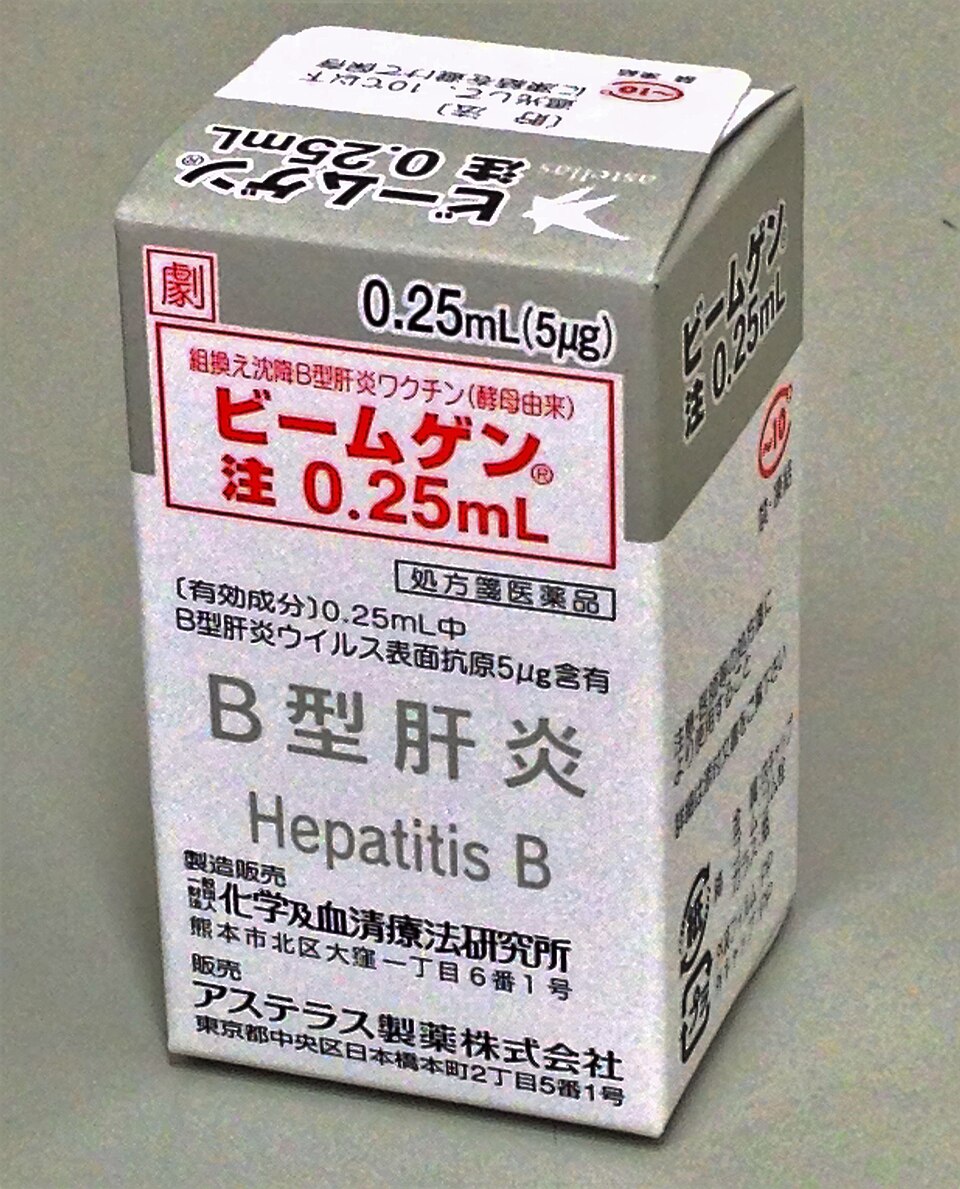
Image context: the cover uses a real Wikimedia Commons photograph of hepatitis B vaccine packages and vials. The image is intentionally mundane. It shows the intervention at the point where cancer prevention is still invisible: a vaccine product before exposure has turned into chronic infection, chronic infection into liver injury, and liver injury into malignancy.[6]
Timeline anchors before the mechanism
- 1965: hepatitis B surface antigen entered the scientific story through Baruch Blumberg's Australia antigen work, giving researchers a serologic handle on a previously obscure viral hepatitis pathway.[2][3]
- 1981: Taiwan formed a Viral Hepatitis Control Committee after high HBV carriage and liver-cancer burden had become visible national problems.[3]
- July 1, 1984: Taiwan launched what later reviews describe as the world's first nationwide hepatitis B vaccination program, initially focused on babies born to HBsAg-carrier mothers.[3][5]
- 1986: Taiwan extended hepatitis B vaccination to all newborns, shifting from targeted interruption to birth-cohort transformation.[3][5]
- 1992: WHO recommended that countries incorporate hepatitis B vaccine into national immunization programs.[5]
- 2003: Taiwan added a nationwide antiviral therapy reimbursement program for chronic viral hepatitis, an important reminder that vaccination and treatment solve different parts of the same disease chain.[3][5]
1. The cancer story begins before cancer exists
The central mechanism starts with chronic infection. WHO's current hepatitis B fact sheet describes the disease in plain terms: hepatitis B attacks the liver, can become chronic, and creates high risk for cirrhosis and hepatocellular carcinoma.[1] The same page estimates 254 million people living with chronic hepatitis B in 2022, with 1.1 million deaths that year, mostly from cirrhosis and hepatocellular carcinoma.[1] Those numbers matter because they frame HBV as a cancer-prevention problem, not only as an acute-infection problem.
The timing of infection is crucial. In highly endemic settings, WHO notes that HBV often spreads from mother to child at birth or among young children, and that chronic infection is very common when infection occurs in infancy or before age five.[1] That is the first hinge. An adult acute infection and an infant infection do not carry the same long-term population meaning. Early-life infection is more likely to become a durable carrier state, and a durable carrier state gives the virus decades to shape liver disease risk.[1][3]
CDC's Pink Book explains the vaccine side of the mechanism from the other direction. The hepatitis B surface protein became the immunogen used in highly effective vaccines, first plasma-derived and then recombinant.[2] In other words, vaccination gives the immune system an encounter with the relevant surface antigen without asking the child to pass through infection. The intervention works upstream of liver injury.
That upstream location is why the article's title says "pipeline." HBV-related liver cancer is not a single jump from virus to tumor. It is a sequence: exposure, persistent infection, chronic hepatic inflammation and viral replication, fibrosis and cirrhosis risk, then hepatocellular carcinoma in a subset of people over time.[1][3][5] Vaccination protects by cutting the sequence near the entrance.
2. Infant vaccination changes a cohort, not just an individual visit
When a newborn receives hepatitis B vaccine, the immediate clinical event is small. At population scale, though, the unit is a birth cohort. If enough infants in a high-transmission setting are immunized early, fewer children become chronic carriers. Years later, that same protected cohort enters adolescence and adulthood with a lower baseline of chronic infection than the cohorts before it.[3][4][5]
Taiwan is the cleanest historical case because the policy arrived early, the burden was high, and the surveillance record is unusually strong. Liu and Chen's 2020 review summarizes the pre-vaccine setting: around 1975, HBsAg carriage in Taiwan's general population was estimated at 15% to 20%, and about 80% of hepatocellular carcinoma patients were HBsAg positive.[3] That is exactly the environment where blocking chronic HBV infection should later change liver-cancer risk if the mechanism is real.
The program design also shows why the word "birth" matters. Taiwan began in 1984 with infants born to carrier mothers, extended to all newborns in 1986, and later moved to recombinant vaccine schedules.[3][4][5] The intervention was not a one-time campaign aimed at already-sick adults. It was a repeated entry-point policy, attached to the beginning of life.
Hu and colleagues' 2018 seroprevalence study gives the cohort signal in blood markers. In 17,611 university entrants tested between 2005 and 2016, chronic HBV infection measured by HBsAg positivity fell from 9.7% among students born before June 1974 to less than 1.0% among students born after 1992.[4] The result does not by itself prove every downstream cancer effect, but it confirms the first necessary step: the carrier reservoir in younger cohorts shrank sharply after neonatal vaccination.
3. Taiwan turned the mechanism into visible cancer prevention
The strongest evidence comes when the reduced carrier state is followed by reduced hepatocellular carcinoma burden. Childhood HCC is rare, which makes it a demanding endpoint, but Taiwan had enough registry structure to see the signal. Liu and Chen summarize the early finding: among children ages 6 to 9, HCC incidence declined from 0.52 per 100,000 in cohorts born before the vaccination program to 0.13 per 100,000 in cohorts born after it.[3]
That is the important conceptual leap. A vaccine given to prevent viral infection was followed by a measurable reduction in a human cancer tied to that virus. The vaccine did not treat tumors. It made fewer children enter the high-risk chronic-infection state that could later produce tumors.[3]
Later follow-up strengthened that interpretation across older vaccinated cohorts. The same review reports relative risks for HCC in vaccinated versus unvaccinated birth cohorts of 0.26 at ages 6 to 9, 0.34 at 10 to 14, 0.37 at 15 to 19, and 0.42 at 20 to 26.[3] Those are not abstract vaccine-efficacy slogans. They are age-banded evidence that the protection remained visible as cohorts moved forward in time.
The 2022 JAMA Network Open cohort study widened the lens from childhood HCC to end-stage liver disease burden in Taiwan between 1979 and 2018. Among 43,604 individuals ages 5 to 39 with end-stage liver disease outcomes, the study found that from 2004 to 2018, chronic liver disease mortality decreased by 26%, HCC mortality by 50%, and HCC incidence by 53%.[5] Its authors are careful to frame the decline as associated with both the national vaccination program and the later antiviral therapy program.[5] That caveat is not a weakness. It is the real disease-control system coming into focus.
4. The boundary: vaccination prevents new chronic infection; it does not erase existing chronic infection
The strongest version of the hepatitis B vaccine story can still be told too broadly. The vaccine is a cancer-prevention tool because it prevents new HBV infection and chronic carriage. It does not cure people who already have established chronic HBV infection, and it does not make adult surveillance or antiviral treatment irrelevant.[3][5]
Taiwan's own history makes that boundary clear. Vaccination began reshaping birth cohorts after 1984 and 1986, but many adults had already lived through the high-endemic era. For them, the later 2003 antiviral reimbursement program mattered because chronic HBV management has to suppress viral replication, monitor liver disease, and reduce progression risk after infection is already established.[3][5] A clean public-health story therefore has two lanes: vaccination for cohort prevention, treatment and surveillance for those already infected.
There is also a perinatal boundary. CDC's Pink Book describes birth-dose vaccination and HBIG timing for infants born to mothers who are HBsAg positive or whose status is unknown, and notes that infants of mothers with high viral loads remain at greatest risk despite immunoprophylaxis.[2] WHO similarly notes that mother-to-child transmission can be prevented with antiviral medicines in addition to vaccine shortly after birth.[1] The mechanism is powerful, but it is not magic. Very high maternal viral load, incomplete schedules, delayed birth-dose delivery, and missed testing can all leave gaps.[1][2][3]
That is why the Taiwan evidence should be read as a system achievement rather than as a vial-only story. The vaccine product mattered. So did maternal screening, newborn timing, national coverage, registries, catch-up policy, and eventually antiviral access.[3][4][5] Cancer prevention emerged because these pieces were organized around the same causal chain.
5. The practical lesson is causal sequencing
The hepatitis B vaccine is one of the clearest examples of preventive medicine operating across decades. The person vaccinated as an infant does not experience "cancer prevention" as a visible event. No tumor appears and disappears. The benefit is negative space: chronic infection that never becomes established, viral replication that never becomes a long-term liver environment, cirrhosis and cancer risk that never receive the same starting conditions.[1][3][4]
That makes the evidence easy to undervalue. A shot in infancy and a lower cancer rate years later can feel too far apart to belong to the same story. Taiwan's data pull the chain back together. First the carrier state falls; then childhood and young-adult HCC signals fall; later, liver-disease mortality and HCC incidence decline inside a broader system that also treats chronic infection.[3][4][5]
The best way to understand hepatitis B vaccination, then, is not as a single-purpose infection blocker. It is a way of moving cancer prevention to the earliest possible point in the disease timeline. That is the quiet power of the intervention: it prevents some liver cancers by making the viral prehistory of those cancers less likely to exist.
Sources
- World Health Organization, "Hepatitis B" fact sheet (July 23, 2025) - global HBV burden, transmission routes, chronic infection, cirrhosis and hepatocellular carcinoma risk, and vaccine prevention.
- Centers for Disease Control and Prevention, Pink Book, Chapter 10: Hepatitis B (May 9, 2024) - HBV history, surface-antigen vaccine mechanism, prevention strategy, perinatal timing, and vaccine-era U.S. trends.
- Liu CJ and Chen PJ, "Elimination of Hepatitis B in Highly Endemic Settings: Lessons Learned in Taiwan and Challenges Ahead" (Viruses, 2020; PMC) - Taiwan program chronology, carriage decline, HCC evidence, and treatment-program boundary.
- Hu YC et al., "Seroprevalence of hepatitis B virus in Taiwan 30 years after the commencement of the national vaccination program" (PeerJ, 2018; PMC) - 17,611 university-entrant seromarker study and post-vaccine HBsAg decline.
- Chiang CJ et al., "Association of Nationwide Hepatitis B Vaccination and Antiviral Therapy Programs With End-Stage Liver Disease Burden in Taiwan" (JAMA Network Open, 2022; PMC) - 1979-2018 age-period-cohort analysis of chronic liver disease mortality, HCC mortality, and HCC incidence.
- Wikimedia Commons, "File:Bimmuge-Hepatitis B Vaccines.jpg" - source page for the real hepatitis B vaccine photograph used as the article image.