
As of 2026-04-15 UTC, the most useful way to watch St John Ambulance's 2:32 video "How To Treat Heat Stroke, Signs & Symptoms - First Aid Training," published on February 1, 2017, is not as a generic summer-safety clip but as a lesson in threshold recognition.[1] The video keeps insisting that heat stroke is what happens when the body's temperature-control system fails and overheating stops being a matter of discomfort.[1] That framing matters because public language around hot weather is often too soft. People hear heat, think rest, shade, and water, and miss the moment when the problem has become neurologic and time-sensitive.
CDC's NIOSH heat-illness page gives the harder version of the same story. Heat stroke is the most serious heat-related illness; the body can no longer control its temperature, sweating can fail, temperature may climb to 106°F or higher within 10 to 15 minutes, and delayed treatment can mean permanent disability or death.[2] NHS guidance draws the boundary in a way ordinary readers can actually use. Heat exhaustion often improves if the person cools down within 30 minutes; once the picture turns into heat stroke, it is an emergency, especially when confusion, seizures, unconsciousness, or very hot skin without sweating appear.[3] Put beside those written sources, the short video stops looking like routine first aid and starts looking like an escalation script.
That escalation script is stricter than many viewers expect.[1] Once heat stroke is suspected, the video does not linger on hydration tips or general summer precautions. It moves immediately to active cooling, emergency contact, and monitoring consciousness.[1] NIOSH says to do the same in American terms: call 911, move the person to a shaded cool area, remove outer clothing, and cool rapidly with cold water, wet skin, cold cloths, air circulation, or ice on high-blood-flow areas.[2] The format varies by setting, but the logic does not. Severe heat illness is a race to pull heat out of the body before transport and organ injury fall further behind.
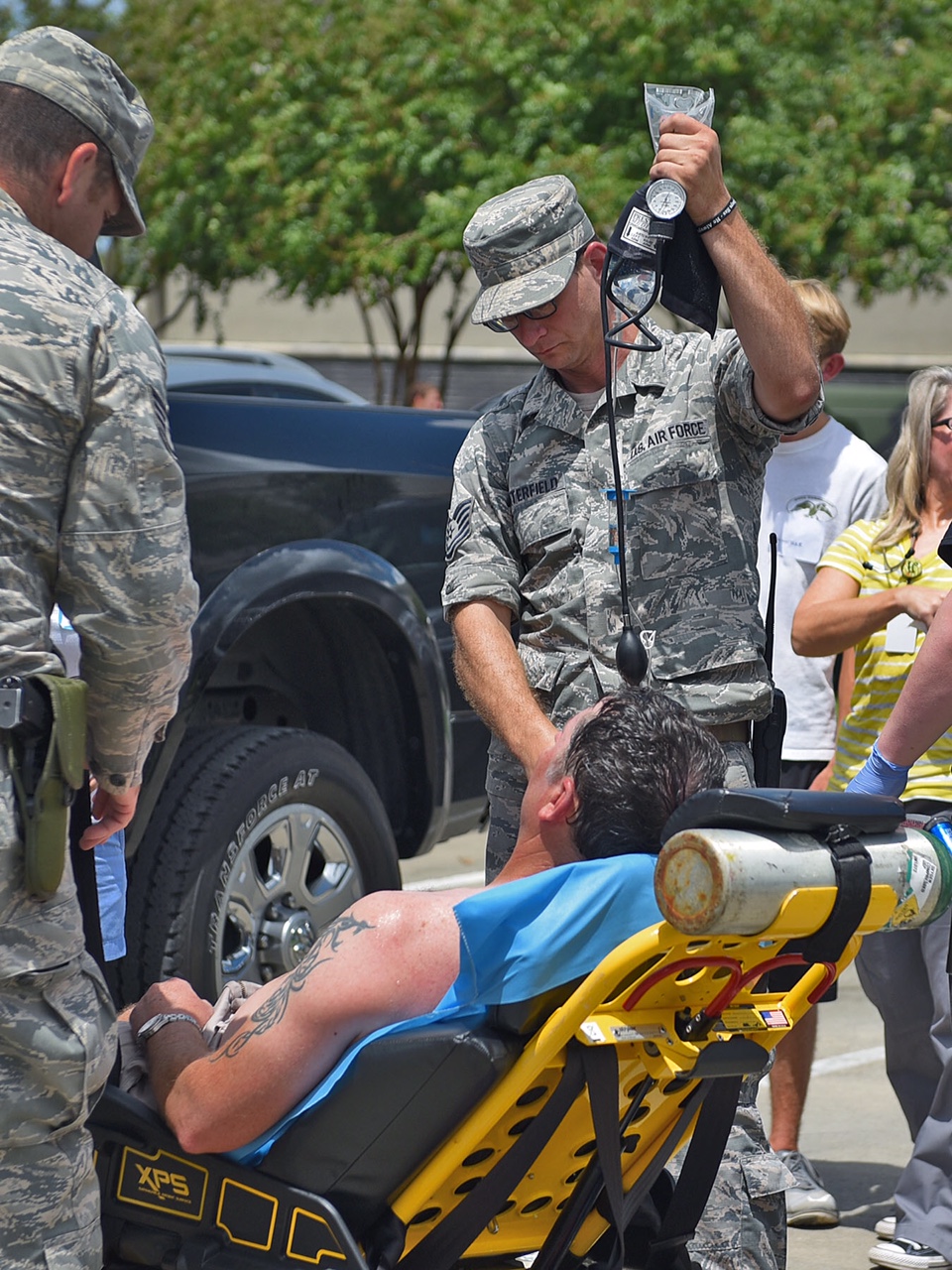
Image context: the cover photograph shows a Louisiana Air National Guard responder treating an overheated flood evacuee in Baton Rouge in August 2016. It fits this essay because the picture places heat illness where it often actually lives: not in a sports-medicine diagram but in an improvised emergency setting where cooling has to begin with whatever hands, cloth, water, and judgment are available.[5]
The opening turns heat stroke from "too hot" into failed thermoregulation
The strongest move in the video's first half is conceptual.[1] It says heat stroke is caused by failure of the "thermostat in the brain" that regulates body temperature.[1] That phrase is simplified, but it does useful work. It tells the viewer that the problem is not merely that someone feels miserable in the sun. The body's cooling control has started to fail.
NIOSH uses more formal language to make the same point: the temperature rises rapidly, the sweating mechanism may fail, and the body becomes unable to cool itself.[2] NHS sharpens the public distinction by separating heat exhaustion from heat stroke. Heat exhaustion may bring sweating, thirst, weakness, nausea, and cramps; heat stroke is the emergency turn, marked by very high temperature, mental-status change, seizures, or unconsciousness.[3] Read together, those sources explain why the video is so effective. It is trying to move the public away from the soft category of overheated person and toward the harder category of failing temperature control.
That distinction matters because the wrong mental model causes delay. If a witness thinks the problem is just fatigue, dehydration, or a brief need to sit down, they will often under-react.[1][2][3] The video is trying to break that habit early.
Around the first minute, confusion is the real threshold
The video's symptom list matters less as a memorization drill than as a threshold test.[1] It names hot flushed dry skin, restlessness and confusion, headache, dizziness, a bounding pulse, a temperature above 40°C, and the risk that responsiveness may fall rapidly.[1] The list is useful because it keeps circling back to neurological change. Heat stroke is not only a hot body. It is a hot body whose control systems are starting to fail in public view.
NIOSH's symptom list lands in the same place with more clinical wording: confusion, altered mental status, slurred speech, seizures, loss of consciousness, and very high temperature.[2] NHS guidance makes the ordinary-decision version explicit: if someone remains unwell after 30 minutes of cooling and fluids, or if they show confusion, lack of coordination, seizure, loss of consciousness, or hot skin that is no longer sweating, call 999 immediately.[3] Inference from these sources: the practical line between heat exhaustion and heat stroke is not just "feels worse." It is the appearance of central nervous system failure or the failure of simple cooling to reverse the picture promptly.
That is why the video's tone changes so quickly.[1] Once confusion and rapid deterioration are on the table, the viewer is no longer being taught comfort care. The viewer is being taught emergency recognition.
The wet-sheet sequence matters because cooling starts before the ambulance arrives
The most valuable part of the clip comes after the symptom list.[1] Move the person to a cool area, remove outer clothing, call emergency help, sit them down, wrap them in a cold wet sheet, keep the sheet wet, and if no sheet is available, sponge with cold water or fan to keep them cool.[1] The video even frames temperature tracking as ongoing work, saying to keep cooling until the temperature falls and to repeat the process if it starts rising again.[1]
That is not identical to every health-system script, but the principle aligns with NIOSH very closely. The CDC page says to cool the worker quickly with a cold water or ice bath if possible, wet the skin, place cold wet cloths on the skin, soak clothing with cool water, circulate air, and put cold wet cloths or ice on the head, neck, armpits, and groin.[2] Different settings offer different tools. The stable lesson is that once heat stroke is suspected, cooling is not something you postpone until the hospital. Cooling is the first job.
This is also the moment where the article's title becomes precise. The public error is to imagine a water break. The video is teaching a cooling race.[1] Notice what drops into the background once severe heat stroke is suspected: leisurely recovery, passive observation, and the assumption that a few sips alone will solve the problem. NHS still recommends fluids for heat exhaustion, but its emergency list for heat stroke is built around urgent help, not casual self-correction.[3] The clip therefore earns its urgency. It treats cooling as active work rather than as a polite supplement to waiting.
The emergency call is part of treatment, not a separate step
Another reason the video works is that it never pretends first aid finishes the case.[1] The instructions braid cooling and escalation together: call 999 or 112, keep monitoring response, keep cooling, and prepare for an unresponsive patient if the level of consciousness drops.[1] NIOSH says the same thing in U.S. language: call 911, stay with the worker, and continue rapid cooling while emergency medical services are on the way.[2]
That sequence is more important than it sounds. Many public first-aid misunderstandings come from false alternatives. People act as though they must choose between helping now and calling for professional help, or between cooling now and transport later. The video rejects that split.[1] Severe heat illness demands simultaneous work: remove heat from the body and move the patient toward definitive care at the same time.[1][2]
Read that way, the video becomes more than a seasonal safety reminder.[1] It is a compact lesson in escalation. Heat exhaustion may still be a cool-place-and-fluids problem if the person improves promptly.[3] Heat stroke is something else. Once confusion, collapse, or persistent severe overheating enters the scene, the correct public response is narrower and faster: recognize the threshold, call emergency services, and start stripping heat off the body immediately.[1][2][3]
Sources
- St John Ambulance, "How To Treat Heat Stroke, Signs & Symptoms - First Aid Training," YouTube video, published February 1, 2017.
- CDC NIOSH, "Heat-related Illnesses" - heat stroke symptoms, temperature rise, and rapid-cooling first-aid steps.
- NHS, "Heat exhaustion and heatstroke" - the 30-minute cooling boundary for heat exhaustion and the emergency signs that trigger 999.
- St John Ambulance, "Heatstroke Symptoms & First Aid" - reviewed written guidance on symptoms, emergency contact, and cooling response.
- Wikimedia Commons, "File: Heat stroke treatment, Baton Rouge, 2016 Louisiana floods" - documentary image source for the article photo.