Pellagra entered the American South as a medical scandal before it became a vitamin story. By 1909, cases had been reported in 26 states, and the NIH history office notes that the disease was killing at least 10 people per day. By 1912, South Carolina alone reported 30,000 cases with a stated mortality rate of 40%.[2] What physicians thought they were facing, however, was still badly unsettled. The dominant explanations leaned toward infection, spoiled corn, or some toxic contaminant in Southern foodways rather than toward a missing nutrient.[2][4]
Joseph Goldberger's June 26, 1914 Public Health Reports paper did not yet name niacin, and that fact matters because it clarifies what the paper actually achieved.[1] It was not a final biochemical proof. It was a sharp causal rearrangement. Goldberger took institutions that looked merely tragic or overcrowded and read them as structured evidence. He asked who became ill, who did not, what each group ate, and how those distributions behaved inside orphanages, asylums, and prisons.[1][2] The paper's lasting force comes from that method. It made pellagra look less like a mystery pathogen and more like a disease of provisioning, hierarchy, and diet.
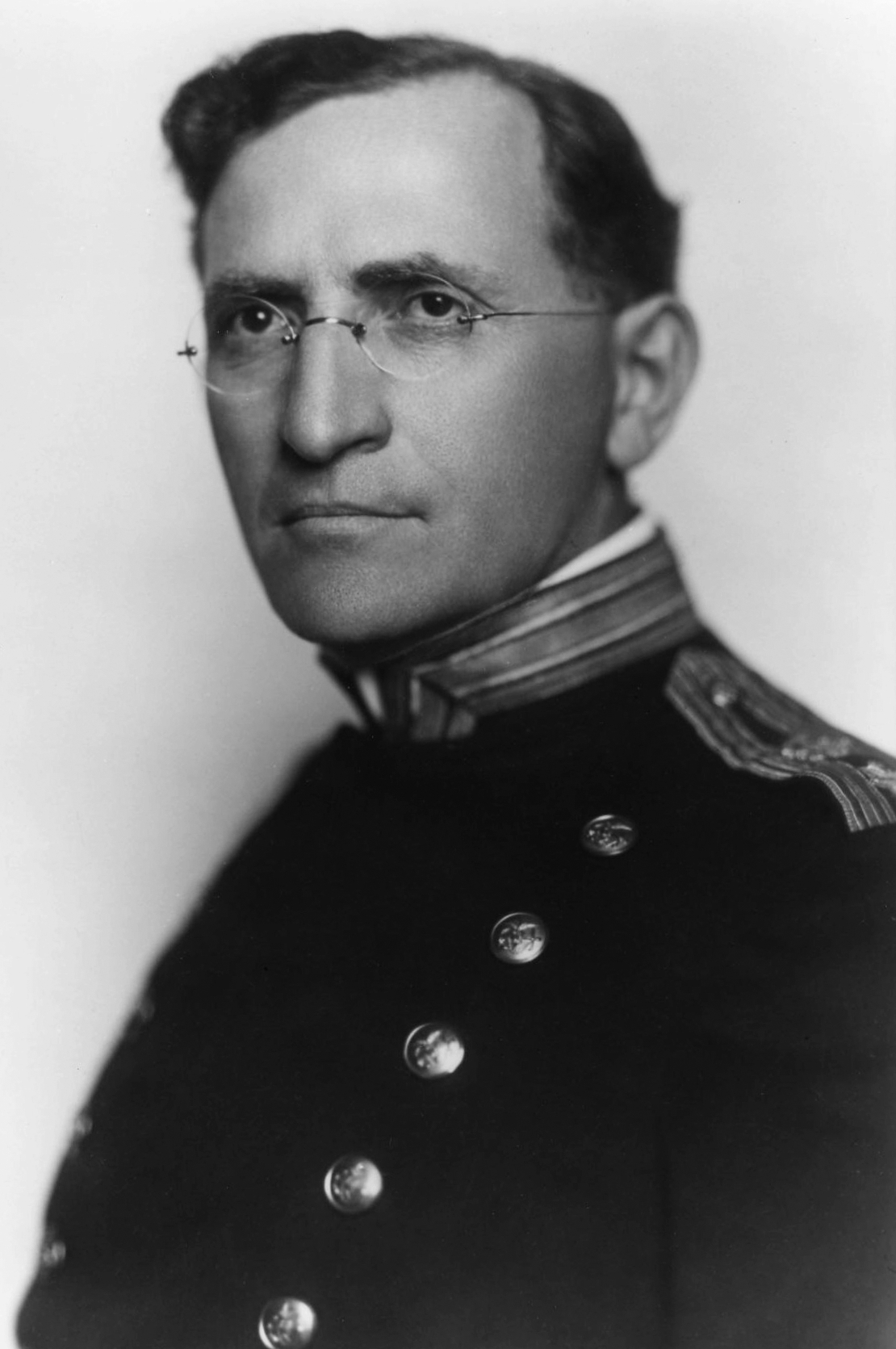
Image context: the cover uses an archival CDC portrait of Goldberger. That choice fits because this article is about a human investigator, but even more because it is about a style of public-health reasoning. The paper did not win by discovering a microbe under glass. It won by making ordinary institutional facts, menus, duties, and age groupings, carry causal weight.[6]
Timeline anchors before the paper could look obvious
- 1909: pellagra is reported in 26 U.S. states, with at least 10 deaths per day noted in later NIH historical summary.[2]
- 1912: South Carolina reports 30,000 cases and a 40% mortality rate, showing the scale of the Southern emergency.[2]
- June 26, 1914: Goldberger publishes "The etiology of pellagra" in Public Health Reports and argues from epidemiologic pattern rather than laboratory isolation.[1]
- 1915: Goldberger and G. A. Wheeler report that a restricted, one-sided prison diet can experimentally produce pellagra in healthy men, strengthening the dietary interpretation.[5]
- 1923: institutional diet studies continue to show prevention by food improvement rather than by quarantine logic alone.[3]
- 1937: niacin is finally identified as the specific anti-pellagra factor, years after Goldberger's death in 1929.[2][3]
That sequence is worth holding in view because retrospective storytelling tends to flatten it. Once niacin is known, the earlier epidemiology can look like an incomplete prelude. Read in real time, the 1914 paper was much more than a prelude. It was the moment when the burden of proof started to move away from contagion.
The paper begins by treating absence as evidence
One of Goldberger's strongest moves is almost negative in form. He pays close attention to who remains well.[1] In institutions with heavy pellagra burden, attendants, nurses, and physicians were exposed to the same buildings and to the same patients, yet they were not falling ill at the same rate.[1][2] That asymmetry is devastating for a simple infectious theory. If pellagra were spreading mainly through ordinary person-to-person contact, the people touching the sick, feeding them, cleaning them, and moving among them daily should have looked more vulnerable than they did.
This is the article's first durable lesson. Close reading in health history is not only about eloquent sentences in an old paper. It is about learning to see what an author counts as a signal. Goldberger does not claim omniscience. He instead narrows the candidate causes by showing that contact intensity and disease incidence do not line up in the expected way.[1] The paper keeps asking a plain question with large consequences: why does the disease choose some institutional populations and bypass others standing a few feet away?
That negative method helps explain why the paper still reads cleanly. Goldberger was not waiting for a perfect lab test before making an argument. He was using epidemiologic mismatch. Pellagra behaved badly for germ theory because the map of illness tracked social position and food allocation more tightly than it tracked exposure to sick bodies.[1][2][4]
The orphanage age bands made diet visible inside one building
The orphanage evidence is where the paper becomes more than a general anti-contagion complaint. NIH's historical summary of Goldberger's work preserves the institutional pattern in memorable form. In some orphanages, pellagra clustered among children roughly 7 to 11 years old, while younger children and older ones were less affected. When Goldberger examined the feeding arrangements, the groups were not actually eating the same food: the youngest children were given milk, older children could receive meat, and the middle band with high pellagra burden sat in the nutritional gap.[2]
That is a powerful epidemiologic design hiding inside ordinary administration. The institution had already split the population. Goldberger did not create the comparison; he recognized it.[1][2] Within the same walls, under the same management, and in contact with the same caregivers, disease intensity lined up with food privilege rather than with shared air or shared bedding alone. The point is not that the orphanage became a clean laboratory. It did not. The point is that the disease distribution was too structured to ignore.
This is why the 1914 paper matters before the vitamin was identified. Goldberger could not yet name the missing factor, but he could show that the cause lived somewhere in the food system. That is a narrower and stronger claim than "poverty is vaguely unhealthy." It links illness to a specific institutional mechanism: some people are issued nutritionally poorer diets, and their bodies reveal the consequence.[1][2]
Prisons and asylums exposed the difference between custody and consumption
Goldberger also understood that institutions do not merely gather people; they sort them by role.[1][3] Prisoners and asylum inmates eat one food line. guards, administrators, and clinicians eat another. A contagion story has trouble with that boundary because the building is shared. A diet story fits it much better.
The later 1915 prison experiment makes this logic even clearer. Goldberger and Wheeler reported that a restricted, cereal-heavy diet at the Mississippi State Penitentiary could produce pellagra in previously healthy men.[5] That later experiment is often cited for its shock value, but in relation to the 1914 paper it serves another purpose. It shows that the earlier institutional reading was not a rhetorical flourish. Goldberger was prepared to press the hypothesis forward: if pellagra belonged to food deficiency rather than infection, then reproducing the deficient diet should reproduce the disease.[5]
In this sense, custody was not the causal mechanism. It was the exposure organizer. Institutions made the diet contrast legible because they fed different classes of people in visibly different ways.[1][2][5] The paper's brilliance lies in seeing that the social architecture of the South, orphanages, mill families, prison farms, public wards, had already staged the argument. Goldberger only had to read it correctly.
What the 1914 paper could prove, and what it could not
The strongest version of Goldberger's achievement is not that he solved pellagra all at once. He did not.[1][3] The 1914 paper could rule out a great deal and redirect inquiry toward diet, but it could not isolate niacin, settle every molecular mechanism, or dissolve the politics surrounding the epidemic. Carpenter's historical review emphasizes that Goldberger spent years pushing the dietary explanation and later demonstrating prevention or treatment with brewer's yeast, yet the specific deficiency factor was identified only in 1937, after his death.[3]
That gap between epidemiologic proof and biochemical closure is part of why resistance lasted. Semba's historical review shows how crowded pellagra theory already was before Goldberger, with competing ideas about spoiled maize, infection, and environmental contamination.[4] NIH's history note adds the political dimension: Southern elites resisted an explanation that pointed toward monotonous poverty diets because it implicated wages, agriculture, and social order rather than an external germ.[2] A microbe is unlucky. A deficient food system is accusatory.
Goldberger's later self-experimentation and so-called filth parties belong here as boundary-setting gestures rather than colorful trivia. When he and colleagues failed to transmit pellagra through blood, secretions, and excreta from pellagra patients, they were not proving that deficiency alone had been fully characterized. They were tightening the noose around infection as the master explanation.[2][3] The paper's method therefore remains exemplary: begin with patterned observation, test the strongest rival theory, and keep narrowing until the causal field becomes unavoidable.
Why the paper still feels modern
Read now, the 1914 article feels strikingly contemporary because it treats institutions as analytic instruments. Modern epidemiology often celebrates biomarkers, assays, and causal graphs. Goldberger was operating earlier, but the reasoning is recognizable. He used population splits, role boundaries, and differential exposure to ask what variable best explains the disease map.[1][2] He did not yet know the nutrient name. He knew that the distribution of illness made germ theory look weaker than menu structure.
That is the deeper reason the paper endures. Goldberger turned menus, custody, and age stratification into public-health evidence before biochemistry could finish the story.[1][3] He did not discover pellagra's secret by escaping the institution. He discovered it by reading the institution more carefully than the prevailing theory allowed. In 1914, that was enough to begin collapsing one explanation and to force another into view.
Sources
- Joseph Goldberger, "The etiology of pellagra. The significance of certain epidemiological observations with respect thereto" (Public Health Reports, June 26, 1914) - the primary-source paper this article reads closely, showing how institutional disease patterns argued against a simple contagion model.
- Gordon Margolin, "Dr. Joseph Goldberger and Pellagra: A Fearsome Disease Tamed" (NIH Catalyst, Office of NIH History and Stetten Museum) - historical summary with the 1909 and 1912 burden figures, the orphanage age-band evidence, and the resistance Goldberger faced.
- K. J. Carpenter, "Joseph Goldberger's research on the prevention of pellagra" (Public Health Reports, 2008) - historical review covering Goldberger's later diet studies, brewer's yeast work, and the lag until niacin was identified in 1937.
- Richard D. Semba, "Pellagra Pre-Goldberger: Rupert Blue, Fleming Sandwith, and The 'Vitamine Hypothesis'" (The Journal of Nutrition, 2014) - background on the theories and debates Goldberger was arguing against.
- Joseph Goldberger and G. A. Wheeler, "Experimental pellagra in the human subject brought about by a restricted diet" (Public Health Reports, November 12, 1915) - later prison-farm evidence showing that a one-sided diet could produce pellagra in healthy men.
- Wikimedia Commons, "File:Joseph Goldberger 01.jpg" - source page for the archival CDC portrait used as the article image.